
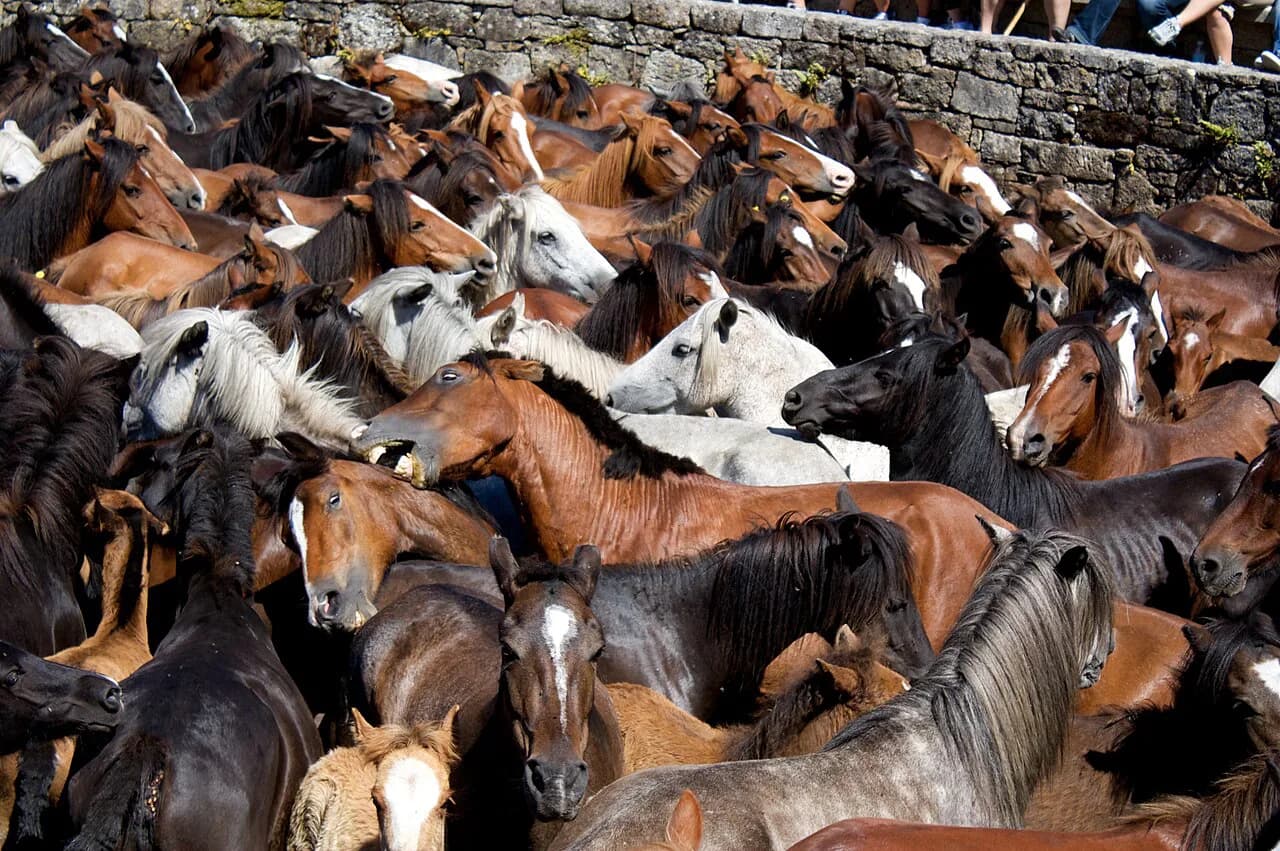
Last updated August 2026, this guide covers the Rapa das Bestas Sabucedo festival for travelers planning Galicia's July horse roundup. Wild herds descend from more than 200 km² of hillside, and aloitadores subdue each horse by hand, without ropes or sticks. Weekend curro seating disappears fast, so book tickets, camping, and transport before you commit to travel dates.
What Is the Rapa das Bestas de Sabucedo?
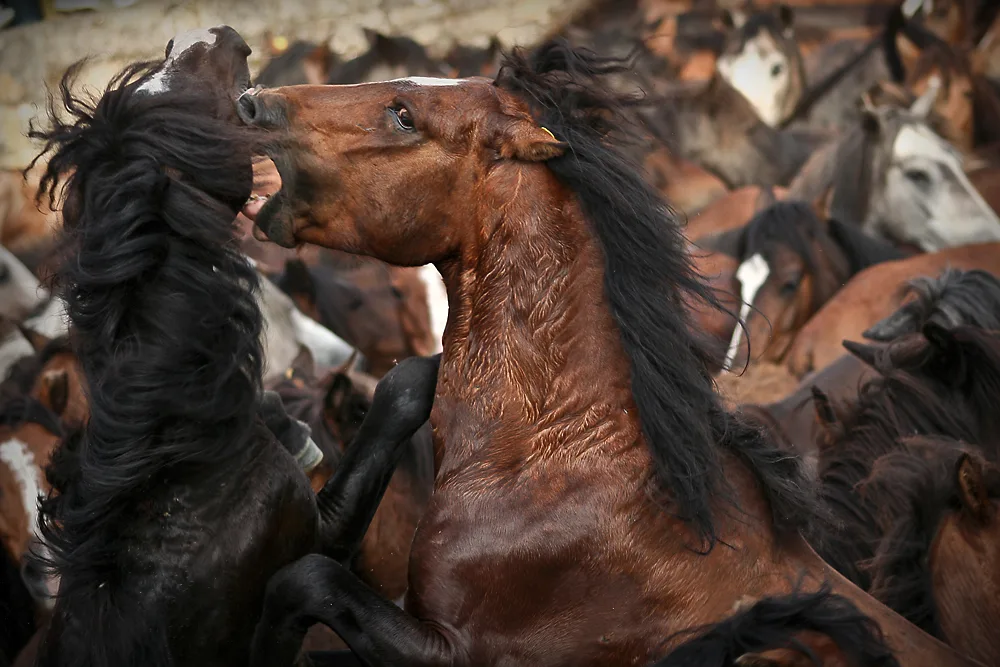
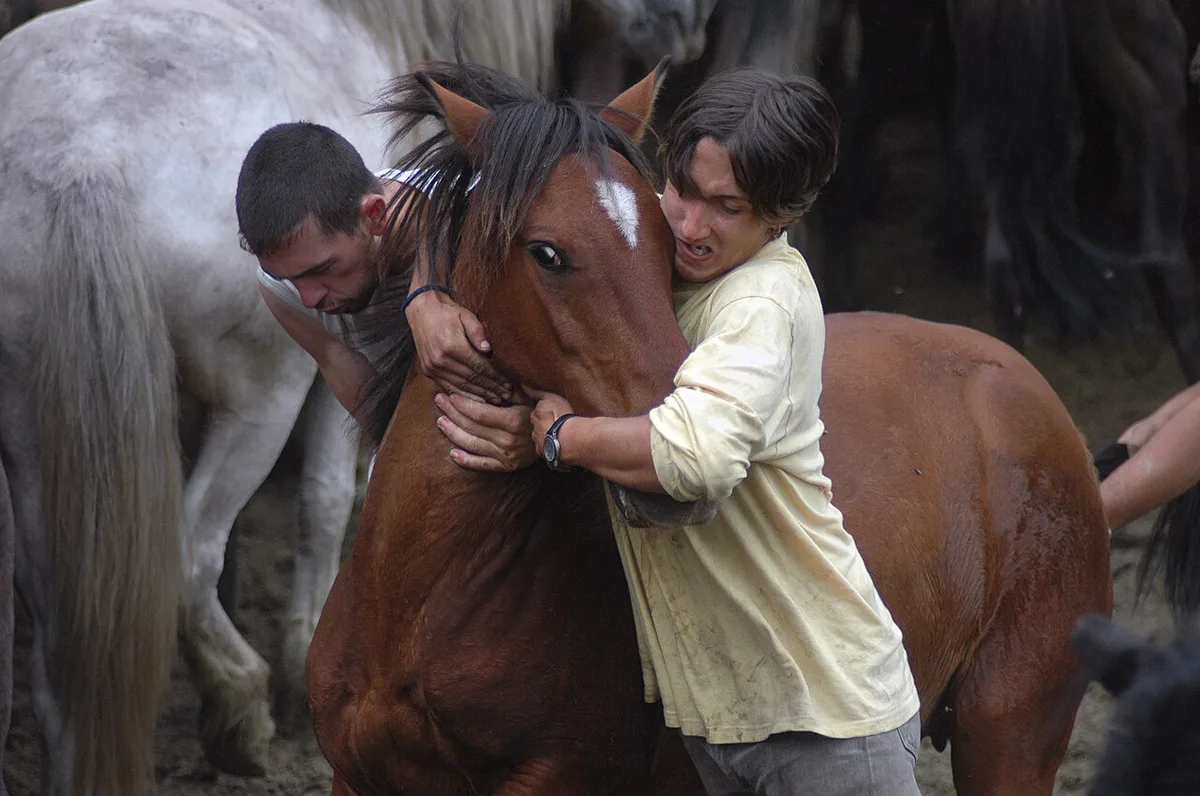
A curro is the stone enclosure where the roundup happens, and a rapa is the act of shearing each horse's mane and tail. Sabucedo runs the ceremony in the Curro do Campo do Medio. It is the only curro in Galicia where the Galician tourism authority confirms handlers work without ropes, sticks, or any other tool. Three aloitadores work each horse. Two hold the head while a third manages the tail, wrestling the animal off balance until it settles. The event outgrew its original stone enclosure in the village center, so organizers built a larger masonry curro to hold today's crowds. Local legend traces the tradition to two sisters who promised two mares to San Lorenzo, the parish's patron saint, in exchange for ending a plague. Records of the bajada and rapa date to the early 18th century, though petroglyphs of mounted riders found nearby suggest older roots. For generations, catching a foal for the first time has marked a rite of passage into the working life of the parish. Visitors often describe the noise of hooves and applause echoing across the arena as the most intense moment of the weekend. Spain named the festival of National Tourist Interest in 1963 and raised it to International Tourist Interest status in 2007.
The Bajada vs the Curro: What's the Difference?
The bajada is the descent, when residents and visitors climb into the hills to find the horses and lead them toward the village. Its counterpart, the curro, is the enclosed event held in the stone arena once herds reach Sabucedo. Locals now hold the bajada on Friday, a schedule that shifted from its traditional Saturday slot in recent years. More than 600 horses range across over 200 km² of hillside, split into 14 droves the Galicians call bestas (mares) and garañones (stallions). Many visitors treat Friday as the emotional heart of the festival, since the bajada feels more like a community event than a spectacle. Joining the bajada costs nothing and gives hikers a close view of the herds before the crowds arrive. Curro seating, by contrast, draws packed stands and requires a ticket for the best spots on Saturday and Sunday.
The Four-Day Schedule: Friday to Monday
Rapa das Bestas runs four consecutive days, always the first Friday through Monday of July. In 2026, the official festival calendar lists the dates as July 3 to 6. Inside the curro, foals are separated from their mothers first, and young helpers lead them to a holding area before the adult horses are shorn.
- Friday: the bajada begins as residents and visitors head into the hills to locate the 14 droves and start the walk back to Sabucedo.
- Saturday morning: a dawn mass honors San Lorenzo before the herds complete their descent into the village.
- Saturday and Sunday afternoon: the main ticketed curros take place in the Curro do Campo do Medio, where aloitadores cut manes and tails by hand.
- Monday: a charity curro closes the festival, with proceeds going to local causes, before the horses return to the mountains.
Tickets, Costs, and How to Book for 2026
Weekend curro seating is the hardest part of this trip to plan. Grandstand spots for Saturday and Sunday often sell out weeks in advance, so treat ticket day like a flight sale. The Friday bajada and Saturday dawn mass cost nothing to attend. Monday's charity curro asks for a modest gate donation that funds local causes, and it typically costs less than weekend grandstand seating. For exact 2026 prices and release dates, check the official Rapa das Bestas site directly, since Sabucedo releases its limited allocation only through that channel.
| What to Book | When to Book | Why |
|---|---|---|
| Accommodation (rural houses, TuriRapa) | About 6 months ahead | Rooms near Sabucedo are limited and fill first |
| Weekend curro tickets | The day official sales open | Allocation is small and moves fast |
| Free camping spot | Arrive Friday afternoon | Space, showers, and toilets fill by evening |
| Monday charity curro | Walk-up, no advance booking needed | Smaller crowd, easier access |
| Local logistics questions | Anytime before you travel | A Estrada tourism office: +34 986 570 030 |
Getting to Sabucedo and Where to Stay
Sabucedo sits in the parish of San Lourenzo, part of A Estrada municipality in Pontevedra province. Santiago de Compostela and Pontevedra city are each roughly 45 minutes away by car, and driving remains the most reliable way in during festival weekend. Public transit thins out during the event, so a rental car or taxi is worth arranging ahead of time. Parking near the curro is informal and fills early, so arrive well before the gates open on ticketed days. Free camping areas open near the village with showers and toilets provided, though space fills fast and the atmosphere stays lively into the night. Rural tourism houses nearby offer a TuriRapa package through the Mar de Compostela association, bundling a bed with festival access. Basing yourself in A Estrada town or Santiago de Compostela works as a quieter, commuter alternative to camping. A Estrada's tourism office can also answer specific access questions for visitors arriving without a car.
Tips for First-Time Visitors
A few practical choices shape how much you enjoy the weekend. Sabucedo also runs cultural programming alongside the curro, so pace your days to catch more than the arena.
- Join the bajada for more space and atmosphere. The mountain walk draws fewer crowds than the curro and lets you see the droves up close.
- Wear sturdy boots and clothes you do not mind getting dirty. The hillside is muddy, and the curro arena kicks up dust.
- Keep a respectful distance from the aloitadores during the struggle. Use a zoom lens instead of pushing toward the rail.
- Budget time for pulpería stalls and family picnics around the curro, the closest thing Sabucedo has to organized festival food.
- Catch the Rapasóns festival's live Galician folk music in the evenings, a cultural program that runs alongside the daytime curro.
- Photographers covering the event professionally can request accreditation through the official festival site's press contact before traveling.
Animal Welfare: The Ethical Context Behind the Struggle
Rapa das Bestas draws criticism from some animal welfare perspectives, and the festival deserves an honest look rather than a scripted defense. The horses living across Sabucedo's hillside are semi-feral, not domesticated pets, and they range freely most of the year without human handling. Cutting the mane and tail removes ticks and parasites that build up over months on unmanaged animals. Each horse is wormed during the curro and marked with a microchip before release, a step that lets owners track its health going forward. Handlers then return every horse to the mountain once the rapa finishes, and the animals live free again until the following July. None of that erases the physical intensity of the struggle itself, and visitors uncomfortable with rough animal handling should weigh that before booking a ticket.
Spain elevated this festival to International Tourist Interest status in 2007, but contemporary visitors face a genuine ethical tension: the tradition persists because of practices that some animal welfare advocates now question.
Who Should Skip Rapa das Bestas
This festival is not a gentle cultural show. Expect loud crowds, dust, mud, and a body-to-body struggle between aloitadores and horses at close range. Travelers uncomfortable watching animals restrained by hand may prefer the free bajada from a distance. Those who dislike packed stands and long queues for basic facilities might skip the event entirely. Families with young children should also weigh the noise and crush around the curro before committing to weekend tickets. If intense crowds and physical animal contact are not your travel style, Galicia offers plenty of quieter festivals worth prioritizing instead. Understanding that trade-off in advance tends to make for a better visit either way.
Spain recognized the festival as National Tourist Interest in 1963, but expect a raw experience rather than a polished show. Direct animal handling in muddy conditions is core to the tradition, and visitors uncomfortable with that should plan differently.
Nearby Stops and Extending Your Galicia Trip
Vesacarballa's windmill route sits close to Sabucedo and makes an easy add-on before or after the festival. This short path passes recently restored mills, water channels, and a sawmill that opens to visitors during Rapa das Bestas. Sabucedo also lies along stretches of the Way of St. James, according to the Galicia tourism authority. Both the Winter Camino and the Vía de la Plata pass through the area. Either stop works well as a half-day detour if you are basing yourself in Sabucedo for the festival weekend. A Estrada is also twinned with Almonte, in Huelva province, a bond built on Almonte's own Saca de las Yeguas horse-gathering tradition. Travelers staying in the region through late July can time a longer trip around the Festa do Apóstolo Santiago in Santiago de Compostela. The official Santiago tourism site publishes that festival's yearly program. For a different flavor of Galician folk culture, the Festival de Ortigueira draws Celtic music crowds each July. Its official festival site lists current dates and lineup.
Frequently Asked Questions
When is Rapa das Bestas Sabucedo in 2026?
The 2026 edition runs Friday July 3 through Monday July 6, following the festival's fixed first-weekend-of-July rule. The official festival site confirms these dates and posts any updates.
Do you need a ticket to watch the Rapa das Bestas?
You need a ticket only for grandstand seating at the Saturday and Sunday curros. The Friday bajada, the Saturday dawn mass, and general access around the arena stay free, though weekend seating sells out weeks ahead.
Is the Rapa das Bestas cruel to the horses?
The struggle is physically intense, and it is fair to ask that question honestly. Handlers restrain each horse by hand to cut its mane and tail, worm it, and fit a microchip before release back to the mountain. Sabucedo remains the only curro that bans ropes and sticks entirely. Some visitors see that as more respectful of the animal, while others still find the contact difficult to watch.
How much does Rapa das Bestas cost to attend?
Official pricing is set and published by the festival organizers each year, so check current rates before you travel. Grandstand seating for the weekend curros costs more than the free bajada or Monday's charity curro, which asks only for a small gate donation.
Can you camp at Rapa das Bestas Sabucedo?
Yes, free camping areas open near Sabucedo for the festival weekend, with showers and toilets provided. Space fills quickly and the atmosphere stays festive into the night, so arrive Friday afternoon if you want a good spot.
How many horses take part in Rapa das Bestas?
More than 600 horses range across the hills above Sabucedo, split into 14 droves that come down during the bajada. Not every horse reaches the curro each year, since some droves stay higher on the mountain.
What is an aloitador?
An aloitador is a handler who wrestles a horse by hand during the curro, working in a team of three per animal. Women take part too, known as aloitadoras, a detail regional tourism sites highlight as part of the tradition.
What should you eat at Rapa das Bestas?
Pulpería stalls near the curro serve Galician octopus, a regional staple worth trying between events. Many attendees also bring picnics and share food with neighbors on the hillside during the bajada.