Last updated July 2026: San Fermín Pamplona runs every year from 6 to 14 July, and the next edition keeps that same fixed slot in 2027. The festival splits into two overlapping experiences: a religious tribute to Saint Fermín and a nine-day street party built around the daily encierro. This guide covers the daily schedule, viewing options for the bull run, dress code etiquette, and the logistics to lock down before the Chupinazo fires at noon.
San Fermín Pamplona: Origins, Dates, and the Hemingway Effect
San Fermín honors Saint Fermín, the co-patron of Navarre and, according to tradition, Pamplona's first bishop. Religious ceremonies for the saint originally fell on 10 October. Organizers moved them to 7 July in 1591 to align with an existing summer trade fair and its better weather. Ernest Hemingway first visited Pamplona in 1923 and returned many times afterward. His novel The Sun Also Rises turned the local fair into a global draw. James Michener's novel The Drifters later added to that same literary pull, and both books still lead readers to retrace scenes described on the page. Spain designated San Fermín a Fiesta of International Tourist Interest in 1980, formal recognition of a status the festival had informally held for decades. According to the official festival guide, Pamplona's population more than doubles during the nine days of San Fermín and triples on weekend days. Travelers interested in the religious side of Spanish festival culture might also compare San Fermín with Seville's Holy Week processions, which center on solemn tradition rather than street celebration. For context on how the festival fits into Spain's wider July calendar, see the Spain festival calendar guide.
The San Fermín Timeline: Chupinazo to Pobre de Mí
San Fermín runs on a fixed daily rhythm that repeats for nine days. Four milestones anchor the calendar: the opening rocket, the saint's procession, the daily bull run, and the candlelit closing. Missing the first day means missing the loudest moment of the entire week. Two more traditions fill gaps in the official schedule. Records trace the Riau-Riau to 1911, a procession from the Casa Consistorial to the San Lorenzo church danced to the Astrain Waltz on the afternoon of 6 July. Public-order concerns during political clashes led the city to drop it from the official calendar in 1992, though an unofficial version still happens most years. El Struendo is a midweek midnight noise event, where crowds gather at the Casa Consistorial with drums, whistles, and pots, a custom traced back to at least 1975.
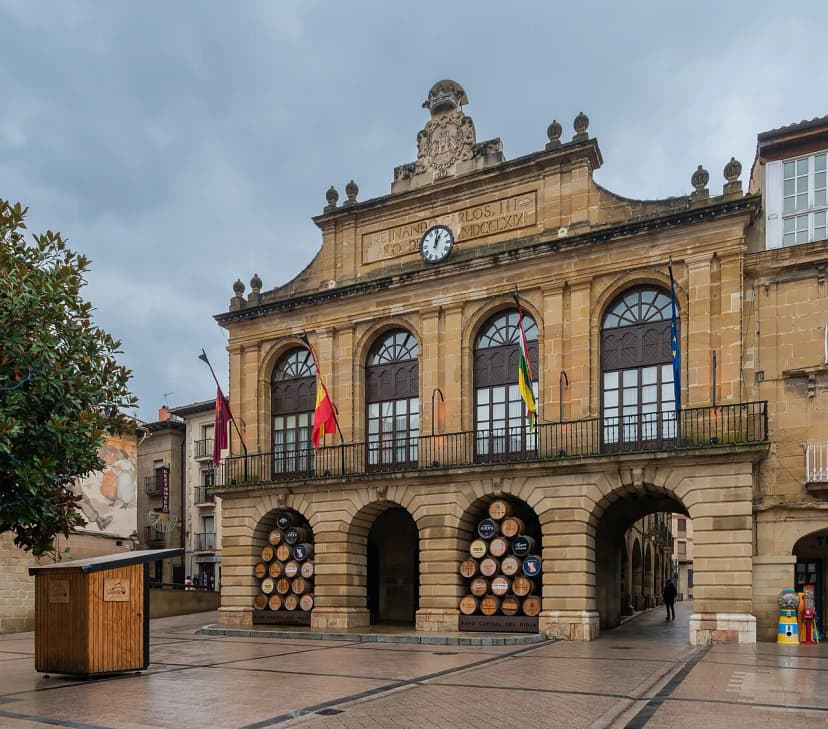
- 6 July, 12:00 PM — The Chupinazo: the mayor's office fires a rocket from the Casa Consistorial balcony, and the crowd below turns Plaza Consistorial into a sea of red scarves.
- 7 July, 10:00 AM — Procession of San Fermín: a 15th-century statue of the saint moves through the old town, accompanied by the gigantes and the Bishop of Pamplona.
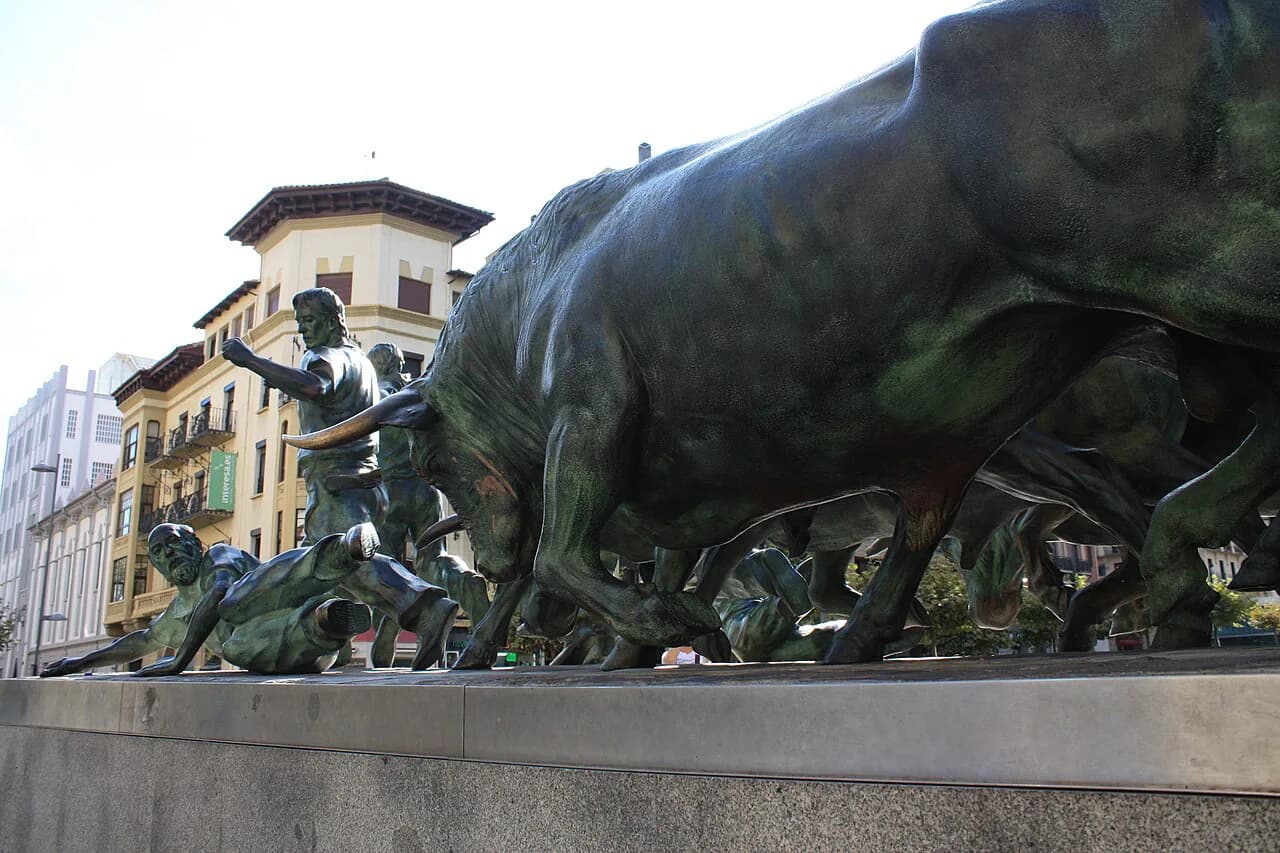
- 7-14 July, 8:00 AM — El Encierro: runners and bulls cover the route from the Santo Domingo corral toward the bullring in about three minutes.
- 14 July, midnight — Pobre de Mí: crowds gather in Plaza Consistorial with lit candles, remove their red scarves, and sing the festival's closing song before a final fireworks display.
The Daily Rhythm: Surviving a 24-Hour Fiesta
San Fermín runs closer to 24 hours a day than a typical festival schedule, and pacing yourself matters more than any single event. Mornings start early with the encierro at 8:00 AM, followed by a lull as runners and spectators eat or nap through the hottest part of the day. Afternoons pick back up with the giants parade, peña brass bands moving through the streets, and early-evening bullfights. Nights run late with open-air dancing, packed bars, and the nightly fireworks over the Citadel, before the cycle restarts the next morning. Treat the first day or two as a chance to find a workable rhythm rather than trying to attend everything at once.
El Encierro: The Route and Viewing Options
Five named stretches carry the route from the corral to the bullring, each with a different character for runners and spectators. Locals nickname the sharpest turn Dead Man's Corner, where the route bends from Mercaderes into Estafeta. Bulls on the course average around £1,300 each, and runners cover the roughly half-mile route in about three minutes. Runners traditionally sing a short petition to San Fermín three times just before the run starts each morning, addressed to a small image of the saint set into the wall on Cuesta de Santo Domingo.
Spectators arriving by 6:00 AM can watch free from the fence, but runners face a stricter deadline: they must be barricaded by 7:30 AM. Both are hard cutoffs, not flexible start times.
| Viewing Option | Typical Cost | Access | Best For |
|---|---|---|---|
| Fence (barricades) | Free | Arrive by around 6:00 AM for a spot | Street-level view, limited sightline |
| Balcony rental | Highest of the three options | Book months ahead through a licensed rental company | Elevated, safer vantage and photos |
| Bullring seat | Mid-range, less than a balcony | Buy tickets in advance | The finish plus the vaquillas afterward |
- Santo Domingo — the steep opening climb away from the corral
- Ayuntamiento square, in front of Pamplona's Town Hall
- Mercaderes — a narrow stretch leading toward the sharpest turn
- Estafeta — the long straight through the old town
- Telefónica — the final dash into the bullring
Rules for Runners at the Encierro
Anyone who plans to run faces several hard rules enforced on the course each morning.
- Minimum age 18, checked by ID
- No flip-flops or open-toe shoes
- No cameras, bags, or recording gear on the course
- Runners must be inside the barricades before 7:30 AM
Is Running with the Bulls Safe? A Neutral Look at the Risks
Pamplona's bull run carries real risk, and locals and officials both treat it as serious rather than a spectacle. Each bull outweighs any runner by hundreds of pounds, and injuries range from bruises and falls to more serious goring wounds most years. Navarra's regional health service treats runners hurt during the encierro, though visitors from outside Spain should expect to pay for that treatment out of pocket. Check your travel insurance policy before you go, since some policies specifically exclude injuries from running with the bulls. Anyone who chooses not to run still has plenty of ways to watch safely, from the barricades to a rented balcony to the bullring stands.
Common Myths About San Fermín
A few persistent myths distort what first-time visitors expect from the festival.
- Bulls are not simply loose in the streets: the encierro route is fenced, with controlled access closed well before the 8:00 AM start.
- Running is entirely optional: many residents attend every year without ever entering the course, watching instead from the barricades or a balcony.
- Fountain jumping in the Navarrería area is not a local tradition: City Hall discourages it, and it is mostly practiced by visitors from abroad.
- San Fermín is not a permissive free-for-all: the same standards of respect, especially toward women, apply here as anywhere else.
Beyond the Bulls: Giants, Peñas, and Fireworks
Oversized figures from the Comparsa de Gigantes y Cabezudos parade daily through the old town, a tradition dating to the mid-19th century. Families who skip the 8:00 AM bull run often build a morning around this parade instead. Peña clubs and their brass bands carry the festival's social energy, marching through the streets with banners between official events. Locals suggest following a peña band for a while whenever one passes, since the liveliest moments of the afternoon often happen around them. An international fireworks competition lights the sky over the Citadel each night of the festival. Spanish state broadcaster TVE airs the festival live nationwide and internationally, with Radio Nacional and Cadena SER carrying it on radio, so those who cannot attend in person can still follow the main events. Travelers drawn to Pamplona's giant-figure parade might also enjoy Barcelona's La Mercè festival, which stages its own gegants tradition. Zaragoza's Fiestas del Pilar celebrations feature similar jota dancing each October, for travelers who want more of that folk tradition. For a shorter, single-day contrast to San Fermín's nine days, La Tomatina's tomato fight runs for about an hour near Valencia.
What to Wear: The San Fermín Outfit and Pañuelico Etiquette
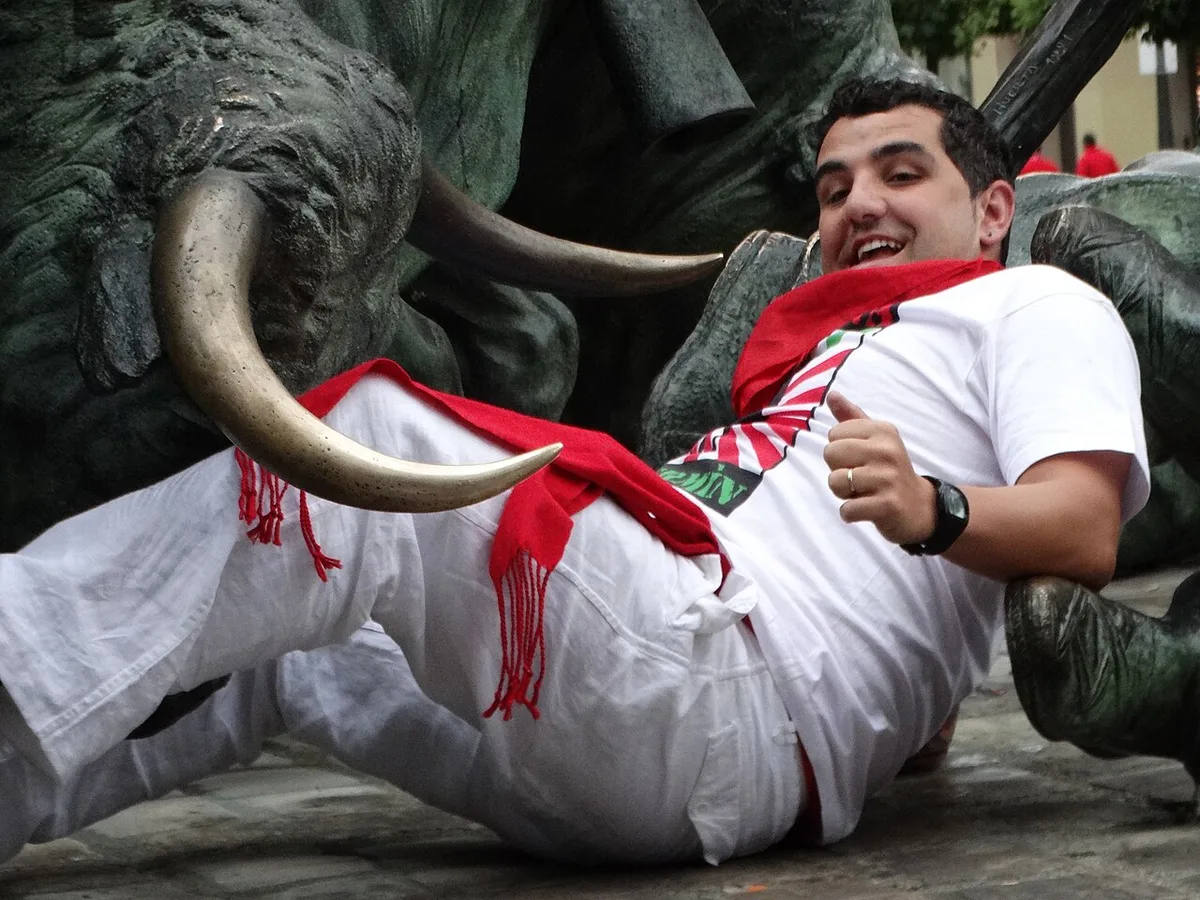
San Fermín's classic outfit is simple: white trousers, a white shirt, a red faja around the waist, and a red pañuelico around the neck. Tradition holds that you tie the scarf only after the Chupinazo fires at noon on 6 July, not before. Vendors set up stalls throughout the old quarter in the days before the festival, selling both the sash and the scarf. Keep the rest of the outfit simple, since the color scheme matters more than the brand or the fit. Seville runs on a different dress code entirely, and its Feria de Abril guide covers the flamenco-dress etiquette expected there.
Where to Stay and How to Get to Pamplona
Rooms in Pamplona routinely book out 6 to 12 months ahead of the festival, so treat accommodation as the first logistics item to lock down, not the last. Camping is not permitted in the city's parks, so most budget travelers look at campsites outside the center or book hostel beds well before July. Some visitors base themselves in San Sebastián instead and commute roughly one hour into Pamplona each day. Renfe trains and ALSA buses both run into Pamplona, and both operators add extra capacity during San Fermín week. Check current timetables before you commit to a plan. Valencia faces a similar crowd-and-logistics squeeze each March, and its Las Fallas guide covers how that city handles it.
Hotel rooms book out 6 to 12 months ahead because Pamplona's population triples on festival weekends. Accommodation that far in advance isn't over-planning—it's the practical minimum to secure any bed at all.
Budgeting for San Fermín
Balcony rentals are the priciest way to watch the encierro, priced per person for the week and booked through licensed rental companies months in advance. Bullring tickets cost less than a balcony seat but still require advance purchase through the ring's official channels. Fence viewing along the barricades is free, though it demands arriving by around 6:00 AM to claim a spot with any sightline. Hotel rates and restaurant prices in Pamplona climb well above the rest of the year during San Fermín week. Book both early, and expect a premium price versus a normal-season visit.
Mistakes to Avoid at San Fermín
A few avoidable mistakes account for most bad San Fermín experiences.
- Wearing new or expensive shoes: wine, sangria, and mud in the streets will ruin them by the second day.
- Trying to run while visibly intoxicated: officials pull impaired runners from the course before it opens.
- Underestimating July heat and crowd density together: plan water breaks between events to avoid dehydration.
- Skipping the whole festival because bulls aren't your thing: the giants parade, peña brass bands, and nightly fireworks fill the days between encierros.
Choosing a Balcony Along the Encierro Route
A balcony’s location matters as much as its height. Before booking, request the exact street address, floor, viewing capacity, and an unobstructed photograph of the sightline.
- Santo Domingo overlooks the steep opening climb, where the bulls remain tightly grouped and move quickly.
- Ayuntamiento offers a broader setting near the Town Hall, but barriers and nearby balconies can restrict views.
- Mercaderes faces the sharp turn into Estafeta, often called Dead Man’s Corner, where bulls can lose their footing.
- Estafeta provides a longer view down the straight, although awnings and signs may block lower-floor balconies.
- Telefónica captures the final approach to the bullring, when runners and bulls may be more widely separated.
Confirm how early guests must arrive because police close access around the route before the 8:00 AM run. Ask whether seating is provided and whether the host remains present. Use an established rental company, obtain written booking terms, and verify the cancellation policy. A higher price does not guarantee a better view, especially from a crowded or recessed balcony.
For trip-planning details, see San Fermin official site and Ayuntamiento de Pamplona.
Frequently Asked Questions
When is the next San Fermín festival?
San Fermín runs 6 to 14 July every year without exception, so the next edition falls in July 2027 on those same fixed dates.
What is the Chupinazo?
The Chupinazo is the opening rocket that launches San Fermín at noon on 6 July from a balcony of the Casa Consistorial. Crowds packed into Plaza Consistorial cheer as the rocket fires, and many tie on their red pañuelico for the first time right after.
How long is the running of the bulls route?
Roughly 848 meters, or about half a mile, separate the Santo Domingo corral from the bullring along the encierro route. A clean run takes about three minutes, though the bulls' pace and the crowd size both affect the exact time.
Do I have to run with the bulls to enjoy San Fermín?
No. Most attendees never enter the course and instead watch from the barricades, a rented balcony, or a bullring seat, while the giants parade, peña brass bands, and nightly fireworks fill the rest of each day.
What should you wear to San Fermín?
Standard dress is white clothing with a red faja around the waist and a red pañuelico around the neck. Tradition says you tie the scarf only after the Chupinazo fires, not before it.
How much does it cost to watch the running of the bulls?
Fence viewing along the barricades is free but requires arriving by around 6:00 AM. A bullring seat costs less than a balcony rental, and balcony spots are the priciest option, booked months ahead through licensed rental companies.