
Last updated July 2026: Spain's festival calendar runs from Cádiz's satirical Carnival in February to Zaragoza's Fiestas del Pilar in October. Timing a trip around these festivals in Spain starts with a handful of fixed dates, not vague seasons. Three events anchor most itineraries: Valencia's fire-and-fireworks Las Fallas, Pamplona's bull-running San Fermín, and Buñol's tomato fight, La Tomatina.
Spain's Big Three Festivals, at a Glance
Three festivals dominate most first-time itineraries, each anchoring a different kind of trip. Valencia brings fire and fireworks. Pamplona pairs a daily bull run with a 24-hour street party. Buñol delivers an hour of tomato-throwing chaos. The table below compares all three before the month-by-month list covers all eighteen festivals in Spain in full.
San Fermín's 24-hour street party centers on the daily encierro, where runners confront bulls and face real injury risk—making this far more than a spectator-friendly celebration.
| Festival | City | Month | Signature Moment |
|---|---|---|---|
| Las Fallas | Valencia | March | Cremà bonfires burn the sculptures |
| San Fermín | Pamplona | July (week of July 7) | Daily encierro bull run |
| La Tomatina | Buñol | August (last Wednesday) | Hour-long tomato fight |
Feria, Fiesta, or Romería: What These Words Mean
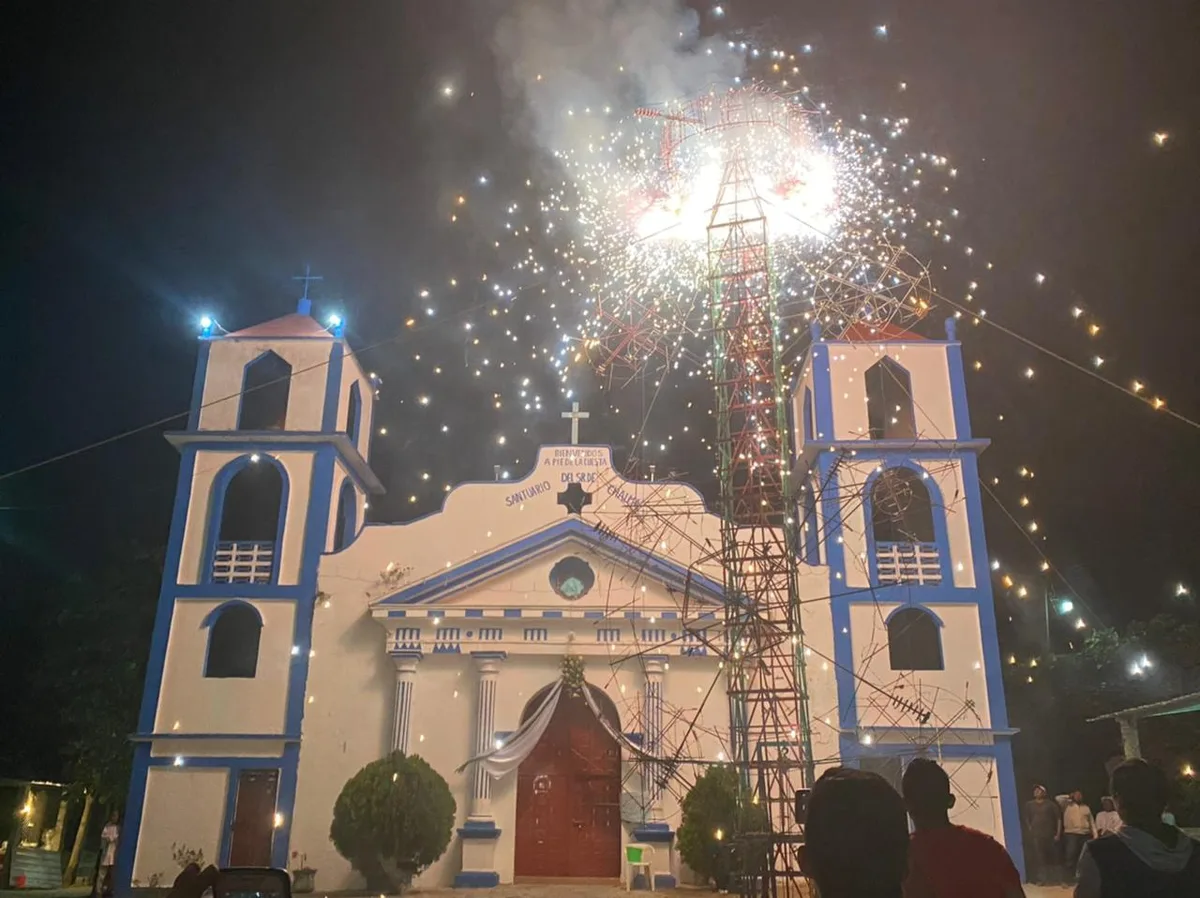
Spanish uses three different words for what English collapses into one: festival. A feria is a fair, historically tied to livestock or trade, that now centers on eating, drinking, and dancing, like Seville's Feria de Abril. A fiesta is the broadest term, covering everything from a neighborhood's patron-saint weekend to a national event like San Fermín. A romería is a pilgrimage, usually on foot or horseback, to a shrine or hermitage, separate from the street-party format of a feria or fiesta. Spain's tourism authority also designates some of these events Fiestas of International Tourist Interest, an official recognition of cultural and touristic scale referenced on many official event pages. Knowing which type of event you're booking matters. A feria usually means reserved tents and a dress code. Open streets and no ticket are the norm for an ordinary fiesta.
Every Spanish Festival, Month by Month
Every major event below is grouped by the month it actually falls in, along with whether the date is fixed or floating.
- Cádiz Carnival (February)
- Cádiz Carnival runs for eleven days ending the eve of Ash Wednesday, so it lands in February or March depending on the year, built around comparsas and chirigotas, costumed groups that perform satirical songs about politics and local news.
- Street performances fill the old town alongside the formal competition stage inside the Gran Teatro Falla.
- Parade routes and the plazas with the loudest chirigota crowds appear in the Cádiz Carnival guide.
- Tenerife Carnival (February)
- Tenerife's Carnival fills Santa Cruz each February on a scale often compared to Rio de Janeiro's celebration, with elaborate costumes and samba-influenced parades.
- The Queen of Carnival gala and the closing Burial of the Sardine mark the festival's two biggest nights.
- Route maps and the gala schedule are covered in the Tenerife Carnival guide.
- Las Fallas (Valencia, March)
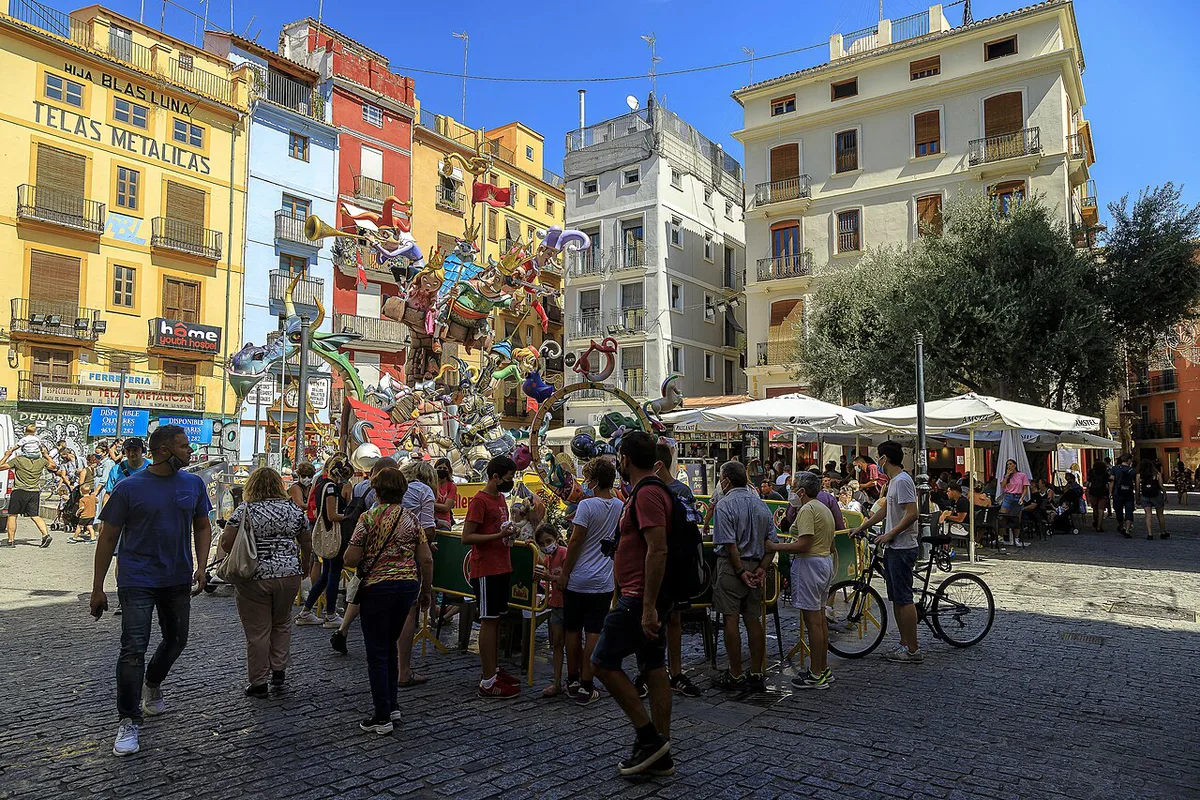
- Las Fallas fills Valencia every March, building toward the cremà, when the city burns its towering falla sculptures on the festival's final night.
- Daily mascletà firecracker displays detonate at midday in the Plaza del Ayuntamiento, building noise and smoke ahead of the fire finale.
- Mascletà viewing spots and neighborhood rivalries are detailed in the Las Fallas guide.
- Semana Santa (Seville, March or April)
- Semana Santa lands on a different date each year, tied to the Christian Easter calendar, in either March or April.
- Seville's hermandades, religious brotherhoods, carry ornate pasos, processional floats, through the streets for a full week before Easter Sunday.
- Brotherhood routes and cathedral timing are mapped in the Semana Santa Seville guide.
- Feria de Abril (Seville, April)
- Feria de Abril follows about two weeks after Easter, turning Seville's Real de la Feria fairground into rows of casetas, tents, for a week of dancing and feasting.
- Sevillanas dancing, sherry, and horse-drawn carriage parades run daily, with women in traditional flamenca dresses across the fairground.
- Which public casetas actually welcome visitors is covered in the Feria de Abril guide.
- Fiesta de San Isidro (Madrid, May)
- Fiesta de San Isidro honors Madrid's patron saint each May with a pilgrimage to the Hermitage of San Isidro alongside picnics and street concerts.
- Locals dance the chotis in traditional dress, turning the religious pilgrimage into a broader celebration of Madrid's culture.
- Bonfires of San Juan (Alicante, June)
- Alicante's Hogueras de San Juan bonfires mark the start of summer toward the end of June, combining bonfires, fireworks, and music across the city.
- The celebration runs for several days, building toward a final night of burning along the beachfront.
- La Patum (Berga, June)
- La Patum fills Berga's streets in June near Corpus Christi, with street parades, theater performances, and fire-and-fireworks games at the center of the program.
- UNESCO has recognized the festival for its cultural heritage, and the timing follows the Corpus Christi calendar rather than a fixed date.
- Haro Wine Battle (La Rioja, June 29)
- Haro's Batalla del Vino happens every year on June 29, a fixed date that doesn't shift with any religious calendar.
- Crowds in white shirts soak each other in red wine using water pistols, buckets, and hoses on the hillside outside town, with no separate spectator area.
- Some access now requires a pre-purchased wristband, similar to La Tomatina's ticket system, so confirm requirements before traveling.
- San Fermín (Pamplona, July)
- San Fermín runs 6–14 July every year in Pamplona, opening with the Chupinazo at noon on the 6th, combining a daily encierro bull run each morning with a street party that continues around the clock.
- Local peñas, social clubs with their own bands and clubhouses, organize much of the daytime program and give the festival its all-day structure.
- Safe viewing spots for the bull run and peña culture are covered in the San Fermín guide.
- International Festival of the Celtic World (Ortigueira, July)
- Ortigueira's Celtic music festival takes over the Galician coast on the second weekend of July, with outdoor concerts spanning folk traditions from Galicia and beyond.
- The natural amphitheater setting on the coast is as much a draw as the lineup for visitors touring Galicia that week.
- Moors and Christians Festival (Villajoyosa, July)
- Villajoyosa's Moors and Christians festival reenacts a historic battle at the end of July, with a beach landing and parades in Moorish and Christian costume.
- The recreated sea landing is the festival's signature moment, drawing crowds to the waterfront to watch it happen.
- La Tomatina (Buñol, August)
- La Tomatina fills Buñol's streets on the last Wednesday of August, when participants throw truckloads of tomatoes at each other for about an hour.
- Past editions have drawn more than 20,000 participants, and organizers cap attendance with a pre-purchased ticket requirement, unlike most festivals on this list, which stay free.
- Ticket steps and packing tips are covered in the La Tomatina guide.
- Viking Pilgrimage (Catoira, August)
- Catoira's Viking Pilgrimage reenacts an 11th-century raid on the first Sunday in August, with replica Viking ships landing on the beach before a costumed procession into town.
- The event doubles as a regional celebration of Galicia's Viking-era history, drawing crowds along the riverbank to watch the ships arrive.
- Semana Grande / Aste Nagusia (Basque Country, August)
- Semana Grande, Aste Nagusia in Basque, honors the Virgen de Begoña each August with a week of folk music, dancing, giant puppet parades, and children's workshops.
- Basque culture runs through the entire week, from traditional competitions to evening concerts, making it one of the region's most anticipated dates.
- La Mercè (Barcelona, September)
- La Mercè takes over Barcelona each September, honoring the city's patron saint with street parties, giant puppets, live music, and fireworks across plazas including Plaça de Catalunya.
- Castellers, teams that build human towers, perform in Plaça Sant Jaume, while the correfoc fire run sends costumed devils and sparks through the crowd.
- Casteller squares and safe correfoc viewing distance are covered in the La Mercè guide.
- Cascamorras (Guadix and Baza, September)
- Cascamorras starts in Guadix in early September, when a costumed figure runs to Baza and back while crowds chase him down and cover him in black paint.
- The paint-covered chase mixes rivalry between the two towns with a shared local legend, and by the end most of the crowd following the run is covered too.
- Fiestas del Pilar (Zaragoza, October)
- Fiestas del Pilar fills Zaragoza in October around the Ofrenda de Flores, a mass flower offering to the Virgin of the Pilar built up outside the basilica.
- A giants-and-bigheads parade, gigantes y cabezudos, runs alongside the flower offering and is one of the festival's most photographed traditions.
- Ofrenda route timing and parade vantage points are covered in the Fiestas del Pilar guide.
Which Festival Fits Your Travel Style
Not every festival suits every traveler, and matching the event to your interests avoids a wasted trip.
- Families
- La Mercè keeps its street parties, giant puppets, and fireworks accessible to kids, with daytime programming that runs well before the evening correfoc begins.
- Party Seekers
- La Tomatina delivers an hour of tomato-throwing chaos.
- San Fermín runs a 24-hour street party around its daily bull runs, and Benicàssim's summer concerts are another option if music matters more than tradition.
- Culture and History Seekers
- Semana Santa's processions, led by centuries-old brotherhoods carrying ornate pasos, draw travelers who want tradition over spectacle.
- Wine and Food Fans
- Haro's Batalla del Vino turns a Rioja wine town into a red-soaked water fight, and Feria de Abril pairs sherry with flamenco inside Seville's casetas.
- Music and Folk Culture Fans
- Ortigueira's Celtic festival and the Basque Country's Semana Grande both center on live folk music and regional tradition over spectacle.
Booking Windows, Trains, and Tickets
Accommodation is the first thing to book for any of Spain's largest festivals, not the last. Hotels near Pamplona for San Fermín and in Seville during Semana Santa often sell out six to twelve months ahead of the date, a gap most travelers underestimate. Nightly rates during these peak windows often climb three to five times normal levels, even when rooms are still available. Renfe's AVE high-speed rail line connects Madrid, Barcelona, Valencia, and Seville directly to several festival cities, cutting travel time compared to driving. Alsa buses reach smaller festival towns, including Haro and Buñol, that don't sit on a direct AVE route. Renting a car adds risk rather than convenience during a city-center festival, since organizers close central streets to traffic and normal parking disappears for the event's duration. Ticket requirements vary by festival. La Tomatina and the Haro Wine Battle both require a pre-purchased wristband or ticket. Most street festivals, including Las Fallas, San Fermín, and La Mercè, stay free to attend.
San Fermín and Semana Santa require advance hotel booking six to twelve months ahead because these festivals fall during July and August, Spain's busiest festival months by volume.
| Festival | Access Type | When to Book |
|---|---|---|
| Las Fallas | Free, open streets | Hotels several months ahead |
| Semana Santa Seville | Free, open streets | Hotels 6-12 months ahead |
| Feria de Abril | Free fairground; most casetas private | Hotels several months ahead |
| San Fermín | Free streets; peña events private | Hotels 6-12 months ahead |
| La Tomatina | Ticketed, capped attendance | Ticket plus hotel months ahead |
| Haro Wine Battle | Wristband/ticket required for some access | Book lodging early; town is small |
| La Mercè | Free, open streets | Standard advance booking |
| Fiestas del Pilar | Free, open streets | Standard advance booking |
Mistakes First-Time Visitors Make
A few planning mistakes come up again and again around Spain's biggest festivals.
- Assuming Every Caseta Is Open
- Most casetas at Feria de Abril belong to families, clubs, or businesses.
- They turn away walk-ins, so budget time to find the handful of public tents instead.
- Underestimating the Correfoc or the Bull Run
- Barcelona's correfoc sends costumed devils through the crowd with lit fireworks, and Pamplona's encierro puts runners directly in the bulls' path.
- Both carry real injury risk, so watch from behind barriers unless you understand exactly what participating involves.
- Skipping the Change of Clothes at La Tomatina
- Tomato acid and juice soak through everything within minutes.
- Pack a bag with dry clothes, shoes you're willing to throw away, and goggles to protect your eyes.
- Booking a Rental Car for a City-Center Festival
- Street closures during Las Fallas, San Fermín, and Feria de Abril block the exact neighborhoods where festival hotels sit.
- Trains and buses reach these city centers directly, so a car often just adds a parking problem.
- Waiting Too Long to Book Lodging
- Rooms near San Fermín and Seville's Semana Santa can sell out six to twelve months ahead.
- Waiting until a few weeks before the trip usually means a longer commute in from outside the city center.
Festival Etiquette and What to Wear
Festival clothing in Spain often signals participation, but visitors should follow local customs without treating traditional dress as a costume. Practical protection also matters at events involving fire, crowds, wine, or tomatoes.
- San Fermín: Wear white clothing with a red neckerchief and sash. Never enter the encierro route after barriers close, and follow police instructions immediately.
- Semana Santa: Keep quiet as a paso approaches, especially during solemn nighttime processions. Do not cross between the float, musicians, and penitents.
- Feria de Abril: A traje de flamenca is optional for visitors. Smart clothing is appropriate, but access to private casetas still requires an invitation.
- La Mercè: For the correfoc, wear cotton clothing, closed shoes, and a hat that covers your hair. Avoid synthetic fabrics, which can melt near sparks.
- La Tomatina and Haro: Use old clothes and secure footwear. Goggles help at Buñol, while white clothing is traditional at Haro.
Ask before photographing religious participants at close range. At crowded events, keep doorways, procession routes, and emergency lanes clear.
For trip-planning details, see Spain's official tourism fiesta directory.
Further reading: Spain on Wikivoyage · Spain on Wikipedia
Frequently Asked Questions
When is the best time to see festivals in Spain?
Late June through September has the highest concentration of major events, with San Fermín in July, La Tomatina in August, and La Mercè in September. March and April carry two of the biggest events too, Las Fallas and Semana Santa.
How far ahead should you book hotels for San Fermín or Semana Santa?
Six to twelve months ahead is standard for hotels near Pamplona during San Fermín and in Seville during Holy Week. Both events draw far more visitors than the cities' normal hotel capacity can absorb.
Do you need a ticket for La Tomatina?
Yes. Organizers cap attendance and require a pre-purchased ticket, unlike most street festivals in Spain, which stay free and open to anyone.
What are peñas at San Fermín?
Peñas are Pamplona's social clubs, each with its own band and clubhouse. They organize much of the daytime programming and give San Fermín its all-day party structure.
Is Semana Santa the same across Spain?
No. Seville and Málaga stage large-scale processions with brotherhoods carrying pasos through packed streets. Other regions, including parts of Catalonia, keep the week more local and family-focused.
Which Spanish festival is the messiest?
La Tomatina and the Haro Wine Battle both involve a serious change of clothes afterward. Tomatina coats participants in tomato pulp, while Haro's Batalla del Vino leaves everyone doused in red wine.
Every Spanish Festival We Have Verified
Each event page carries its dates, the official source behind them, and the day we last checked.