Last updated July 2026. Nit de Sant Joan in Barcelona falls on the night of June 23, when bonfires, firecrackers, and beach parties take over until sunrise. Expect roughly 60,000 to 70,000 people spread across the city beaches from Barceloneta to Llevant, plus dozens of neighborhood verbenas and a public holiday the next day. This guide breaks down where to go, what to eat, and how to get home safely once the fireworks smoke clears.
What Is Nit de Sant Joan in Barcelona?
Nit de Sant Joan marks the summer solstice with a night of fire, food, and noise across Catalonia. Its roots predate Christianity, tracing back to pagan solstice rites that used bonfires to ward off evil spirits and welcome longer days. Catholic tradition later attached the date to the eve of St. John the Baptist's feast day, observed on June 24. That overlap causes real confusion: June 23 is the celebration night, and June 24 is the public holiday when most shops and restaurants close. Barcelona has no single central party for the night; every neighborhood lights its own bonfire and runs its own program at the same time, from communal street dinners known as sopars populars to organized fireworks near the sea.
The Three Ways to Spend Sant Joan Night
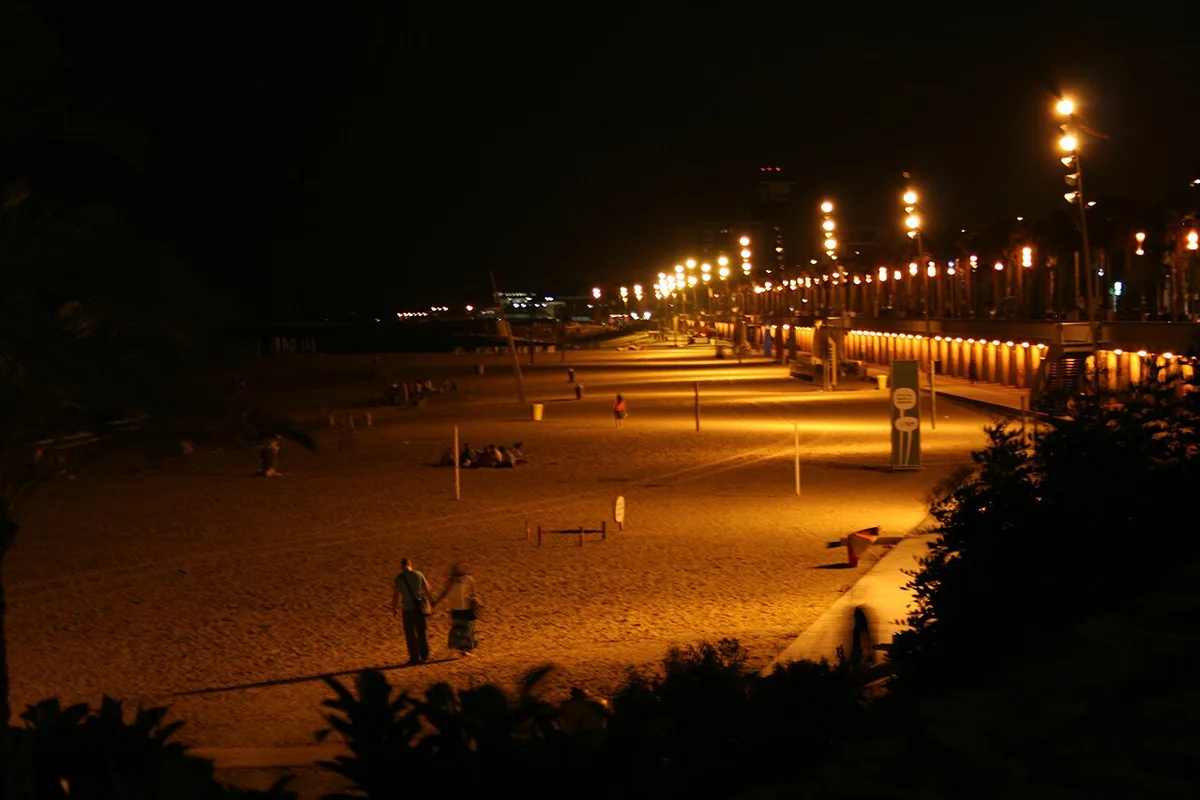
Barcelona splits into three distinct scenes on Sant Joan night, and picking the right one matters more than picking the right neighborhood. Each option trades noise, crowd size, and authenticity differently, so match the plan to what you want the night to feel like.
| Option | Best For | Crowd Size | Trade-off |
|---|---|---|---|
| The Beach (Barceloneta, Bogatell, Mar Bella) | Groups and travelers wanting the classic scene | 60,000-70,000 across city beaches | Crowded; hard to leave before sunrise |
| Neighborhood Verbena (Sant Antoni, Sant Andreu, Gràcia) | Families and first-time visitors | Block-party scale, smaller crowds | Arrive early to claim table space |
| Panoramic Viewpoint (Montjuïc, Tibidabo) | Photographers and noise-sensitive visitors | Light crowds | Removed from street-level energy |
- Sant Antoni: a neighborhood-run bonfire and live music at the junction of Carrer de Floridablanca and Carrer d'Entença.
- Sant Andreu: a central bonfire and local bands around Jardins d'Elx and Carrer de Garcilaso, with a strong village feel.
- Montjuïc and Tibidabo: elevated views over the bonfires and fireworks; bring a layer, since the breeze picks up after midnight.
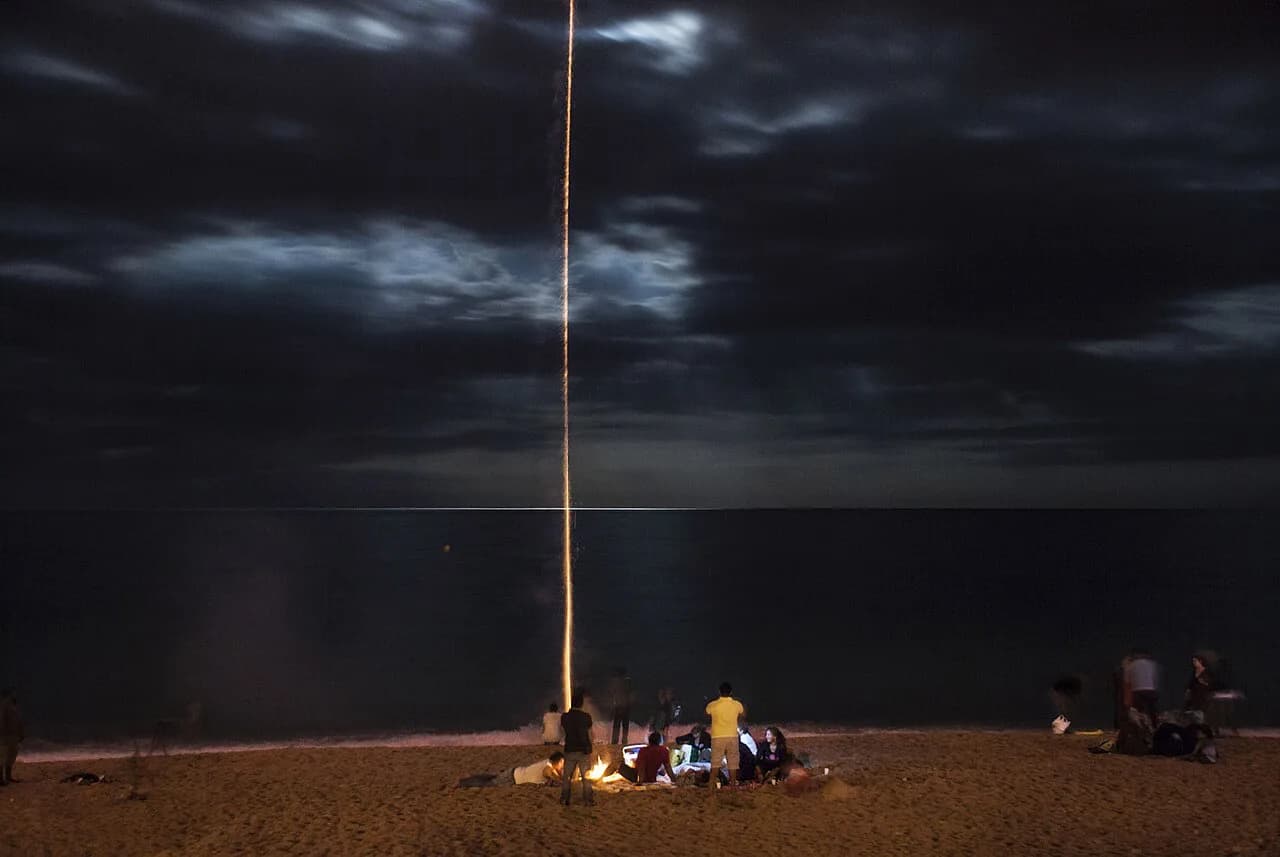
- Barceloneta: arrive before dark to claim beach space with a picnic, since the sand fills in fast after dinner.
The Flama del Canigó and Barcelona's Fire Traditions
The night's official start is the Flama del Canigó, a flame carried down by relay runners from the Canigó summit in the Pyrenees. It reaches Plaça Sant Jaume around 18:30 on June 23, met by the city's Eagle and Giants figures and a performance of Muntanyes del Canigó. Representatives from each district then carry torches home to light their neighborhood bonfires. As Barcelona's official culture portal notes, 18th-century laws already tried to curb the spread of bonfires and fireworks in the city. That shows how long this tradition has run in Barcelona. The relay itself dates to 1966, and the flame has reached Barcelona since the 1970s. Some neighborhoods pair the bonfire lighting with a Correfoc, a fire-run procession of costumed devils and dragons that sends sparks into the crowd; keep a distance and wear closed shoes if joining one.
The Flama relay dates only to 1966, yet the fire traditions behind it trace to pagan solstice rites predating Christianity—a recent framework for ancient customs.
Coca de Sant Joan and Cava: What to Eat and Drink
Two things anchor every Sant Joan table: coca de Sant Joan and cava. Coca is a flat, sweet bread topped with candied fruit and pine nuts, or filled with custard or cream; some versions add crackling for a savory edge. One traditional recipe calls for a precise shape, twice as long as it is wide. Buy coca on the morning of June 23 from a neighborhood pastisseria rather than a supermarket, since the better bakeries sell out by afternoon. Cava, Catalonia's traditional-method sparkling wine, is the default drink for the night. Pack bottles in ice or a cooler bag; warm cava on a late-night beach counts as a rookie mistake among locals. Some restaurants run special Sant Joan dinner menus on June 23, pairing Catalan seafood or grilled meats with coca for dessert. Book at least two weeks ahead, since these menus sell out fast.
Firecrackers and Fireworks: What to Actually Expect
Sant Joan is not one organized fireworks show; it is thousands of small ones happening at once. Most of the noise on Sant Joan night comes from ordinary residents lighting their own firecrackers on balconies, streets, and beaches, not from a curated municipal display. Official bonfires and organized firework moments happen too, often timed to the early evening and around midnight. Expect the noise to start hours before midnight and continue well past 02:00, especially in residential streets. This is the loudest night of the year for pets; keep animals indoors with windows closed, and pack earplugs if sensitive to noise. Anyone uneasy around firecrackers should stick to a rooftop, a terrace, or one of the panoramic viewpoints instead of the crowded streets.
Getting Around and Staying Safe on Sant Joan Night
The Barcelona Metro typically runs all night on June 23. Confirm the exact 2026 schedule on TMB's site closer to the date, since holiday timetables can shift. Taxis get scarce and expensive after midnight, particularly near the beaches, so take the metro or plan a short walk instead. Beach bonfires, open flames, and smoking are not allowed directly on the sand; official bonfires burn nearby instead, and locals pack out whatever they bring in. Crowded beaches and squares are prime pickpocket territory, so keep valuables zipped and phones out of back pockets. Anyone swimming at midnight or later should stay near others, since visibility drops fast once crowds and fireworks smoke thicken. For the current bonfire map and any late changes, check Barcelona's tourism board.
Noise continues well past 02:00, though the metro runs all night, giving late-night revelers transport options throughout the celebrations even as taxis become scarce after midnight.
The Day After: June 24 in Barcelona
June 24 is a public holiday in Catalonia, and most shops and many restaurants close for the day. Locals treat it as a recovery day after an all-night party, so expect a slower city with quieter streets by mid-morning. Beaches stay open and popular for anyone who wants a swim to recover, though cleanup crews are often still clearing bonfire ash and firework debris. Plan grocery runs and other errands for June 22 or 23 instead of the holiday itself.
Beyond Barcelona: Other Catalan Fire Festivals Worth Planning Around
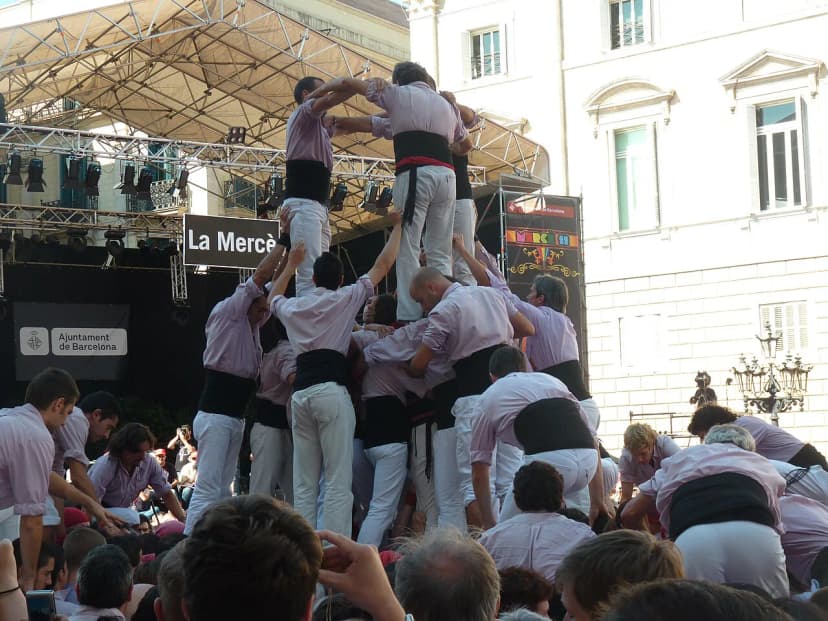
Sant Joan is Barcelona's main fire night, but it is not Catalonia's only fire tradition. For a different, more theatrical take on Catalan fire culture, look at La Patum de Berga, a separate festival built around processions of fire figures. Confirm its dates and program on La Patum's official site before planning a trip, since it runs on its own calendar, not June 23. Catalonia's other signature regional festival trades fire for human towers: Tarragona's castells competition gathers teams from across the region to build towers several stories high. Check the competition's official site for the current schedule before booking travel around it.
Sitges or the Pyrenees: Two Alternative Sant Joan Plans
Sitges offers a coastal alternative to Barcelona’s largest beach crowds. Celebrations concentrate around the seafront and beaches beside Passeig de la Ribera. Reach Sitges on the R2 Sud train from Barcelona-Sants or Passeig de Gràcia. Check the special holiday timetable before leaving, because Rodalies trains do not necessarily operate all night. Booking accommodation is safer than relying on a return train after midnight.
For a more traditional fire ritual, consider the summer-solstice falles of the Catalan Pyrenees. In villages such as Isil, participants carry burning torches down the mountainside before lighting a communal bonfire. These torch descents belong to the UNESCO-listed summer fire festivals of the Pyrenees.
- Choose Sitges for beaches, nightlife, and straightforward rail access.
- Choose Isil for a ceremonial mountain festival with limited visitor infrastructure.
- Reserve Pyrenees accommodation early and confirm road restrictions with the local council.
Neither option works well as a casual late-night detour. Plan transport and sleeping arrangements before June 23.
Frequently Asked Questions
Is Nit de Sant Joan in Barcelona free?
Yes. Every bonfire, verbena, and beach gathering is free and open to the public, with no tickets or entry fee required.
What time do the bonfires and parties start?
Most neighborhood bonfires and verbenas start after 21:00, with crowds and noise building steadily until well past midnight.
Can you bring your own alcohol to the beach for Sant Joan?
Bringing cava or other drinks to the beach is common practice. Glass containers are technically restricted on Barcelona's sand, so transfer cava to a plastic bottle or thermos before heading down.
When does the Flama del Canigó arrive in Barcelona?
The flame reaches Plaça Sant Jaume around 18:30 on June 23. It is received there before being carried out to light neighborhood bonfires across the city.
Does the Barcelona Metro run all night during Sant Joan?
The metro typically runs all night on June 23, though it is worth checking TMB's schedule for the exact 2026 timetable closer to the event.
What stays closed on June 24 in Barcelona?
June 24 is a public holiday in Catalonia, so most shops and many restaurants close. Plan groceries and other errands for June 22 or 23 instead.