Last updated July 2026. Festa Major de Gràcia Barcelona fills roughly twenty city blocks with paper-and-recycled-material street art every August 15 to 21, when neighborhood committees spend months preparing installations for a decorating competition. Expect free concerts, human towers at Plaça de la Vila de Gràcia, and a fire run on the closing night, all inside a district that keeps functioning as a residential neighborhood around the celebration.
The Essence of Festa Major de Gràcia
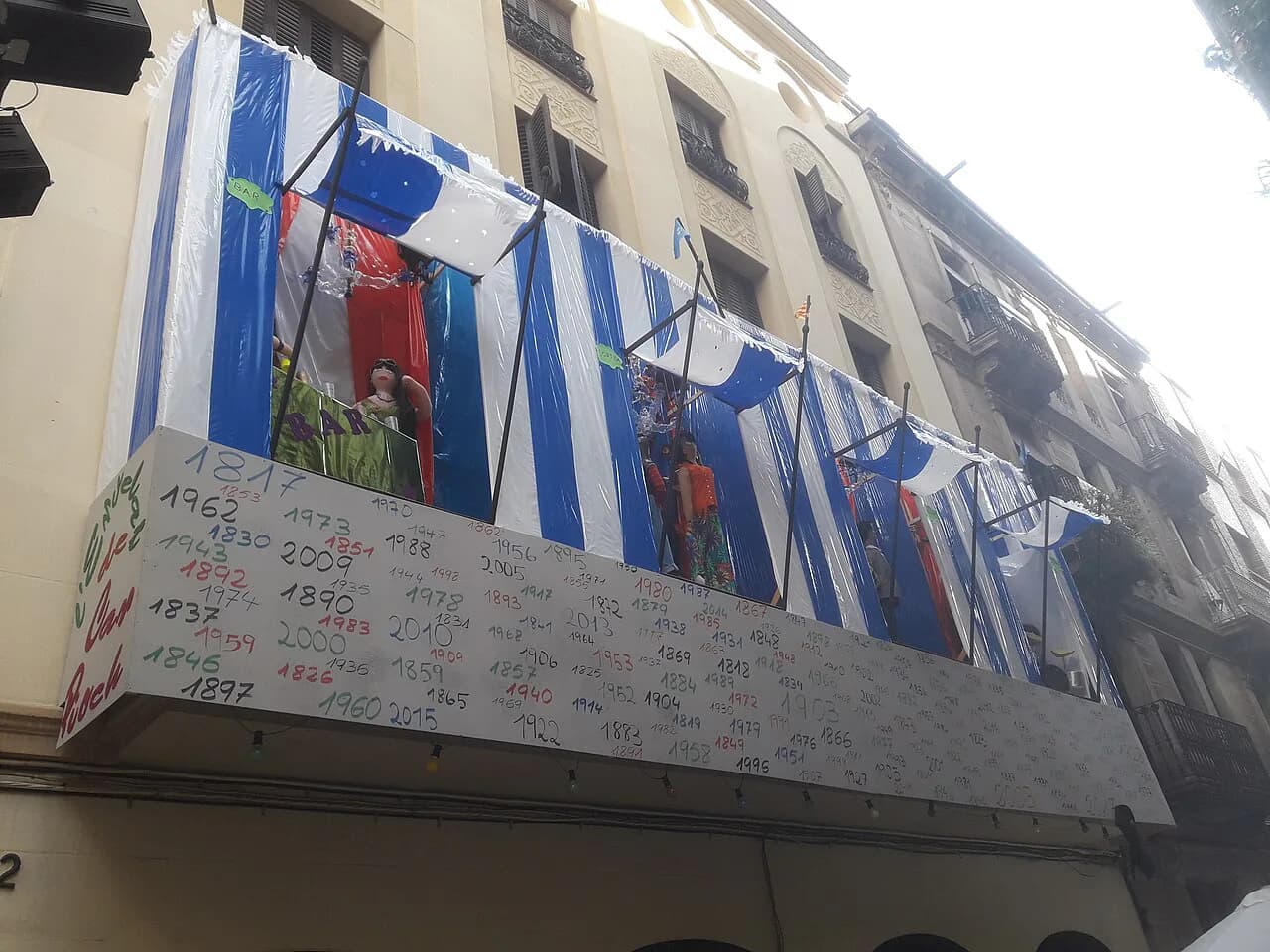
Festa Major de Gràcia began as a small-scale village celebration and now ranks among Barcelona's most recognized neighborhood festivals. Written records trace it to 1817, when the event coincided with the Sant Isidre feast day on May 15 and honored the patron saint of agriculture in the then-independent village of Vila de Gràcia. Economic shifts moved much of the population from farming into trades and small manufacturing. Organizers eventually relocated the celebration to its current August 15-21 window, where it has stayed for well over a century. Its centerpiece is a street-decorating competition: each participating street or square forms its own volunteer committee, called a comissió, and works in secrecy for months so rival streets cannot borrow ideas. Committees build largely from recycled materials, covering entire blocks in paper, cardboard, and reused fabric before revealing everything just as the festival opens. Carrer de Verdi, home to the neighborhood's independent cinema, is one of the streets that participates most consistently and draws heavy foot traffic each year. The foundation also runs parallel contests beyond the street competition: decorated balconies, doorways, and storefronts; a photography contest; a poster and graphic-image contest for the following year's official artwork; and a literary competition open to the wider public. This year's poster, illustrated by Pol Lupiáñez Ortega, was unveiled at a public presentation ahead of the festival. Compared with religious processions such as Semana Santa in Málaga, Gràcia's festival is entirely secular and organized street by street rather than by the church calendar.
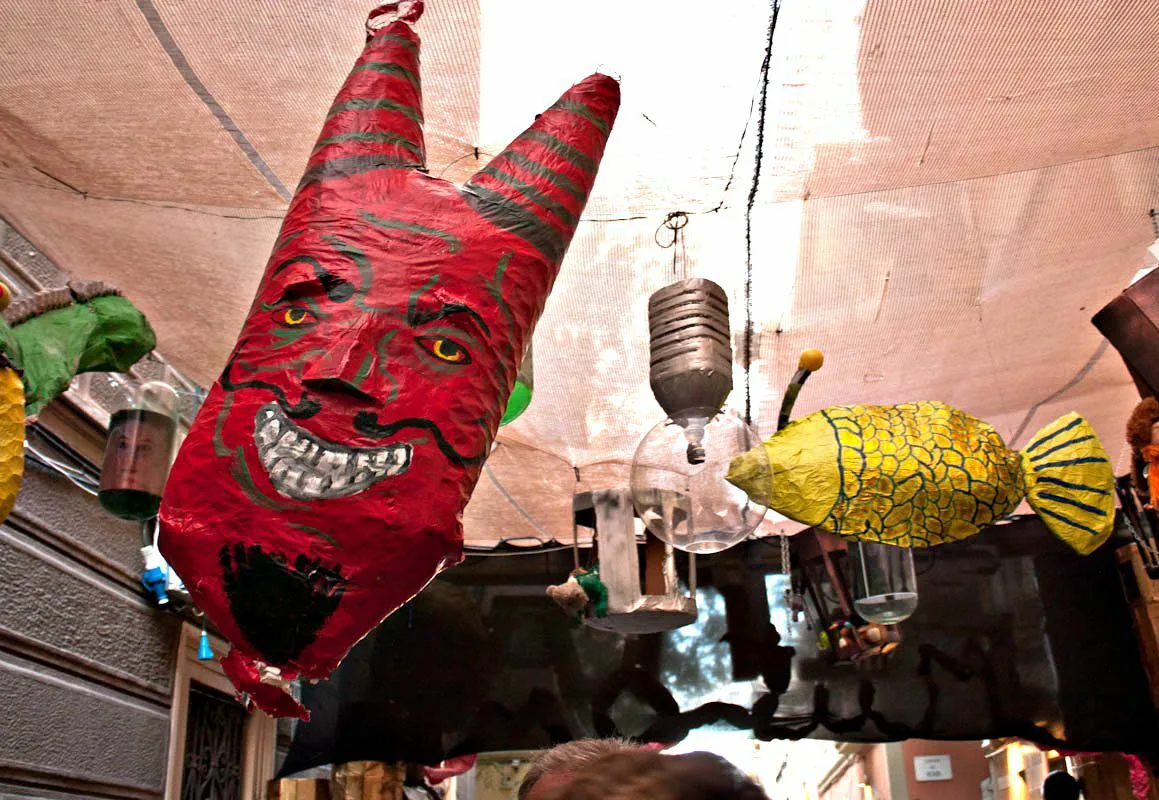
Festa Major de Gràcia Barcelona: Dates, Metro Stops, and Getting There
The festival runs every year from August 15 to August 21, a fixed one-week window that does not shift with the calendar. All activity centers on the Gràcia district, with the largest crowds converging on Plaça de la Vila de Gràcia, Plaça del Sol, and Plaça del Diamant. Two metro stations serve the district directly, and each comes with a tradeoff. Avoid exiting at Fontana between 8pm and midnight on August 15 and 16, when the platform and surrounding streets reach capacity. During peak hours, several of the busiest decorated streets enforce one-way pedestrian flow to keep foot traffic moving; follow posted signage or steward direction rather than walking against the current. Organizers release the official street map and program each year, typically as a downloadable PDF from festamajordegracia.cat in late July. Checking that map before arriving is the fastest way to decide which of the 2026 edition's 23 competing streets and squares to prioritize on a first visit.
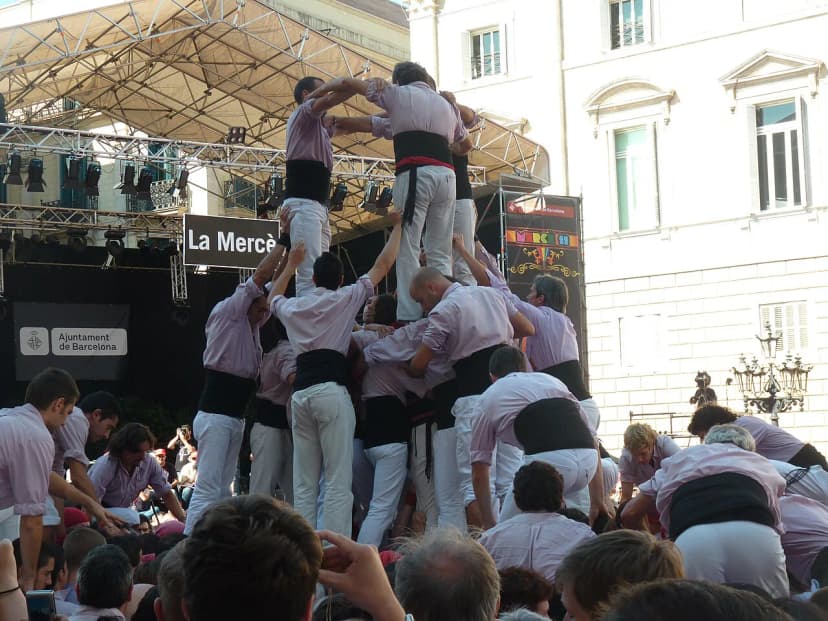
Fontana metro reaches capacity between 8pm and midnight on August 15 and 16, when castellers most often perform at nearby Plaça de la Vila de Gràcia; Joanic metro provides a quieter alternative.
- Metro Fontana (L3, green line) sits closest to the main squares but gets severely congested on peak nights.
- Metro Joanic (L4, yellow line) offers a quieter approach with a short walk into the decorated streets.
- Bus routes 22, 24, 39, 114, 116, and V17 also stop within the festival zone.
- Walking in from Passeig de Gràcia or Diagonal avoids station crowding and takes roughly 20 minutes on foot.
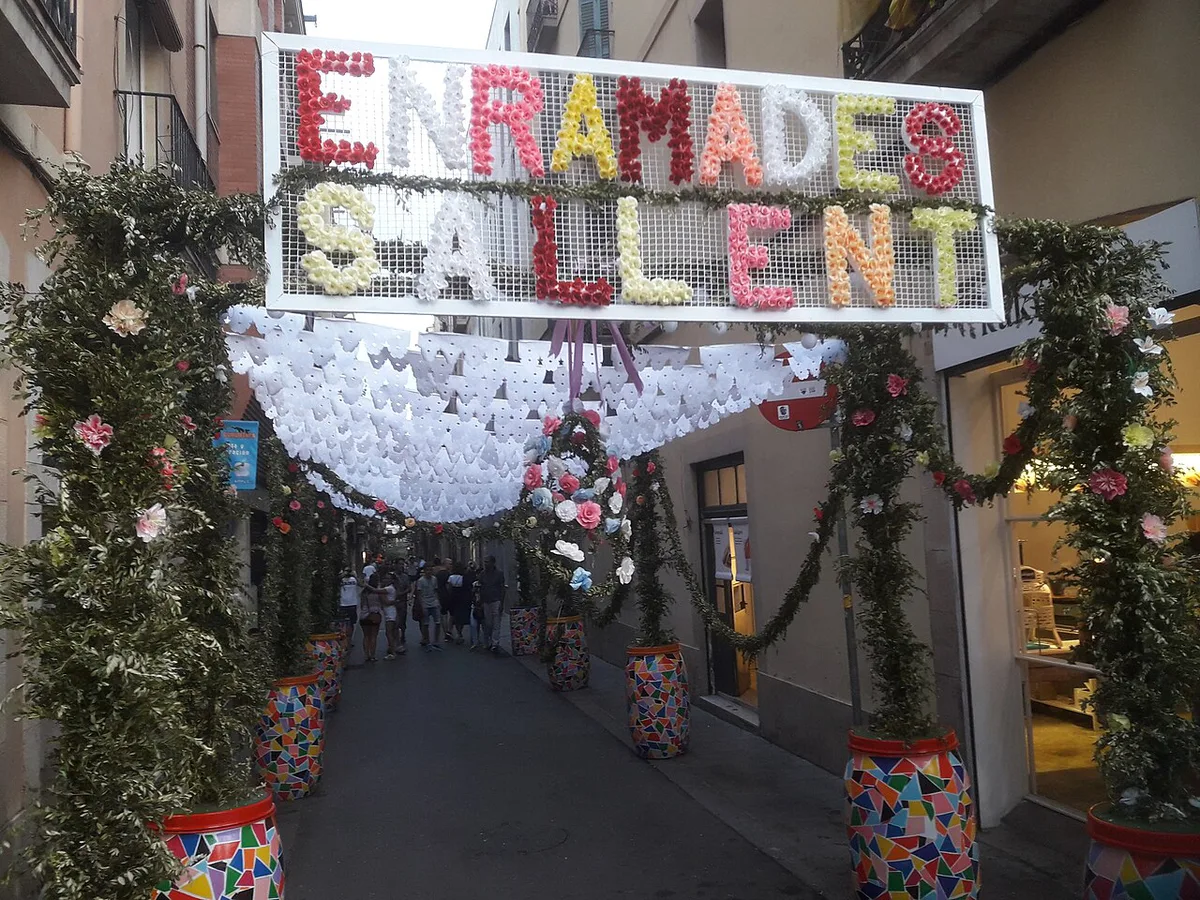
Top Cultural Highlights: Castellers, Correfoc, and Gegants
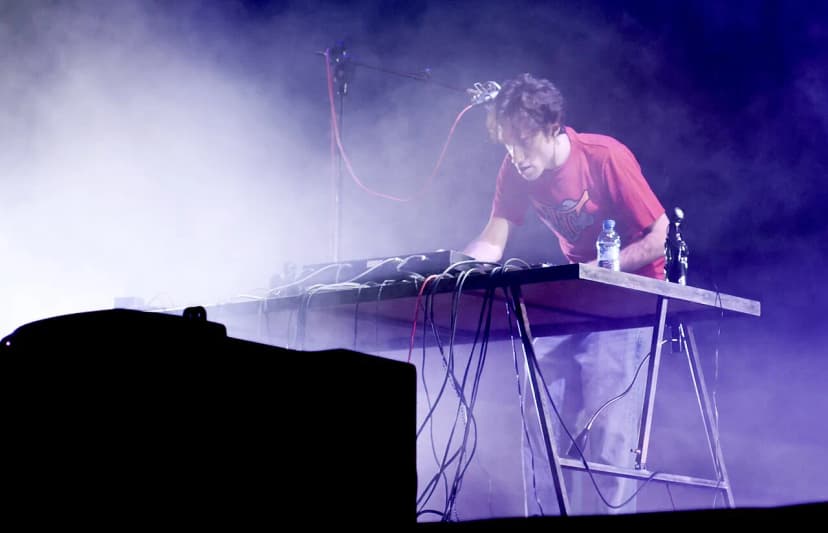
Several set-piece traditions anchor the week beyond the decorated streets themselves. The Cercavila de Cultura Popular opens the festival on August 15, starting at 6pm at the junction of Carrer de Santa Àgata and Gran de Gràcia and finishing at Plaça de la Vila de Gràcia. Giants, known as gegants, parade alongside capgrossos (big-heads), dragons, stick dancers, and musicians; Gràcia's version includes a pair of giants representing the sun and the moon. Castellers build human towers at Plaça de la Vila de Gràcia most evenings around 8pm. The main Diada Castellera performance typically falls on August 19, when visiting teams join the local group. The Correfoc, or fire run, closes the festival on the night of August 21, moving from Plaça Trilla to Plaça de la Vila de Gràcia between roughly 9:30pm and 11pm. Devil-costumed performers set off showers of sparks as they move through the crowd near the route, so long sleeves in cotton or another natural fiber are the safer clothing choice. A calmer correfoc infantil for families runs earlier the same evening, around 6:30pm at Plaça del Diamant, preceded by a drum parade around 8pm. Daytime hours bring Havaneres, traditional sea-shanty singalongs often paired with cremat, a flaming rum-and-coffee drink. Nighttime shifts toward live bands and DJ sets on stages in Plaça del Sol and other squares. Travelers drawn to fire traditions elsewhere in Spain can compare notes with Alicante's Hogueras de San Juan. A different parade-and-fire hybrid appears each year at Alcoy's Moors and Christians festival.
Day vs Night: Planning Your Visit by Priority
Gràcia during the festival splits into two distinct experiences, and choosing when to visit matters as much as choosing which day. Families tend to do best in the morning hours, when the correfoc infantil and foam-party events run without evening-level density. Foam parties, another family fixture, typically run in early evening before the concert stages get loud. Photographers get the clearest shots of decorated streets before 10am. Pedestrian traffic fills the narrow lanes by early afternoon, crowding out compositions. Several installations also use lighting effects only visible after dark, so a single visit rarely captures everything a street offers. Anyone prioritizing the concert scene should treat August 17 through 20 as the practical sweet spot. The first two nights draw the largest crowds, and August 21 empties out early once the Correfoc route closes to general foot traffic.
| Aspect | Daytime (roughly 10am-6pm) | Nighttime (8pm to 2am weekdays, 3:30am weekends) |
|---|---|---|
| Crowds | Lighter, easier to move between streets | Heaviest on August 15-16, near gridlock in places |
| Noise | Low to moderate ambient chatter | High, amplified music near the stage squares |
| Best activity | Photographing decorated streets, Havaneres singalongs | Castellers, Correfoc, live concerts and DJ sets |
| Heat | Direct sun, typically warm to hot for mid-August | Cooler and more comfortable for walking |
Respectful Visiting: Defensem la Festa Major de Gràcia
Gràcia remains a residential district for the other 51 weeks of the year, and the foundation's own Defensem la Festa Major de Gràcia campaign, which translates roughly to 'defend the Festa Major de Gràcia,' addresses friction between residents and rising visitor volume. Noise complaints and overcrowding on narrow streets are the most common flashpoints, especially around the first two nights. A few concrete habits reduce that impact. Some festival events, including the committee dinners held on each street, are reserved for residents and comissió members rather than the general public; respecting that boundary is part of visiting well.
- Do not touch, lean on, or pull at the decorations; committees spend months of volunteer labor building them from recycled materials.
- Buy drinks and food from the street commission stalls instead of bringing in supermarket alcohol, since stall sales fund next year's decorations.
- Keep voices down after midnight on purely residential blocks away from the main squares.
- Pick two or three squares for one night rather than attempting all 20-plus competing streets at once.
Practical Tips and Mistakes to Avoid
A handful of recurring mistakes shape most negative feedback about the festival. Open-toed shoes are a genuine hazard during the Correfoc, when sparks and embers land on the pavement throughout the route. Treating the entire event as cost-free is another miscalculation. Entry and most concerts carry no charge, but food, drinks, and any seated viewing spots are paid extras sold directly by the street commissions. Cash still moves faster than cards at those small stalls. Downloading the official Festa Major de Gràcia app before arriving resolves most schedule confusion, since street-level timing can shift by an hour or more with little public notice. The same app also lets visitors vote for their favorite decorated street, part of the public half of the judging process. Córdoba runs a comparable decorated-space competition at a household rather than a street scale; see Córdoba's patio festival for how that judging format differs. Travelers assembling a wider festival calendar can also look at Málaga's annual fair for contrast in scale. Madrid's San Isidro festival offers another format entirely, built around a different patron-saint tradition. For something further from a street party, Haro's wine battle represents a different regional tradition entirely. The Elx mystery play is another, rooted in medieval religious theater rather than street competition.
The Correfoc between 9:30pm and 11pm on August 21 features sparks and embers throughout the route; wear closed shoes and long cotton sleeves for safe, comfortable viewing.
How to Find Workshops and Street-Level Events
The headline concerts and parades are only part of the festival program. Each participating street commission also schedules workshops, communal meals, children’s activities, dances, and small performances.
Download the official Festa Major de Gràcia app and check it each morning. Filters help narrow events by date, location, and activity type. Schedule changes may appear there before they reach printed notices.
The printed program, known as the Llibret, is another useful planning tool. Look for copies at festival information points or ask a participating commission stall. It is especially helpful when mobile coverage slows in crowded streets.
- Search by individual streets, including Carrer de Verdi, rather than viewing only major squares.
- Check noticeboards beside decorated-street entrances for additions and last-minute timing changes.
- Confirm whether an activity is public before joining. Some committee dinners and neighborhood gatherings are reserved for residents or members.
Smaller daytime events often provide a calmer view of local festival culture than Plaça del Sol’s late-night concerts. Build a route around two nearby streets instead of crossing Gràcia repeatedly.
For trip-planning details, see Festa Major de Gracia official source and Barcelona / regional tourism authority.
Frequently Asked Questions
When is Festa Major de Gràcia in 2026?
Festa Major de Gràcia runs from August 15 to August 21, 2026, the same fixed dates the festival keeps every year. Check festamajordegracia.cat in late July for the confirmed street list and hour-by-hour program before finalizing plans.
Is Festa Major de Gràcia free to attend?
Entry to every decorated street and most concerts costs nothing. Food, drinks, and seating at some stages are paid extras sold directly by the street commissions running each block.
What is the best way to reach Gràcia during the festival?
Metro Joanic (L4) tends to be calmer than Metro Fontana (L3), which gets crowded near the main squares on peak nights. Walking in from Passeig de Gràcia or Diagonal, roughly 20 minutes on foot, avoids station congestion entirely.
Is the Correfoc safe to watch?
Watching from a slight distance, in long sleeves made of cotton or another natural fiber, is standard advice for the Correfoc route. Families with young children can instead attend the shorter correfoc infantil at Plaça del Diamant, which runs earlier and at lower intensity.
Which nights have smaller crowds?
August 17 through 20 are calmer than the opening weekend, since August 15 and 16 draw the heaviest attendance. August 21 also thins out early once the Correfoc closes the main route to general foot traffic.
Are there other Spanish festivals with a similar decorating tradition?
Córdoba's patio festival applies the same idea at a household scale rather than a street scale; see Córdoba's patio festival for details. Pilgrimage-style events such as the Romería del Rocío follow an entirely different, religious format rather than a street competition.