
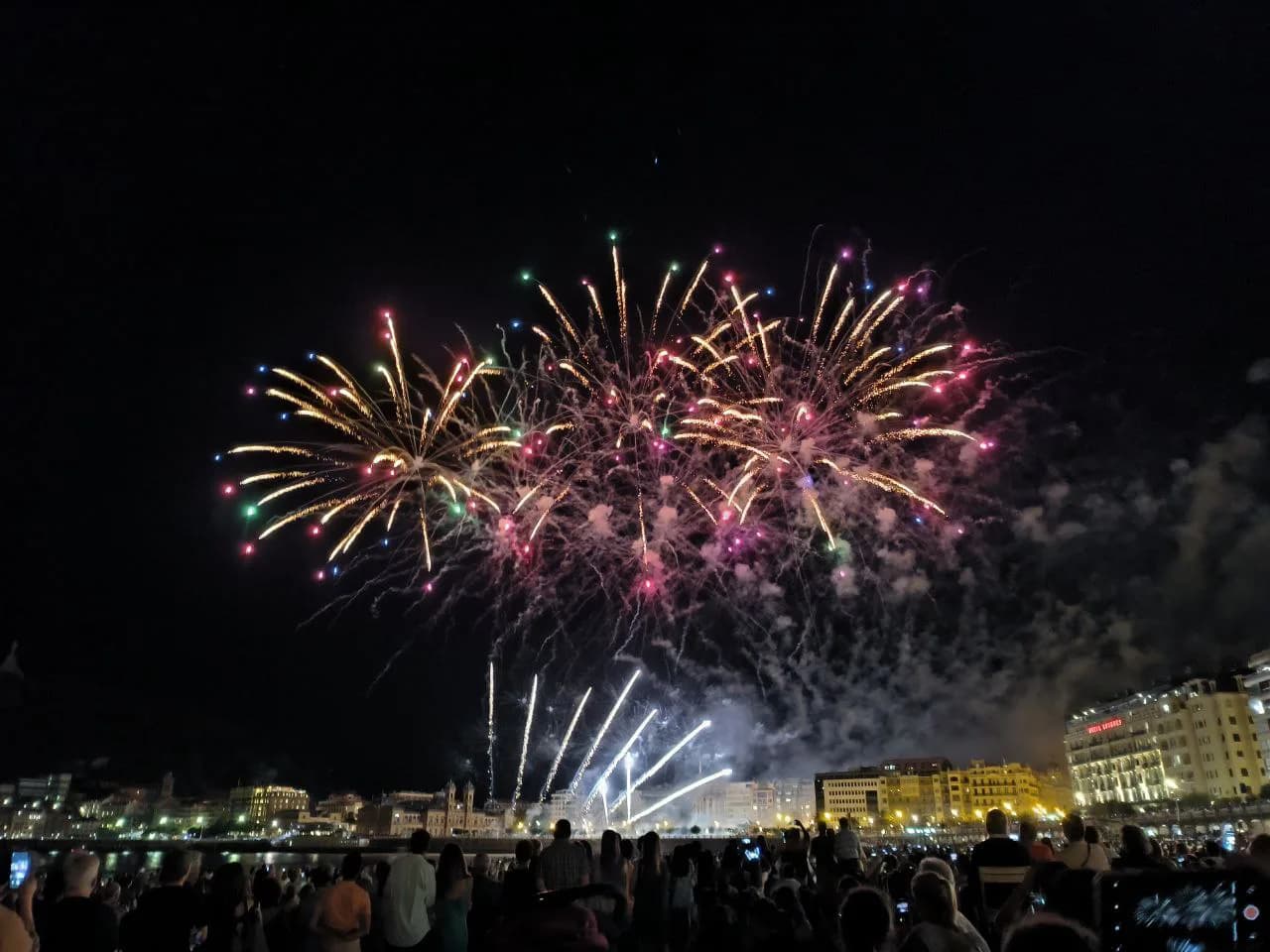
Last updated July 2026. Semana Grande San Sebastián runs Saturday, August 8 through Saturday, August 15, 2026, the week built around the Assumption Day holiday. During Semana Grande, two festivals run at once: an official City Hall program of fireworks and parades, and a separate, grassroots Donostiako Piratak scene at the port.
What Is Semana Grande San Sebastián (Aste Nagusia)?
Semana Grande San Sebastián, called Aste Nagusia in Basque, is a week-long city festival built around Basque culture, fireworks, and street parties. It always falls on the week surrounding August 15, the Feast of the Assumption, running Saturday to Saturday. In 2026 that means August 8 through August 15. Its origins trace back to 1876, when San Sebastián leaned on bullfighting promotions to rebuild tourism after the Third Carlist War. Music, dances, and fireworks were added later, and the celebration eventually outgrew the bullring. Bullfights still run at the Illumbe bullring during the week, a holdover from that history, but they operate on a separate ticketed schedule from the street events covered below. Today the week splits into two parallel programs. City Hall's official calendar covers the Cañonazo opening, the fireworks contest, and the Gigantes y Cabezudos parade. A separate, community-driven Donostiako Piratak movement runs its own events at the port, detailed further down. Donostia Kultura and San Sebastián Turismo publish the full day-by-day program each July, usually as a downloadable PDF, so check their sites close to the date for exact set times. Bilbao holds a similarly named but separate celebration each August, the Bilbao Aste Nagusia. Treat the two as distinct festivals, each with its own dates and traditions. For a contrast in tone, San Sebastián's other headline festival is the wintertime Tamborrada drum festival each January. It centers on marching drum companies rather than summer fireworks.
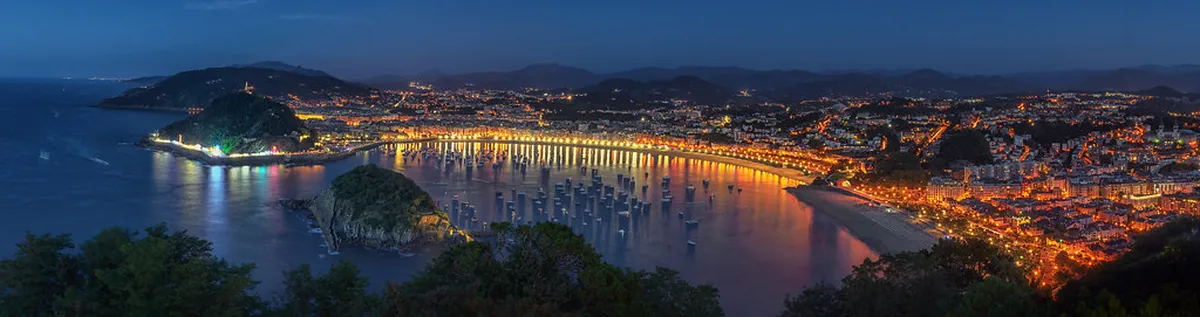
- Dates: Saturday, August 8 to Saturday, August 15, 2026
- Cañonazo (opening cannon shot): Alderdi Eder gardens, 19:00, August 8
- Fireworks competition: La Concha bay, nightly at 22:45
- Toros de Fuego: city center, nightly at 23:30
- Signature pirate event: La Abordaia raft race, Monday of festival week
The Cañonazo: How the Festival Begins at Alderdi Eder
Semana Grande opens with the Cañonazo, a ceremonial cannon shot fired from the Alderdi Eder gardens next to City Hall. It happens on the first Saturday, August 8, 2026, at 19:00. Crowds sing the traditional Artillero song in the minutes before the shot. Arrive by around 18:00 for a spot close to City Hall. Space fills fast as the hour approaches. Once the cannon fires, the week's official program is considered underway, and street parties spread through Parte Vieja within the hour.
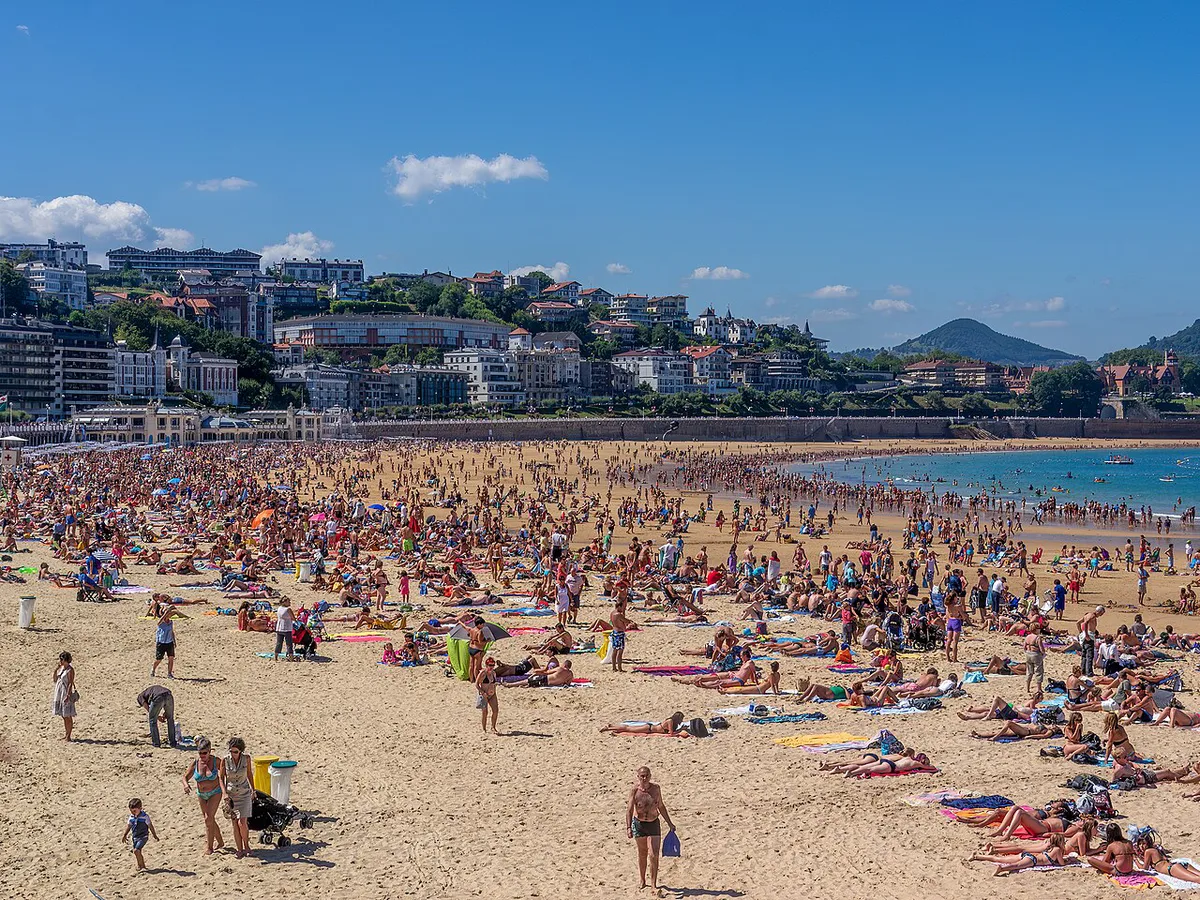
The International Fireworks Competition Over La Concha
Each night at 22:45, a different pyrotechnics company fires a roughly 15-minute display over La Concha bay. Companies from different countries compete for the Concha de Oro, judged by both a jury and public vote. Judges announce the overall winner at the end of the week, alongside the public vote result. That reflection off the bay is part of the appeal, so where you stand changes the experience more than at a typical fireworks show. La Concha beach and promenade deliver the most immersive view, but space fills early and the crowd is dense by showtime. Bring water and snacks if you plan to hold a beach spot for more than an hour before showtime. Monte Urgull offers a panoramic angle above the harbor, better for photography and more breathing room. Palacio Miramar's gardens add a quieter, elevated option away from both crowds. Watching from a boat out in the bay gives the widest, closest sightline, though it depends on securing a spot on the water rather than the shore. The tourist office on the Boulevard in the Old Town can point visitors toward sailing and cruise options in the bay.
| Viewpoint | Crowd Level | Best For |
|---|---|---|
| La Concha Beach & Promenade | Very high, arrive early | Immersive view, reflections on the water |
| Zurriola Beach / Gros side | Moderate to high | Alternative to the La Concha crush |
| Monte Urgull | Moderate | Panoramic photos above the harbor |
| Monte Igueldo | Lower | Distance views away from the crowds |
| Palacio Miramar gardens | Lower | Quieter elevated garden setting |
| Boat on the bay | Low, capacity-limited | Closest, most private vantage point |
Basque Daytime Traditions: Giants, Rural Sports, and the Getaria Swim
Daytime hours during Semana Grande belong to Basque folk tradition rather than fireworks. Several events are worth building a schedule around.
- Gigantes y Cabezudos: a parade of giant puppets and oversized-head cabezudos figures moves through the streets, a family favorite for younger visitors.
- Herri Kirolak: Basque rural sports, including stone lifting and wood chopping, run in Plaza de la Constitución.
- Getaria-Donostia swim: a 16km open-water race that finishes in San Sebastián, reflecting the Basque coast's fishing and whaling history.
- Water sports: water polo, beach volleyball, and handball tournaments run during the week alongside the Getaria swim.
- Charangas: roaming brass bands play through the streets most afternoons, trailed by dancing crowds.
- Horse races: traditional carreras de caballos run for the Copa de Oro trophy, one of the week's longest-running sporting fixtures.
- Salve ceremony: a traditional service at the Basílica de Santa María del Coro on the evening of August 14, the night before the festival's final day.
The Pirate Side: Donostiako Piratak and the Abordaia
Alongside the official program runs the Donostiako Piratak movement, a grassroots pirate identity that many visitors miss entirely. It has grown into its own strand of the festival, with a distinct look and its own stage rather than a fringe sideshow. La Abordaia, the Great Boarding, is the signature event, held on the Monday of festival week. Neighborhood kuadrilla groups spend weeks preparing their rafts before the race. Locals build makeshift rafts from scavenged materials and race them from the harbor toward Isla Santa Clara before pushing on to La Concha beach. Crowds line the port and the beach to watch, so arrive early if you want a clear view of the raft launch. Music runs on a separate stage, La Flamenka, in the Port area, distinct from the official concerts at Sagüés. That vibe skips the city-sanctioned program in favor of a rougher, community-run atmosphere.
Toros de Fuego and Late-Night Concerts at Sagüés
Every night at 23:30, the Toros de Fuego run through the center along Calle Miramar. Despite the name, these are metal bull-shaped frames carried on runners' shoulders, not live animals. They spit sparks and firecracker bursts as they pass, which is part of the show rather than a malfunction. Stand well back if you are in normal synthetic clothing, since sparks can singe fabric at close range. Non-synthetic layers are the safer choice for standing near the route. Keep children at a distance and treat it as a loud, sparking procession rather than a spectator activity for toddlers. The run repeats at the same 23:30 time and route every night of the festival, so you can plan around it more than once if the first evening feels too crowded. Large free concerts run most nights at Sagüés, at the far end of Zurriola beach, spanning genres from Basque folk music to rock acts. A night amusement park runs all week along the Paseo Nuevo waterfront for those not ready to head to bed after the fire bulls.
Events accelerate into the evening: fireworks ignite at 22:45, Toros de Fuego run at 23:30, and concerts continue after, with official programming launching at 19:00 from Alderdi Eder, creating a four-hour entertainment window.
Where to Stay, Eat, and Get Around During Festival Week
Semana Grande pushes the city near capacity, and logistics matter more than any single event.
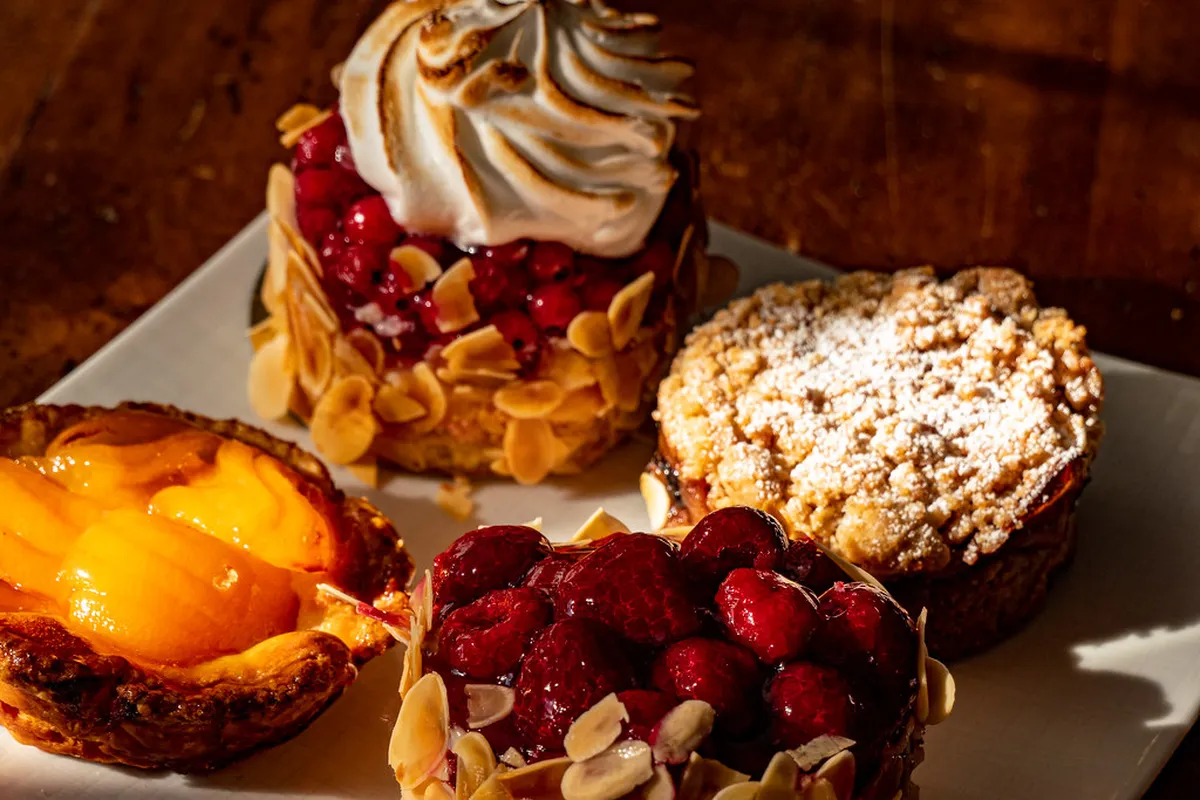
- Accommodation: nightly rates in Parte Vieja and Centro climb well above the shoulder-season baseline. Gros offers a calmer, often cheaper base close to Zurriola beach. Rentería and Zarautz sit further out but cost less and connect to the center via the Topo, the Euskotren commuter line.
- Getting around: the center closes several streets to traffic during peak hours. Plan on Dbus routes or walking instead of driving into Parte Vieja.
- Dining: pintxo bars in Parte Vieja run standing-room-only with trimmed menus during festival week. Book a table in advance if you want a guaranteed seat.
- Food and markets: an annual paella competition runs in Plaza Cataluña, and food trucks line up near the Kursaal for stand-up meals between events.
- Txosnas: community-run stalls staffed by local groups appear across the city, serving drinks and pintxos through the night.
- Schedule: the printed agenda is usually in Spanish and Basque. The tourist office on the Boulevard in the Old Town can provide an English-language copy.
- Crowd safety: keep bags zipped and valuables close in Parte Vieja's densest hours, especially right before and after the fireworks.
San Sebastián's Other Big Dates: Music Fortnight, Film Festival, and Gastronomika
Semana Grande is the August peak, but it isn't the only major date on San Sebastián's calendar. Every July, before Semana Grande even starts, the city runs its Jazz Festival across venues downtown. Three more events anchor the months right after Semana Grande and draw a different kind of crowd. Each of these runs on its own booking calendar, separate from the Semana Grande dates above, so treat them as distinct trips rather than one extended festival season.
Semana Grande (August 8 through August 15) occupies the heart of the Music Fortnight, which runs August 2–30, creating a month-long classical and festival calendar for visitors combining orchestral concerts with fireworks and street celebrations.
| Event | 2026 Dates | Focus |
|---|---|---|
| San Sebastián Jazz Festival | July (dates vary) | Live jazz across city venues |
| San Sebastián Music Fortnight (Quincena Musical) | August 2 - August 30 | Classical and orchestral concerts |
| San Sebastián International Film Festival | September 18 - September 26 | Cinema premieres and industry events |
| San Sebastián Gastronomika | October 5 - October 7 | Culinary industry conference |
For trip-planning details, see Aste Nagusia Donostia official source and San Sebastian / regional tourism authority.
Frequently Asked Questions
When is Semana Grande San Sebastián in 2026?
Semana Grande San Sebastián runs Saturday, August 8 through Saturday, August 15, 2026. Exact dates shift slightly year to year around the fixed August 15 Assumption Day holiday.
What time do the fireworks start each night?
Nightly fireworks over La Concha bay start at 22:45 and run roughly 15 minutes. Arrive well before showtime if you want space on the beach or promenade.
Are the Toros de Fuego real bulls?
No, the Toros de Fuego are metal bull-shaped frames carried by runners, not live animals. They release sparks and firecracker bursts, so non-synthetic clothing is the safer choice if you plan to stand close to the route at 23:30.
How is Semana Grande different from Bilbao's Aste Nagusia?
Semana Grande San Sebastián and Bilbao's Aste Nagusia share a name and similar mid-August timing, but they run as separate festivals with their own programs. Check the specific city's calendar before booking, since the two schedules do not always line up exactly.
Is Semana Grande the same event as the Tamborrada?
No, the Tamborrada is a January drum festival, held well before Semana Grande's August fireworks and street parties. Both events sit five months apart, with a different tone and set of traditions.
Where is the best spot to watch the Semana Grande fireworks?
La Concha beach and promenade give the most immersive view, but arrive early since space fills fast. Monte Urgull offers a panoramic angle with more room, and a boat in the bay is the option with the closest, most private sightline.
Is Semana Grande free to attend?
Most street events, including the fireworks, parades, and concerts at Sagüés, are free to attend. Bullfights at the Illumbe bullring and any reserved seating are the main ticketed exceptions.
How many days does Semana Grande last?
Semana Grande runs Saturday to Saturday, eight days in total, built around the August 15 Assumption Day holiday. In 2026 that means August 8 through August 15.
Where should you stay during Semana Grande?
Parte Vieja puts you inside the action but at the highest rates and noise levels. Gros, the Centro, Rentería, and Zarautz are calmer, often cheaper alternatives connected by bus or the Topo train.
What should you wear to watch the Toros de Fuego?
Choose non-synthetic fabrics like cotton if you plan to stand close to the route at 23:30, since the metal bull frames throw sparks. Standing further back removes most of the risk if you would rather wear whatever you already packed.