
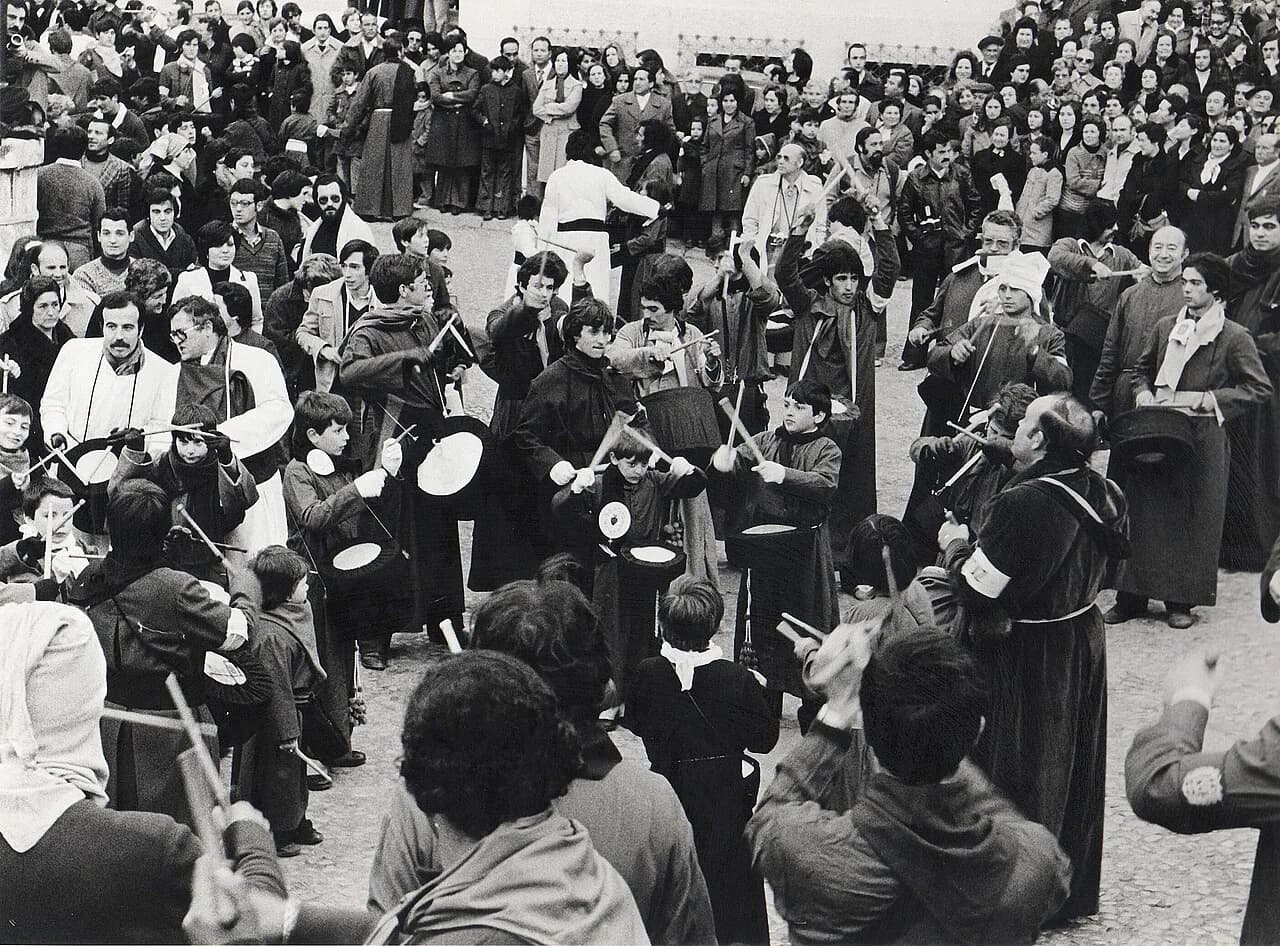
Last updated August 2026, Semana Santa in Cuenca runs from Palm Sunday to Easter Sunday, with 2026 dates falling March 29 to April 5. Its cliffside old town turns every procession into a steep uphill climb, unlike the flatter routes of Seville or Valladolid. The week builds to Las Turbas at dawn on Good Friday, when drums and horns fill the narrow streets before giving way to silence outside San Felipe Neri.
Semana Santa Cuenca 2026: Dates and Why the Old Town Changes Everything
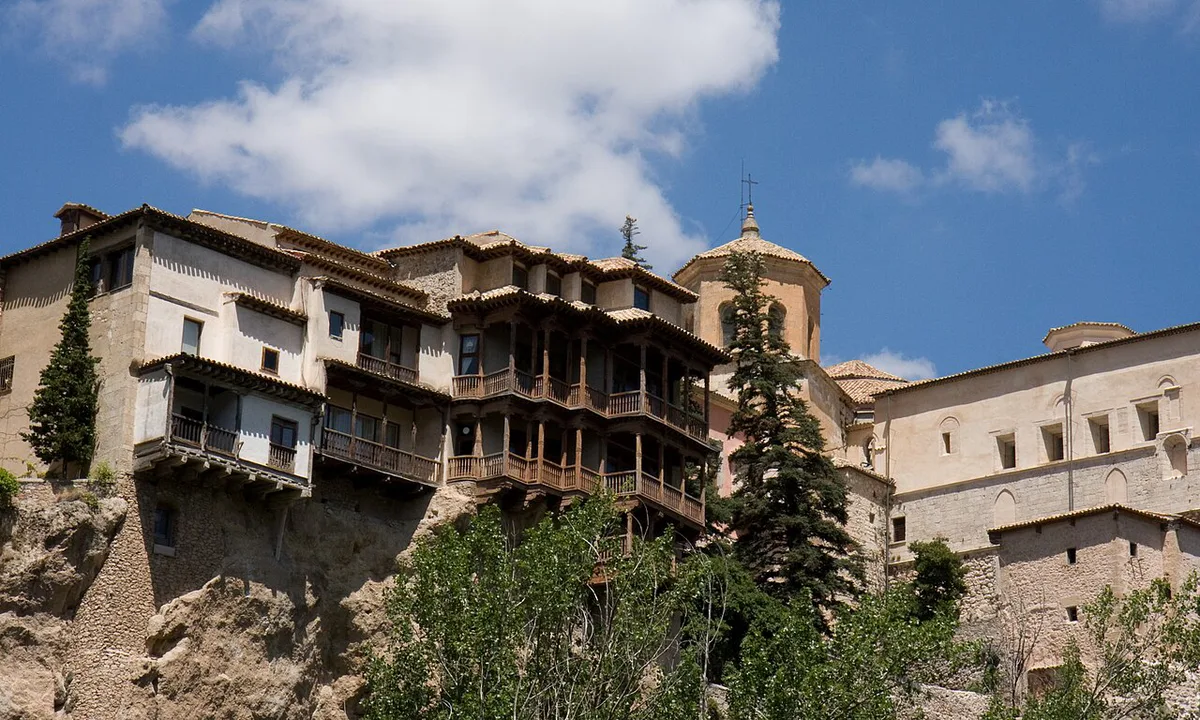
Holy Week dates move with Easter every year. Semana Santa Cuenca 2026 falls March 29 to April 5, from Domingo de Ramos (Palm Sunday) through Domingo de Resurrección (Easter Sunday). Cuenca's Casco Antiguo, a UNESCO World Heritage old town built along a narrow gorge, is what separates this Holy Week from most others in Spain. Every paso — the sculpture group carried by porters called banceros — has to climb steep, cobbled streets instead of moving through flat plazas. Its pasos also favor stark, unadorned carving over the ornate baroque sculpture tradition found in Valladolid's Holy Week processions. Cuenca's tourism office lists Holy Week among the city's Fiestas of International Tourist Interest, and the same week brings the Semana de Música Religiosa to the same streets.
Day-by-Day Procession Schedule for Semana Santa Cuenca 2026
Eight processions run across Semana Santa Cuenca, one nearly every day between Palm Sunday and Easter Sunday. Times and starting churches come from the Junta de Cofradías de Cuenca, the cofradías' official coordinating body. Details can shift slightly year to year, so confirm the current program before finalizing plans. Midweek processions stay quiet and contemplative, and the week's energy builds toward Thursday night and the Good Friday processions.
Running eight processions plus the Semana de Música Religiosa's major concerts simultaneously creates intense hotel demand, requiring bookings well ahead of March 2026 to secure accommodation.
- Domingo de Ramos (Palm Sunday), March 29: Procesión del Hosanna leaves the Iglesia de San Andrés at 9:30 a.m., pauses at San Felipe Neri around 12:30 p.m. for the blessing of palms, then climbs Alfonso VIII to the Cathedral on Plaza Mayor.
- Lunes Santo, March 30: Procesión Penitencial del Santísimo Cristo de la Vera Cruz leaves the Cathedral at 9:30 p.m., after hermanos gather in Plaza Mayor from 7:30 p.m., and reads the Seven Words at churches along the route before finishing near San Esteban.
- Martes Santo, March 31: Procesión del Perdón continues the week's austere character.
- Miércoles Santo, April 1: Procesión del Silencio, the most sober procession of the week.
- Jueves Santo, April 2: Procesión de Paz y Caridad.
- Viernes Santo, April 3: three processions in a single day — Camino del Calvario (Las Turbas) at dawn, En el Calvario at midday, and Santo Entierro in the evening.
- Sábado Santo, April 4: Procesión del Duelo.
- Domingo de Resurrección, April 5: Procesión de El Encuentro closes the week.
Good Friday: Las Turbas and the Silence at San Felipe Neri
Good Friday holds the week's defining moment: Procesión Camino del Calvario, known locally as Las Turbas. It leaves in the very early hours, with local accounts placing the start around 5:30 a.m. This procession reenacts the burla, the mockery Jesus faced on the way to the cross. Drums and clarines fill the narrow streets at full volume. Noise stops suddenly when the procession reaches the steps of the Iglesia de San Felipe Neri, where the Miserere is sung. That shift from full-volume drums to a sung Miserere in near-total silence is the detail most first-time visitors underestimate. It is also the reason many travelers plan their entire trip around Good Friday morning.
Procession Etiquette: Silence, Banceros, and Crossing the Route
Cuenca's Holy Week etiquette differs sharply from Andalusian tradition. Local custom asks for near-total silence during the passage of a procession, broken only by the drums of Las Turbas, the week's one sanctioned exception. That same Castilian austerity shapes Holy Week in Zamora, though Zamora's routes run through flatter streets than Cuenca's gorge-side quarter. Zamora's own cofradías document that same silence-first tradition on Zamora's official Holy Week site. Each year, the Junta de Cofradías de Cuenca publishes a short list of rules for visitors, and the essentials are worth memorizing before you pick a viewing spot.
- No applause and no saetas sung to the images; Palm Sunday and Easter Sunday allow occasional applause, but that is the exception.
- Never cross through a moving procession; if you must cross, a nazareno carrying a staff (cetro) will tell you when it is safe.
- Reserved zones along the route are marked for the official band, people with reduced mobility, and press, so stay behind the rope in those stretches.
- Make way for older visitors, people with reduced mobility, and prams in the crowd, especially in the narrower stretches near Carretería and San Esteban.
- A procession is not over until the last nazareno has passed, even if the lead images are long gone.
Getting Around Cuenca's Casco Antiguo During Holy Week
Cuenca's old town sits on a narrow spur above a deep gorge, and its streets were never built for crowds or cars. During the main processions, the Casco Antiguo closes to private traffic. Cuenca also adds shuttle buses and relies on the public escalators, the escaleras mecánicas, to link the lower city with the historic quarter. Confirm the current shuttle stops and running hours with Cuenca's tourism office before you travel, since routes can change from year to year. Plan on walking the last stretch regardless of where you park, and wear shoes that grip wet, uneven cobblestones.
Las Turbas starts at 5:30 a.m., which likely precedes daily shuttle bus and escalator service hours, so arrange transportation to San Felipe Neri before dawn if you want to watch the procession's opening.
Where to Stay: Casco Antiguo or the Lower City
Staying inside the Casco Antiguo puts you steps from the processions and the Miserere at San Felipe Neri. Rooms book out early, though, and street noise runs late into the night, especially before Las Turbas. Staying in the lower city usually costs less and gives easier vehicle access. That trade-off means climbing back up to the old quarter after each procession, on foot or via the escalators. Families with young children or anyone unsteady on slopes may prefer the lower city and a shorter, planned walk up for the processions that matter most to them. Either way, book well ahead of March 2026, since Semana Santa is one of Cuenca's busiest weeks for hotel demand. Overlapping Semana de Música Religiosa concerts add another layer of demand on top of it.
Semana de Música Religiosa and What to Eat During Holy Week
Cuenca runs its Semana de Música Religiosa in the same week as the processions, pairing sacred choral and orchestral concerts with the Passion story on the streets outside. The festival has run for close to six decades, one of the country's longest-established sacred music events. Check the season's program and buy concert tickets well before Palm Sunday, since the best concerts overlap directly with the processions' busiest hours. Food carries its own Holy Week identity: try Resolí, a coffee-based liqueur made with brandy, caramel, orange peel, and spices, often poured after a Lenten meal.
- Resolí — a coffee, brandy, caramel, orange peel, and spice liqueur, sometimes described locally as the nazareno's own drink.
- Morteruelo — a warm pâté-style dish made from game meats and liver.
- Ajoarriero — a garlic, olive oil, and salt-cod spread.
- Torrijas — Cuenca's Holy Week dessert, bread soaked and fried, similar to French toast.
Which Procession Should You Watch? A Quick Comparison
Not every procession suits every visitor, and the week's character shifts sharply from one day to the next. Overlapping crowds, timing, and mood all factor into which processions to prioritize on a short trip. The comparison below groups the main processions by mood, so you can match your schedule and energy to the right day.
| Procession | When | Character | Best For |
|---|---|---|---|
| Hosanna | Palm Sunday, March 29 | Festive, family-oriented, palms and petals | First-time visitors and families |
| Vera Cruz | Lunes Santo, March 30, night | Reflective, Seven Words readings along the route | Visitors interested in ritual and readings |
| Silencio | Miércoles Santo, April 1 | The most austere and quiet procession of the week | Travelers who want Castilian austerity at its purest |
| Camino del Calvario (Las Turbas) | Good Friday, dawn, April 3 | Loud and traditional, drums and horns followed by sudden silence | Visitors prepared for a very early start |
| Santo Entierro | Good Friday evening, April 3 | Solemn and formal, a funeral procession in tone | Anyone who wants a quieter close to Good Friday |
| El Encuentro | Easter Sunday, April 5 | A lighter, resolving note after the week's austerity | A joyful finish to the week |
Common Mistakes to Avoid During Semana Santa Cuenca
A few avoidable mistakes shape most complaints from first-time visitors to Semana Santa Cuenca. None of them require much planning to fix, and most come down to timing and footwear.
- Arriving at the steps of San Felipe Neri after the crowd has already claimed a view — get there well ahead of a procession's expected arrival if the Miserere matters to you.
- Underestimating the slope — routes climb from the lower streets up through the Casco Antiguo, and the uphill stretch takes noticeably longer than the same distance on flat ground.
- Wearing smooth-soled or formal shoes on medieval paving that is uneven and often damp at night.
- Mixing up the Camino del Calvario procession with the separate late-night gathering in Plaza de España — the procession itself begins in the very early hours and draws a different, more solemn crowd.
- Skipping the Semana de Música Religiosa entirely and missing one of the week's two headline events happening in the same streets.
Choosing a Viewing Spot for Cuenca’s Steep Procession Routes
Following a paso through the Casco Antiguo demands more stamina than watching from one fixed point. The climb along Alfonso VIII toward Plaza Mayor is steep, cobbled, and slow when crowds narrow the route. Public escalators reduce part of the ascent from the lower city, but they do not remove uneven walking.
- For the least movement: choose Plaza Mayor and wait for the procession to arrive. Reach the upper town before road closures and crowding intensify.
- For Las Turbas and the Miserere: wait near San Felipe Neri rather than following the procession uphill. Arrive well before dawn because viewing space around the steps fills early.
- For stronger walkers: follow a short section around Alfonso VIII, Calle del Peso, or the curves by the Audiencia. Expect gradients, bottlenecks, and prolonged standing.
Visitors with reduced mobility should check the Junta de Cofradías program for designated viewing areas. Confirm shuttle and escalator hours with Cuenca’s tourism office, since Holy Week traffic arrangements can change.
Frequently Asked Questions
When is Semana Santa in Cuenca in 2026?
Semana Santa Cuenca runs from Palm Sunday to Easter Sunday. In 2026 the dates are March 29 to April 5, with the Camino del Calvario (Las Turbas) procession falling in the early hours of April 3, Good Friday.
What are the Turbas in Cuenca's Holy Week?
The Turbas are the crowd in the Camino del Calvario procession on Good Friday morning. Their drums and horns represent the mockery Jesus faced on the way to the cross. Noise stops suddenly when the procession reaches San Felipe Neri for the sung Miserere.
Where is the best place to watch the processions in Cuenca?
Plaza Mayor, the steps near the Iglesia de San Felipe Neri, the curves by the Audiencia, and the narrow Calle del Peso are the classic vantage points named by locals. Arrive early for San Felipe Neri if you want to hear the Miserere clearly.
How does Semana Santa in Cuenca compare to Zamora or Valladolid?
All three share a sober, Castilian style with heavy silence and minimal ornamentation, as seen in Holy Week in Zamora. Cuenca's distinct feature is its vertical route through a hillside old town, rather than the flatter streets of Zamora and Valladolid. Valladolid is better known for elaborate baroque pasos, covered in more detail in the Valladolid Holy Week guide.
What should you pack for Semana Santa in Cuenca?
Pack warm layers for cold nights and early mornings, since Cuenca sits at altitude and Holy Week falls in early spring. Bring comfortable, grippy shoes rather than formal footwear, since the Casco Antiguo's medieval paving is steep and uneven.
Is Semana Santa in Cuenca crowded, and do you need tickets?
Good Friday and the days around it draw the largest crowds, especially near San Felipe Neri and Plaza Mayor. Processions themselves are free to watch from the street. Only Semana de Música Religiosa concerts require tickets, so book those separately.
Does Cuenca celebrate anything else alongside Semana Santa?
Yes — the Semana de Música Religiosa runs in the same week, pairing sacred choral and orchestral concerts with the Passion story outside. It has run for close to six decades and draws its own dedicated audience of cultural travelers.