
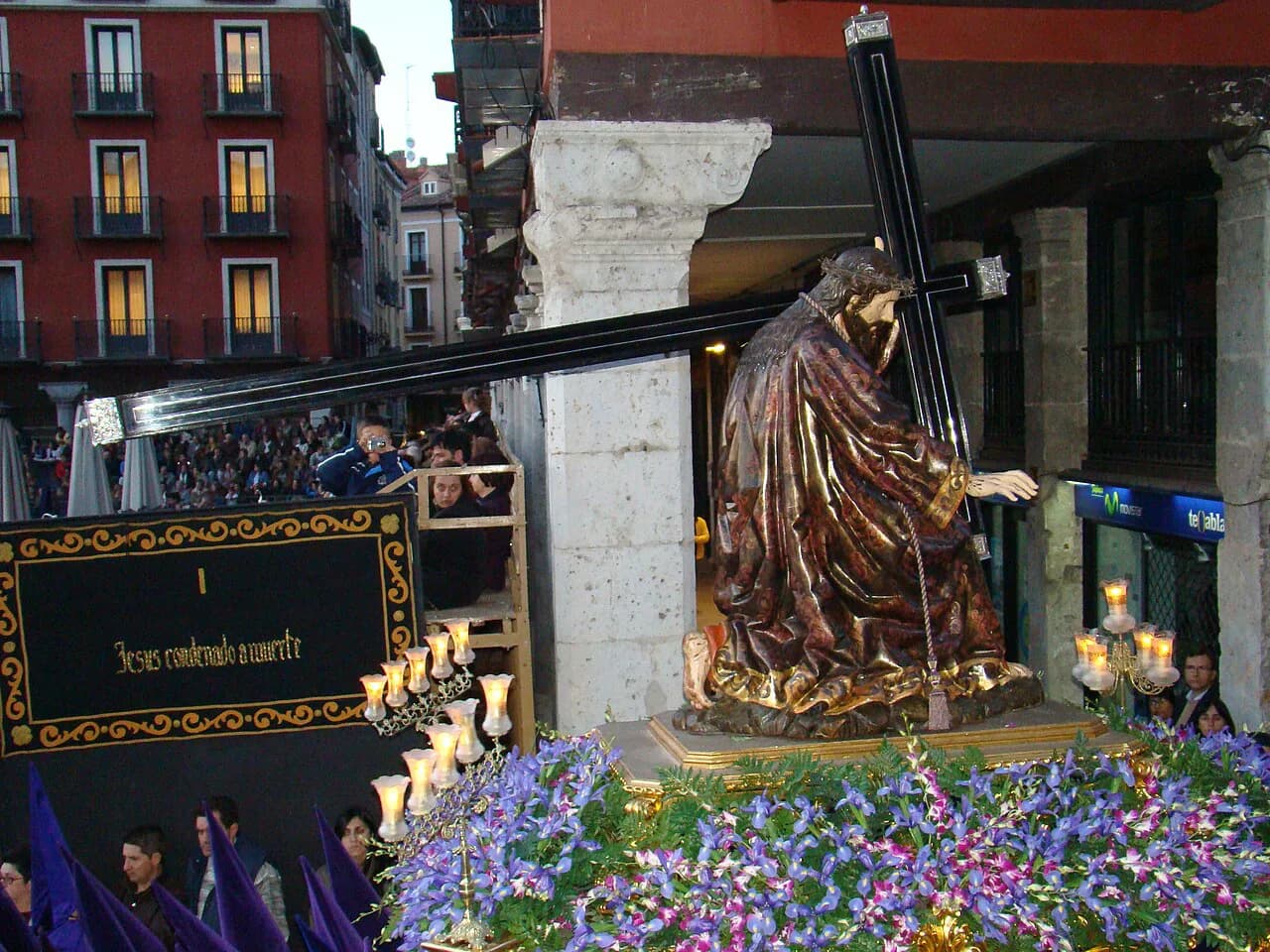
Last updated August 2026, this guide to Semana Santa Valladolid covers the 2027 dates and how to book tribuna seating. It also explains why the city's pasos count as museum-grade sculpture, not street decoration. Unlike Andalusia's brass bands, Valladolid's processions move through Castilian silence broken only by drums.
Semana Santa Valladolid 2027: Dates and the Castilian Silence
Semana Santa Valladolid runs on a movable calendar tied to Easter, so exact dates shift every year. Its 2027 edition falls March 21 to March 28, running from Palm Sunday through Easter Sunday. Check the official Semana Santa Valladolid site each January for the confirmed program, since brotherhoods sometimes adjust routes. Valladolid's city council voted unanimously in 2014 to pursue UNESCO recognition for the event, and the lower house's Culture Committee backed the request in October 2015. A separate honor, Fiesta of International Tourist Interest, dates back to 1980. None of that official history explains the atmosphere on the ground. Locals call it Castilian silence, and it shapes the entire week. Drums and trumpets are the only sounds that interrupt the quiet as brotherhoods pass, a sharp contrast with Andalusia's brass bands. Robed penitents wear tall, pointed capirotes with eye-holes, a design meant to let them repent anonymously rather than draw attention. Lead-up traditions build for weeks before the first procession. An official poster, or cartel, goes public in mid-January. The Pregón, a formal proclamation, has been delivered inside the Cathedral on the Friday of the fourth week of Lent since 1990. For a similarly restrained mood outside Valladolid, Zamora's Holy Week follows the same silent, unhurried style.
The Must-See Processions and Acts
Three ceremonies anchor the week for visitors with limited time. Each shows a different side of the tradition, from ritual solemnity to communal celebration. Five historic brotherhoods anchor the roster: Vera Cruz, Angustias, Piedad, Pasión, and Nazareno. Vera Cruz is the oldest, founded in 1498. Brotherhood members carry most pasos on platforms or wooden staves rather than push-wheeled carts, so watch the visible effort as a float turns a corner.
- Sermón de las Siete Palabras (Plaza Mayor): Mounted heralds open the ceremony, recreating the atmosphere of 16th-century autos de fe in the city's main square.
- Procesión General de la Sagrada Pasión del Redentor (Good Friday): The only procession where all of Valladolid's brotherhoods and their most significant pasos appear together.
- The Encounter (Easter Sunday): Processions return to the Plaza Mayor for the meeting between the risen Christ and the Virgin, marking the shift from mourning to celebration.
How the Week Unfolds, Day by Day
Processions begin the Friday before Palm Sunday and run through Easter Sunday, covering more than a week in total. Each day carries its own brotherhoods, though three moments matter most for visitors on a tight schedule.
- Friday of Sorrows and Passion Saturday: The week's first processions, including the Cofradía Penitencial de la Sagrada Pasión de Cristo, founded in 1531.
- Palm Sunday through midweek: Includes the Sermón de las Siete Palabras, staged in the Plaza Mayor with mounted heralds opening the act.
- Good Friday: The Procesión General de la Sagrada Pasión del Redentor, when every brotherhood parades together.
- Holy Saturday: A quieter day built around the transfer of the Recumbent Christ in the afternoon, with a penitential act honoring the Virgin at the Vera Cruz church that evening.
- Easter Sunday: The Encounter in the Plaza Mayor closes the week on a celebratory note.
Planning Your Visit: Tribunas, Hotels, and Getting Around
Book accommodation early. Hotels near the historic center often sell out six months ahead of Holy Week, especially rooms overlooking the Procesión General route.
- Tribuna seats: Reserved grandstand seating along key routes is sold through the Junta de Cofradías' official channels and at local kiosks. Prices and release dates change every year, so check ahead rather than assume last year's terms.
- Street viewing: Watching from the pavement is free along most of the route. Arrive well before a procession starts for a clear sightline on narrower streets.
- Walking the old town: Most procession routes run through pedestrianized streets in the historic center, so plan on foot rather than by car.
- Local buses: City routes reroute around procession corridors on peak days. Confirm current diversions on Valladolid's city tourism site before Holy Week.
The Open-Air Museum: Gregorio Fernández, Juan de Juni, and the National Sculpture Museum
Gregorio Fernández and Juan de Juni built their reputations while Valladolid served as Spain's imperial court in the 16th and 17th centuries. Their carved, polychrome wood figures rank among the country's most realistic Baroque religious sculpture. Museo Nacional de Escultura lends 42 images to the processions each year, a level of museum-to-street collaboration that is rare in Spain. Fernández's Quinta Angustia, carved in 1625, is one of the pieces that leaves its case to walk the streets. Visit the museum, housed in the Colegio de San Gregorio, before Holy Week begins if the schedule allows. Seeing the pasos in their permanent setting first gives context that a single, crowded street viewing cannot.
Gregorio Fernández and Juan de Juni's high-realism sculpture style developed during the 16th and 17th centuries while Valladolid was Spain's imperial court; this distinctive carved approach sets Valladolid's Semana Santa apart from Seville's more ornate Baroque aesthetic.
Local Traditions and Holy Week Gastronomy
Food marks the season as much as the processions do. Potaje de vigilia, a chickpea and cod stew, is the traditional Lenten dish served across the city during Holy Week. Torrijas, bread soaked in milk or wine and then fried, appear on menus as the signature Easter sweet. Bakeries also sell penitentes, small pastries named for the robed penitents in the processions. Try them at a bar near the Plaza Mayor between processions instead of rushing between viewing spots.
Mistakes First-Time Visitors Make
A few planning errors show up again and again among first-time visitors.
The Pregón, a formal proclamation delivered since 1990, institutionalizes solemnity at the season's start; this ceremonial seriousness explains why silence is non-negotiable during processions—observers participate in a deep principle, not a casual public celebration.
- Underestimating the cold: March and April nights on the Castilian meseta can drop close to freezing, even when afternoons feel mild. Pack a heavy coat for evening processions.
- Talking during the Procesión del Silencio: Silence is the point, not a formality. Save conversation for after a paso has passed.
- Watching only from the Plaza Mayor: The square draws the largest crowds of the week. Side streets along the same route offer a closer view with far less crowding.
Valladolid vs Seville: Two Styles of Spanish Holy Week
Valladolid and Seville represent two distinct approaches to Semana Santa. Knowing the difference helps you decide which city fits your interests, or whether to combine both on separate trips.
| Feature | Valladolid (Castilian style) | Seville (Andalusian style) |
|---|---|---|
| Atmosphere | Solemn and silent | Music-filled and emotionally charged |
| Art style | High-realism Baroque carving by Fernández and Juni | Ornate Baroque carving by Montañés |
| Signature element | Pasos treated as museum-grade sculpture | Saetas (sung laments) and embroidered mantos |
| Best suited for | Art history and quiet reflection | Crowd energy and street celebration |
Beyond the City: Holy Week in the Province and Nearby Castile
Travelers with more than three days can extend the trip into the province. Medina de Rioseco and Medina del Campo both hold Holy Week processions recognized as Fiesta of National Tourist Interest, a tier below Valladolid's international designation. Peñafiel and Tordesillas also field active brotherhoods and processions on a smaller scale. For a different regional flavor, Cuenca's Holy Week pairs a similarly restrained atmosphere with a mountain-gorge setting instead of an open plaza.
Frequently Asked Questions
When is Semana Santa Valladolid in 2027?
The 2027 edition runs March 21 to March 28, tracking Palm Sunday through Easter Sunday. Dates shift every year because the week is tied to the Easter calendar.
Do you need tickets to watch the processions in Valladolid?
Most viewing along the route is free and open to the public. Paid tribuna seating gives a guaranteed seat and is sold through official channels ahead of the week.
What is the most important procession to see if you only have one day?
The Procesión General de la Sagrada Pasión del Redentor on Good Friday brings every historic brotherhood together in one event. It is the best choice for a short visit.
Why is Valladolid's Holy Week called an open-air museum?
Museo Nacional de Escultura lends dozens of its polychrome wood sculptures, including works by Gregorio Fernández and Juan de Juni, for the processions each year. Pieces that normally sit behind glass walk through the streets instead.
How cold does it get during Holy Week in Valladolid?
Valladolid sits on the Castilian meseta, where March and April nights can drop close to freezing even if the day felt mild. Pack a heavy coat for evening processions.
Should you visit the National Sculpture Museum before or after the processions?
Visit before Holy Week begins if the schedule allows. Seeing the pasos in their permanent setting first makes it easier to recognize individual works once they appear in the street.