
Last updated August 2026: the Sitges Film Festival fills this Catalan coastal town with fantasy, horror, and science-fiction cinema every October, and organizers call it the world's top fantastic-film festival. It runs about 10 days, spans venues from a 1,380-seat auditorium to a historic downtown cinema, and packs a dozen competitive sections into that window. This guide covers ticket strategy, the Auditori-to-town-center walk, the Zombie Walk, and whether a Barcelona day trip beats staying in Sitges.
What Makes the Sitges Film Festival Different
Sitges Film Festival started in 1968 as the International Week of Fantasy and Horror Movies. It has run every year since, almost always in early-to-mid October. FIAPF accredits it as a competitive fantastic-genre event. Winning short films in the Official Fantàstic and Anima't sections both advance to Academy Award shortlist consideration. Its official site bills the event as the World's #1 Fantastic Film Festival, a claim built on genre focus rather than arthouse prestige. Àngel Sala has directed the festival since 2001, giving it two decades of consistent programming identity. Sitges also awards the Josefina Molina prize, a €10,000 honor for the best fantastic-feature screenplay written by a woman, now in its second edition with SGAE Foundation backing. San Sebastián and Málaga both run major Spanish festivals too, but neither centers its identity on fantasy and horror the way Sitges does. That focus shapes everything from the lineup to the crowd, including the costumed audiences who turn up for late-night screenings.
Festival Layout: Auditori Melià vs. the Historic Center
Two zones make up the Sitges Film Festival map. Inside the Hotel Melià Sitges, the Auditori seats 1,380 people and hosts premieres, plus the press room known as the Tramuntana Room. Cine El Retiro and Cine Casino Prado anchor the historic downtown, both within walking distance of the seafront and the train station. Nearby spaces known collectively as the King Kong area host exhibitions, panels, and fan meetups throughout the festival. Industry accreditation and press activity also cluster near the Auditori, since the Tramuntana Room sits inside the same hotel. Walking from the historic center up to the Auditori takes longer than it looks on a map. It's uphill and outside the main pedestrian core, so build in extra time between venues. Shuttle service, if the festival runs one this year, is worth confirming on the official schedule before you commit to back-to-back screenings at both ends of town.
- Auditori (Hotel Melià Sitges) — main venue, 1,380 seats, hosts premieres and the press room
- Cine El Retiro — historic downtown cinema, near the seafront and train station
- Cine Casino Prado — second downtown venue, a short walk from El Retiro
- King Kong area — cluster of nearby spaces for exhibitions, panels, and fan meetups
Official Sections to Know Before You Book
Sitges organizes its lineup into named sections, and knowing them turns browsing into an actual schedule. Gorilla prizes, given across acting, directing, and screenplay categories, are the festival's headline honors alongside each section's own awards.
- Secció Oficial Fantàstic a Competició — the flagship competition; 2025 winners included The Ugly Stepsister for Best Film and Park Chan-wook's No Other Choice for Best Director
- Noves Visions — the experimental and indie showcase for features and shorts outside the main competition
- Midnight X-Treme — hardcore horror and cult titles, judged in part by the festival's Carnet Jove youth jury
- Anima't — animated features and shorts; the winning short qualifies for Academy Award consideration
- Brigadoon — independent horror and fantastic films that don't require a Spanish premiere to enter
- Sitges Family — films for younger audiences, dubbed into Spanish or Catalan
- Órbita — genre-adjacent titles chosen for broad audience appeal
- Sitges Collection — high-profile studio genre titles screened outside the main competition
Tickets and Passes: Packs vs. Single Screenings
Two purchase options cover the festival: single tickets and multi-film packs. Single tickets cover one screening at a time, and multi-film packs bundle several screenings at a lower cost per film. Packs make sense once you're booking more than a handful of titles; single tickets suit a lighter, one-or-two-film visit. Carnet Jove (Youth Card) holders get separate discounts on top of the standard pricing structure. That youth-jury program also selects some of the festival's own awards, including the Midnight X-Treme prize. Passes and packs typically go on sale before the festival opens, based on the official site's own announcements. Euro pricing is published there each year rather than fixed in advance. The official site's own homepage flags packs as on sale before the full program drops, so early buyers sometimes commit before seeing the final lineup. Check the official festival site for the current year's pack and ticket prices before you build a screening schedule.
The Zombie Walk and Fringe Events
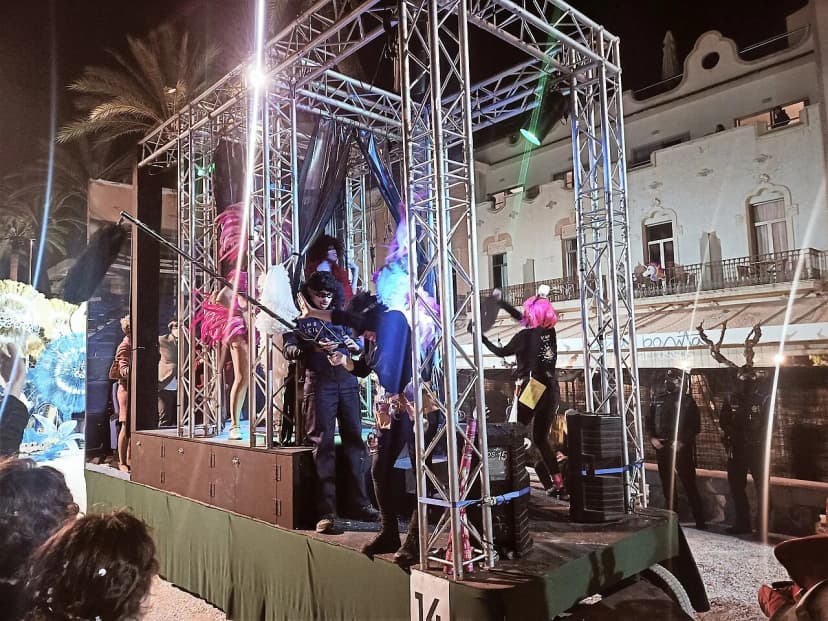
Sitges' Zombie Walk is one of the festival's best-known public events. Hundreds of costumed fans parade through town in makeup and prosthetics, and watching from the sidelines is free. Joining in usually means arriving in costume at a designated meeting point before the walk starts. Exact date, time, and route shift year to year, so check the official festival program or Sitges' tourism site for this year's specifics. Fringe events cluster around the same weekend, so expect the historic center to feel busier than a normal festival day even if you're only spectating.
Getting to Sitges: The Barcelona Day-Trip Decision
Rodalies de Catalunya runs the R2 Sud line between Barcelona and Sitges, with direct trains from Barcelona Sants and Passeig de Gràcia. That ride takes about 40 minutes each way, which makes a day trip realistic if you're already based in Barcelona. Late-night service is the catch: the festival's best-known slots run past midnight, and the last northbound train doesn't wait for the credits. Confirm the last departure on Rodalies de Catalunya's schedule before booking a late screening, or plan on a taxi or an overnight stay instead. Book Sitges accommodation as soon as festival dates are confirmed, since rooms near the venues fill up weeks ahead of opening night.
| Factor | Stay in Sitges | Commute from Barcelona |
|---|---|---|
| Cost | Higher — rooms book up and prices climb during the festival | Lower — Barcelona has more room inventory and price flexibility |
| Sleep | Late nights end steps from your room | Late nights end with a train timetable to beat |
| Transit | None needed once you're in town | About 40 minutes each way on the R2 Sud line |
| Atmosphere | Full immersion in bars, meetups, and Zombie Walk energy after dark | You leave the festival bubble as soon as you board the train |
Pro Tip: The Final-Weekend Marathons
Marathon sessions cluster on the festival's last weekend, when venues run consecutive screenings back to back for hardcore fans. Attendees who want to see the most films in the least time build their schedule around these blocks. Expect long stretches inside the same venue, so plan meals and breaks accordingly. Packs make more financial sense here than single tickets, since marathon weekends are exactly when you're likely to watch more than a handful of titles.
The festival runs about 10 days with a dozen competitive sections packed into that window; final-weekend marathons are the only way to sample widely across genres rather than seeing everything in one category.
Mistakes First-Time Attendees Make
A few avoidable mistakes show up every year among first-time attendees.
The commute takes about 40 minutes each way, meaning day-trippers cannot safely attend late screenings since the train schedule stops before post-midnight films end—checking final departures is critical.
- Booking only evening screenings and skipping matinee showings, which are usually less crowded
- Underestimating the walk (or shuttle wait) between the Auditori and the historic center
- Missing the last R2 Sud train back to Barcelona after a late slot
- Skipping the marathon sessions on the festival's final weekend, when venues run consecutive screenings
- Booking Sitges accommodation late, after rooms near the festival dates have already filled up
- Not confirming whether a shuttle runs to the Auditori before relying on one
Sitges vs. San Sebastián vs. Málaga: Which Festival Fits Your Trip
Spain runs three major film festivals, and each one serves a different trip. Sitges Film Festival built its identity on fantasy, horror, and cult cinema, plus fan-culture events like the Zombie Walk. San Sebastián International Film Festival leans toward arthouse premieres and red-carpet prestige instead. Festival de Málaga focuses on Spanish- and Latin American-language cinema, drawing an industry-heavy crowd. Málaga's industry focus also means more Spanish-language premieres and less genre programming than Sitges offers. For arthouse premieres and international glamour, see our San Sebastián Film Festival guide. If Spanish-language industry access matters more to your trip, our Málaga Film Festival guide covers that scene instead.
| Festival | Genre Focus | Best For |
|---|---|---|
| Sitges Film Festival | Fantasy, horror, and sci-fi — the fantastic genre | Genre fans who want costumes, late slots, and cult premieres |
| San Sebastián Film Festival | Arthouse and international premieres | Travelers who want red-carpet glamour and world premieres |
| Festival de Málaga | Spanish- and Latin American-language cinema | Visitors focused on Spanish-language industry access |
Frequently Asked Questions
When is the Sitges Film Festival in 2026?
Organizers expect the 59th edition to run in October 2026, in line with the festival's usual 10-day format. Confirm exact dates on the official site before booking travel, since scheduling can shift slightly year to year.
How do you get from Barcelona to Sitges for the festival?
Take the R2 Sud line from Barcelona Sants or Passeig de Gràcia; the ride takes about 40 minutes each way. Check Rodalies de Catalunya's schedule for the last northbound train if you're planning a late screening.
Should you book a pack or single tickets?
Packs cost less per film than single tickets, so they pay off if you're watching more than a handful of screenings. Casual visitors seeing just a few films often do fine with single tickets instead.
Is the Sitges Film Festival family-friendly?
Most of the program leans toward horror and adult fantastic cinema, but the Sitges Family section screens films for younger audiences, dubbed into Spanish or Catalan. Outside that section, expect mature content throughout the main sections.
Can you day-trip from Barcelona, or should you stay in Sitges?
A day trip works if you're sticking to earlier screenings and don't mind leaving before the night's last slot ends. Staying in Sitges costs more but lets you catch the latest screenings and fringe events without watching the clock.
What are the Gorilla awards?
Gorilla awards are the festival's main competition prizes, covering categories like Best Feature Film, Best Director, Best Actor, and Best Actress. An international jury decides them during the Official Fantàstic competition.