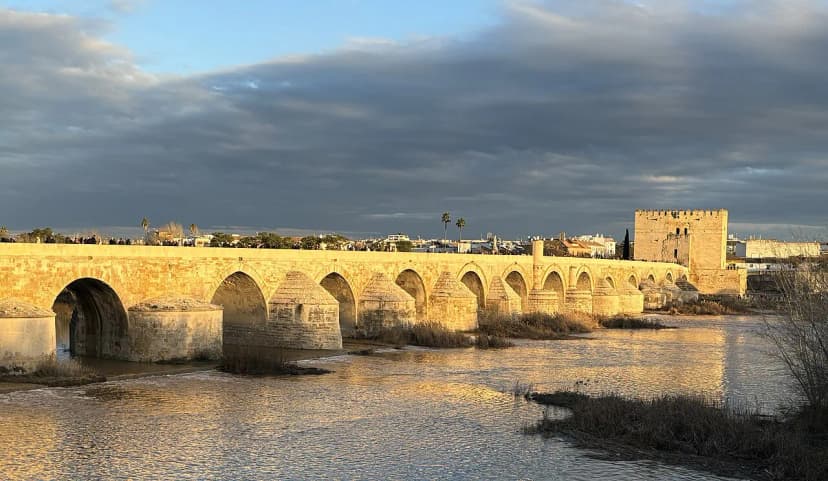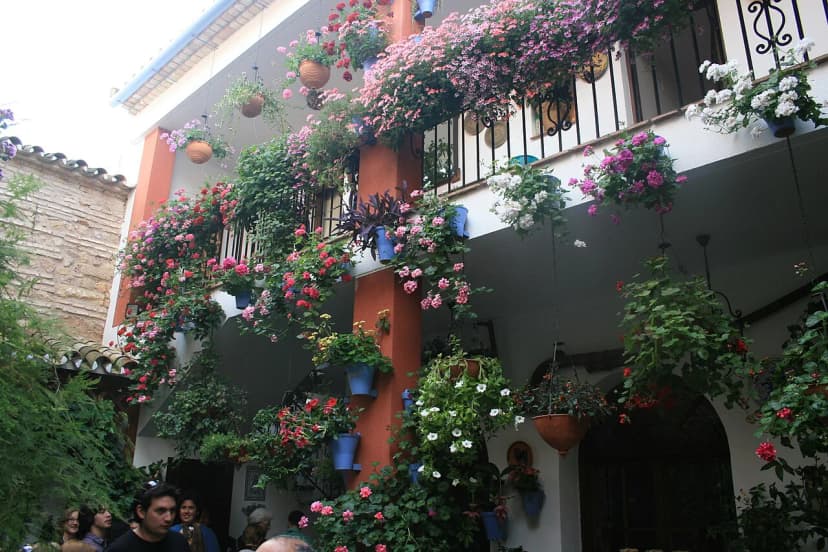
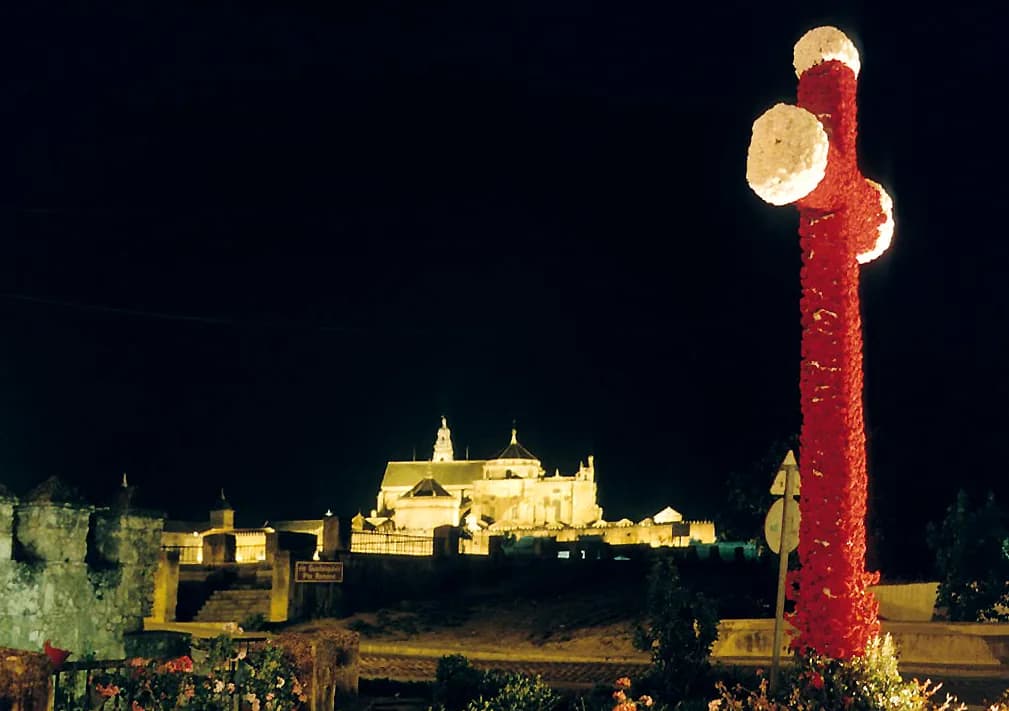
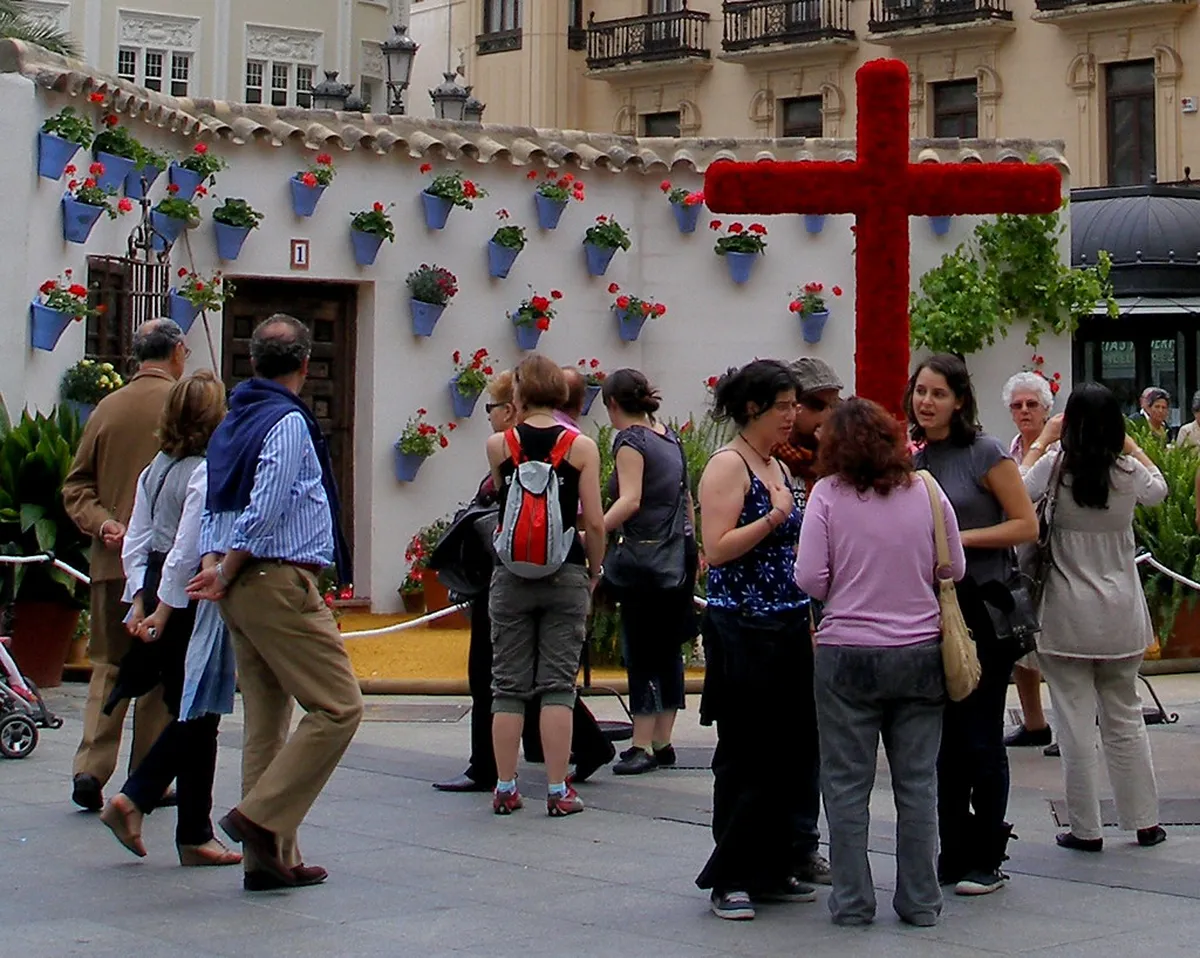
Last updated July 2026: cruces de mayo cordoba names the flower-covered crosses that fill Córdoba's neighborhood squares in the first days of May. Each cross stands beside a temporary bar, or barra, so an evening walk becomes a moving street party with no ticket booths anywhere. This guide ranks six neighborhoods, lists the confirmed 2026 hours day by day, and flags the scheduling trap that catches visitors on the final afternoon.
The Cruces de Mayo Festival in Cordoba, Explained
Cruces de Mayo is Córdoba's opening act for its spring festival season, staged in neighborhood squares rather than the private courtyards of the Patio Festival. Neighborhood associations, religious brotherhoods (hermandades), and local clubs (peñas) each build a floral cross roughly 10 to 13 feet tall, dense with carnations, geraniums, and roses. Around every cross, organizers set up a temporary bar and a small stage for live sevillanas. Judges from the Ayuntamiento de Córdoba score three separate categories: crosses in the historic center, crosses in modern neighborhoods, and crosses inside enclosed spaces such as patios or sports facilities. That split helps first-time visitors decide where to go. Historic-center crosses cluster within walking distance of the Mezquita-Catedral. Modern-zone and enclosed entries spread further across the city. The Turismo de Córdoba tourist board pairs the crosses with the separate Batalla de las Flores parade and recommends walking through San Basilio, San Andrés, Santa Marina, San Agustín, and the city center to see the range of styles. The tradition ties back to the Christian feast marking the finding of the Holy Cross on May 3, layered over older spring customs tied to flowers and the turn of the season. Neighborhood associations, hermandades, and peñas kept the custom alive block by block long before the Ayuntamiento formalized a citywide contest. Today's three-category format channels that same neighborhood rivalry into one scored competition each year. Prize money for 2026 is public and split by category.
The festival always closes by May 3, the Christian feast of the Holy Cross, making the tradition historically rooted rather than arbitrary—each year's dates reflect this fixed religious observance.
| Prize | Amount |
|---|---|
| 1st place (per category) | €2,000 |
| 2nd place (per category) | €1,260 |
| 3rd place (per category) | €980 |
| Jury special prizes | Two at €300, one at €200 |
| "Belleza" special mention (new for 2026) | Recognizes overall care of the installation |
| Participation accésit (up to 45 crosses) | €700 each, requires a jury score of 10 |
2026 Dates, Hours, and the Afternoon Quiet Gap
Córdoba's most recently confirmed Cruces de Mayo ran Wednesday, April 29 through Sunday, May 3, 2026, per the Ayuntamiento de Córdoba's official festival page. The festival follows the same early-May pattern every year, always finishing just before the Patio Festival opens, so expect a similar window in 2027 pending official confirmation. Hours followed a consistent pattern across the run, with one key exception. Music volume dropped between 16:00 and 19:00 each day, and organizing crews took a break. That gap is the best window for photographing crosses without a crowd in frame, but it is the weakest time for music or dancing. Use it deliberately instead of waiting it out at a table. The Mezquita-Catedral and the Alcázar de los Reyes Cristianos both keep regular afternoon visiting hours, so a midday cross visit followed by a monument stop and a return after 19:00 covers more ground than sitting through three flat hours at one square. A free planning app, Mayo Cordobés from Amarillo Limón, adds a GPS map of all 52 crosses plus day-by-day hours for anyone navigating the Judería's narrow streets. It also lists 2025 contest winners by category, useful context for deciding which crosses might repeat a strong showing.
| Day (2026) | Hours | Note |
|---|---|---|
| Wed 29 Apr | 12:00–00:00 | Music lowers around 23:00 |
| Thu 30 Apr – Sat 2 May | 12:00–02:00 | Music lowers 16:00–19:00, then again near midnight |
| Sun 3 May (final day) | 12:00–16:00 | Festival ends in the afternoon, no evening session |
6 Best Cruces de Mayo Neighborhoods in Cordoba
Fifty-two crosses compete across Córdoba each year: 19 in the historic center, 22 in modern neighborhoods, and 11 inside enclosed spaces. Walking all of them in one visit is unrealistic for a short trip. Use the six picks below to match a neighborhood to what matters most: photography, tradition, tapas, families, or the festival's quieter side.
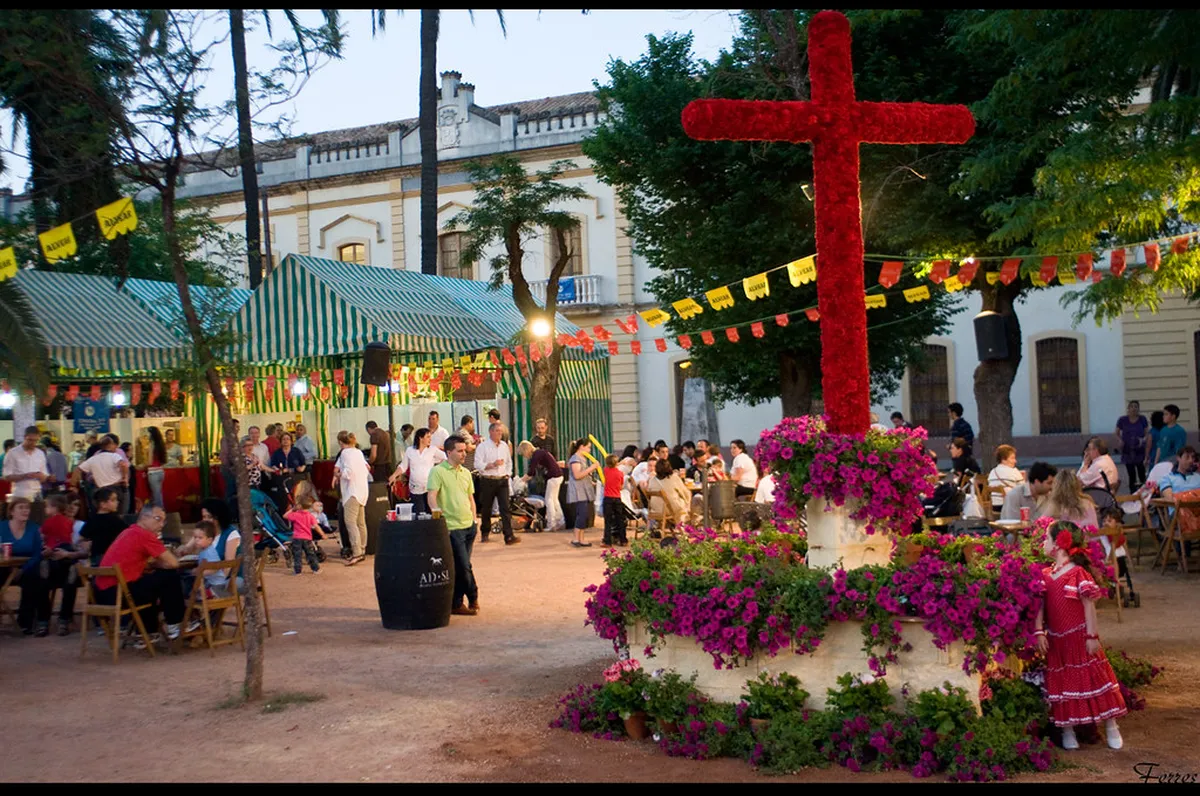
- San Basilio and Alcázar Viejo — Best for Photography and First-Timers
- This stretch sits closest to the Alcázar de los Reyes Cristianos and the Judería, an easy add-on to a first day in Córdoba.
- At Calle San Basilio, 13, the Asociación Vecinal Alcázar Viejo's cross placed fourth in the 2025 historic-center category.
- Early afternoon light works best here, before the after-dark crowds arrive.
- Santa Marina and San Agustín — Best for Tradition and Hermandades
- Local hermandades, or religious brotherhoods, run most crosses in this pocket rather than neighborhood associations.
- At Plaza de San Agustín, the Hermandad de la Entrada Triunfal keeps a devotional tone closer to Holy Week than to a street party.
- Expect a smaller, more local crowd than in the busiest parts of the historic center.
- San Andrés — Best for Tapas and Local Mingling
- Plaza de San Andrés hosts the Hermandad de las Penas de Santiago's cross, a well-known barra stop within the historic-center category.
- Fewer visitors pass through here than through San Basilio, so tables for salmorejo or flamenquín are easier to find.
- Live sevillanas and dancing pick up around the bar tables after 20:00.
- Fuensanta, Cañero, and Villarrubia — Best for Families and Open Space
- Twenty-two of the 52 crosses stand in modern neighborhoods, including Fuensanta, Cañero, Ciudad Jardín, Villarrubia, and Sector Sur.
- These squares run wider and less dense than the historic center, useful with strollers and younger kids.
- At Plaza del Santuario in Fuensanta, the Parroquia de Nuestra Señora de la Fuensanta's cross placed fourth in the 2025 modern-zone category.
- Recintos Cerrados (Enclosed Spaces) — Best for the Festival's Most Elaborate Displays
- Eleven crosses sit inside private patios, sports facilities, and cultural centers with limited capacity, or aforo.
- At Calle Dolores Ibárruri, 2, the ACPACYS cross won first place in the enclosed-space category in 2025.
- First-time visitors tend to skip this category entirely, which makes it the least crowded of the three.
- Plaza de las Tendillas — Best for a Quick Orientation Stop
- Las Tendillas hosts the city's official municipal cross, entered outside the three competition categories.
- This square also stages Córdoba's dance-academy showcase during the same week, per the Ayuntamiento de Córdoba's own festival listing.
- Its central position makes a practical starting point before walking toward San Basilio or Santa Marina.
What to Eat and Drink at the Cruces de Mayo Barras
Every cross runs its own barra, a folding-table bar staffed by the same neighbors, hermandad, or peña that built the cross. Card readers are rare, so bring cash for tapas and wine. Peñas and hermandades take turns staffing the grill, so menus vary slightly cross to cross, but the items below appear almost everywhere.
- Salmorejo cordobés
- A thick, cold tomato-and-bread soup topped with chopped egg and jamón, Córdoba's signature starter.
- Flamenquín
- A breaded, deep-fried roll of pork loin and jamón, usually served with fries.
- Tortilla de patatas
- A thick potato-and-egg omelet, sliced and served at room temperature, a reliable order at any barra.
- Rebujito
- Fino or manzanilla sherry mixes with lemon-lime soda and mint, poured over ice.
- It drinks lighter than it tastes, so pace it against the heat and the walking.
- Montilla-Moriles wine
- The region's own fino and Palo Cortado styles pour by the glass at most barras.
Cruces de Mayo vs the Patio Festival vs Feria de Mayo
Cruces de Mayo is the loudest of Córdoba's three big spring events, ahead of the Patio Festival and the Feria de Mayo. Each follows a different rhythm, so a short trip usually fits one or two rather than all three. Patios open the morning after Cruces ends and run through much of May, trading street noise for quiet courtyards. Patios require walking into private courtyards one at a time, so lines can form at the most popular addresses during peak afternoon hours. Cruces de Mayo has no equivalent bottleneck, since every square stays open and every barra serves whoever walks up. Once the Patios close, the city shifts into Córdoba's Feria de Mayo, a fairground event built around casetas rather than flower-covered crosses. Travelers building a longer Andalusian spring circuit sometimes add Jerez's Feria del Caballo, a separate horse-and-flower fair held elsewhere in the region. Both pair naturally with the Cruces if the itinerary allows extra travel days.
Cruces de Mayo ranks loudest among Córdoba's spring festivals, yet 22 in modern neighborhoods occupy wider squares with less-dense crowds, making them more family-friendly than the compact historic center.
| Festival | Atmosphere | Access |
|---|---|---|
| Cruces de Mayo | Loud, festive, open squares | Free, public plazas |
| Patio Festival | Quiet, contemplative | Free, private courtyards open to visitors |
| Feria de Mayo | Fairground energy, casetas | Some casetas require entry arrangements |
Practical Tips: Cash, Footwear, and the Final-Day Trap
A few logistics decide whether the night runs smoothly.
- Cash is king
- Neighbor-run and hermandad-run bars rarely accept cards.
- Carry small bills for tapas and rebujito, since change can run short at a folding-table bar.
- Skip the sandals
- Córdoba's traditional cobblestones, or chinos cordobeses, are uneven and hard on sandals or heels.
- Closed, flat shoes make the walk between squares easier.
- Watch the final-day trap
- The 2026 festival's last day, Sunday May 3, closed at 16:00 instead of running into the night.
- Anyone planning a late final evening in a future edition should shift plans to the Thursday, Friday, or Saturday session instead.
- Start early in the week
- Wednesday and Thursday squares run the same hours as the weekend but with noticeably thinner crowds.
- Early-week visits still include full barra service and live music once the evening session starts.
Frequently Asked Questions
Is Cruces de Mayo in Cordoba free to attend?
Yes. Entry to every square and every cross is free, with no tickets or reserved areas. Food and drink at the barras cost a few euros each, and cash is the easiest way to pay.
When do the Cruces de Mayo take place in Cordoba?
The 2026 edition ran Wednesday, April 29 through Sunday, May 3. The festival follows the same early-May pattern every year, finishing just before the Patio Festival opens, so a future edition should fall in a similar window pending official confirmation.
Can you bring kids to the Cruces de Mayo?
Yes, especially during the day. Afternoon hours are calmer, particularly in the wider modern-zone squares like Fuensanta and Cañero. Evening sessions get louder and more crowded, so families often prefer the daytime visit.
Where is the best enclosed cross (recinto cerrado)?
The ACPACYS cross at Calle Dolores Ibárruri, 2, won first place in the enclosed-space category in 2025. Enclosed crosses sit inside patios, sports facilities, or cultural centers with limited capacity, so allow a short wait at the door.
What's the difference between Cruces de Mayo and the Patio Festival?
Cruces de Mayo happens in public squares with music, bars, and an open-air party. The Patio Festival opens private courtyards for quiet, close-up viewing of potted flowers, with no bars attached. Patios begin the morning after Cruces ends.
Do the bars at the crosses accept credit cards?
Rarely. Most barras are run by neighbors, hermandades, or peñas on folding tables, and card readers are uncommon. Bring cash for tapas, wine, and rebujito at every cross.
How do you get between the different Cruces de Mayo neighborhoods?
Walking is the practical option, since the crosses spread across compact, mostly pedestrian squares in the historic center. San Basilio, Santa Marina, San Agustín, and San Andrés sit within a walkable loop, per the route Turismo de Córdoba itself recommends.
What should you do during the 16:00–19:00 quiet gap?
Visit the Mezquita-Catedral or the Alcázar de los Reyes Cristianos, both open through the afternoon, or rest before the evening session. Music volume drops and crowds thin during this window, so it is a poor time to expect a party atmosphere.
More Andalusian Fairs
Cordoba and Jerez in May.