Last updated July 2026. Feria del Caballo Jerez fills Parque González Hontoria with horses, sherry, and flamenco for one week every May, drawing crowds from across Andalusia. Unlike Seville's April Fair, every caseta in Jerez stays open to the public, so visitors without local connections can walk in and join the party. This guide covers the 2026 and 2027 dates, how the fairgrounds work, and where the Jerez fair fits alongside Córdoba's May festivals.
What Is the Feria del Caballo in Jerez de la Frontera?
Feria del Caballo is Jerez de la Frontera's week-long spring celebration of horses, sherry, and flamenco, held each May in Parque González Hontoria. Spain's tourism ministry has recognized it as a Fiesta of International Tourist Interest since 1980. That places it alongside Seville's April Fair and the Romería del Rocío among Andalusia's major spring events. Its roots trace to the 13th century, when King Alfonso X granted Jerez a livestock fair after the Castilian conquest. Horse trading still happens alongside the modern festivities. In 1985, the city council removed most of the fixed casetas that had lined the park. It kept only a handful tied to institutions like Domecq and González Byass. That change opened space for today's temporary structures. In 2011, fair organizers renamed several streets inside the Real after Jerez-born flamenco artists, reflecting the city's flamenco heritage. The detail that matters most for first-time visitors: every single caseta in Jerez stays open to the public. Unlike Seville, where most casetas require a private membership card, anyone can walk into any tent in Jerez to eat, drink, and dance.
Feria del Caballo Jerez Dates for 2026 and 2027
Planning around the right week matters because Feria del Caballo Jerez dates shift every year rather than falling on a fixed weekend. The 2026 edition runs May 9 to May 16, positioned in the second week of May and just before the Romería del Rocío pilgrimage. For 2027, the Jerez tourism board confirms an earlier window, April 24 to May 1, moved up to avoid overlapping other regional fairs. Confirm exact dates against the official Ayuntamiento de Jerez calendar a few months out, since fair week can shift by a matter of days. Recent editions have stretched the fair from seven days to nine, adding the preceding weekend, so total length can vary too. Each day also splits into two distinct moods, shown below.
| Day Fair (about 1 p.m.–7 p.m.) | Night Fair (after dark) | |
|---|---|---|
| Main activity | Paseo de Caballistas horse and carriage parade | Live music, dancing, casetas at full capacity |
| Setting | Open albero ground, equestrian contests running | Alumbrado lights overhead, cooler evening air |
| Good for | Families, first-time visitors, photographers | Later dancing, larger groups |
Inside the Real: Parque González Hontoria
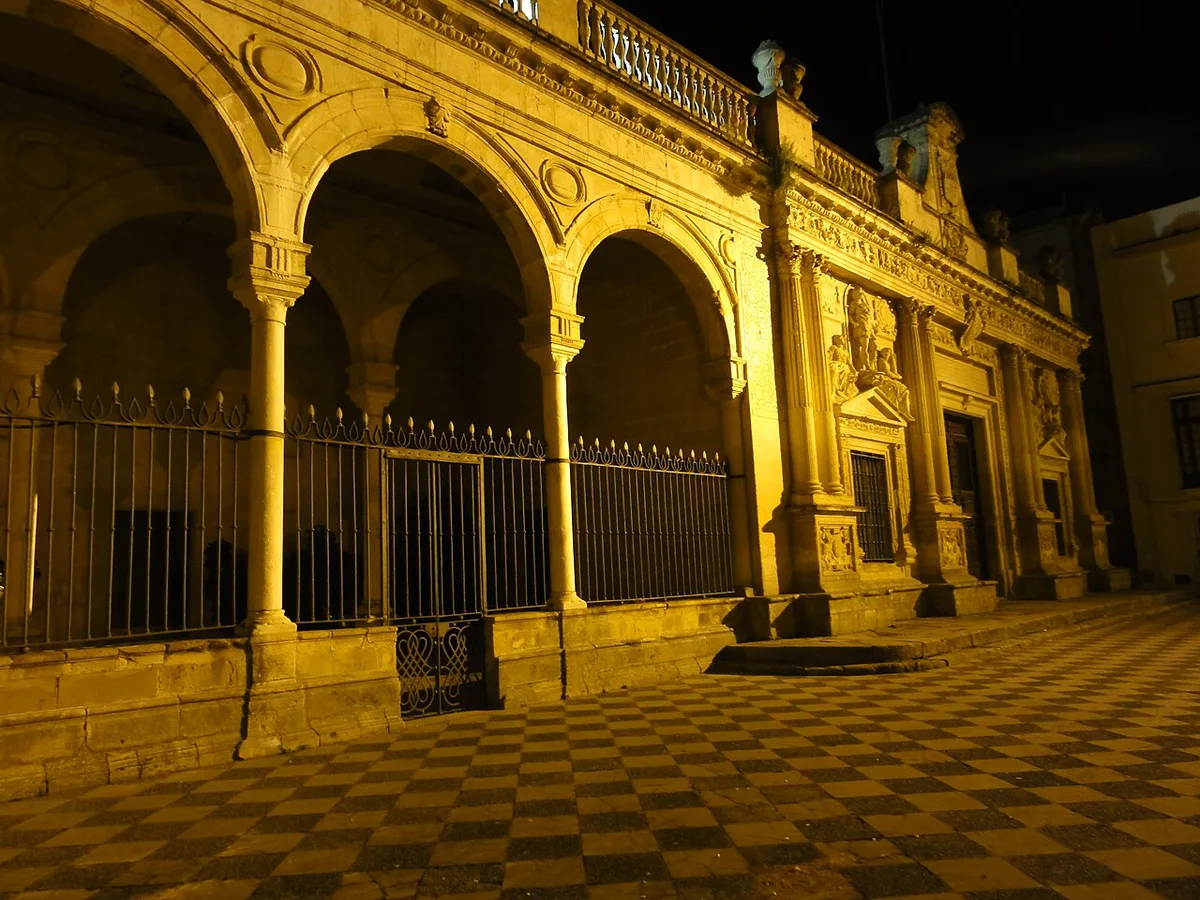
The fairgrounds, known locally as the Real, sit inside Parque González Hontoria, within walking distance of Jerez's historic center. More than 200 casetas line the sand-covered streets, spread across a layout that blends open albero ground with landscaped garden sections. Opening night belongs to the Alumbrado, the ceremonial switch-on of the string lights that canopy the Real for the rest of the week. Paseo de Caballistas fills the main avenues from roughly 1 p.m. to 7 p.m. each day. Riders in traditional dress and horse-drawn carriages parade a tradition that predates the modern funfair entirely. A separate amusement zone, known as Calle del Infierno, runs rides and games alongside the caseta streets. That gives visitors a break from the sherry and dancing when they want one. Ayuntamiento de Jerez publishes interactive and PDF maps of every caseta by number and name, plus a live radio feed, through its official Feria portal.
The Caseta Experience: Sherry, Food, and Flamenco
Every caseta at the Feria del Caballo is open to anyone, a structural difference from Seville that international visitors notice immediately. No membership list, no door check, and no local contact are required. You can step into whichever tent looks lively and order a drink. Fino sherry is the traditional pour, often produced by Jerez's own bodegas, including Tio Pepe and Lustau. Many casetas mix that fino with lemon-lime soda over ice to make rebujito, the fair's signature cocktail. Food runs toward pescaíto frito (fried fish), tortilla, jamón, and heartier plates like rabo de toro (oxtail stew). Some casetas also run limited-edition Platos Especiales menus during fair week, according to the official Feria program. Live music fills the tents all week, mostly sevillanas and the bulerías style associated with Jerez's own flamenco tradition.
Equestrian Highlights and Parallel Events
Horses remain the reason the fair exists, and several formal competitions run throughout fair week. The Concurso de Enganches judges horse-drawn carriage teams and their drivers on precision and presentation. Concurso Morfológico evaluates the conformation of Pura Raza Española and Cartujana horses, the breeds most associated with Jerez. Riding disciplines on show include doma clásica (classical dressage), doma vaquera (working equestrianism), and acoso y derribo, a traditional herding skill. Caballo de Oro, the Golden Horse award, closes out the week, presented to a standout figure in the equestrian world. In 2025, the mayor presented it to the Real Sociedad de Carreras de Caballos de Sanlúcar de Barrameda, according to the Ayuntamiento de Jerez. Riders looking for more horse culture beyond fair week can plan a separate visit to the Real Escuela Andaluza del Arte Ecuestre, Jerez's dedicated equestrian school. It runs its own show schedule independent of Feria week. Check current dates before you go.
Getting to the Fairgrounds and Where to Stay
Parque González Hontoria sits close enough to central Jerez that many visitors walk from their hotel, especially during the Day Fair. The Servicio Autobuses Urbanos runs dedicated routes to the fairgrounds throughout fair week for visitors staying farther out. Extra buses also cover the wider rural zone. Special taxi ranks operate near the Real entrance for the busiest hours, particularly late at night when the Night Fair winds down. Book accommodation six to nine months ahead if possible, since hotel and apartment rates around fair week climb well above off-season pricing. Staying within walking distance of Parque González Hontoria costs more but saves on late-night transport once the casetas close.
Budgeting for the Feria: What's Free and What Costs Extra
Getting into Parque González Hontoria and every caseta inside it costs nothing. There is no gate fee and no cover charge at any tent. Your actual spending happens on food, drinks, and rides once you are inside. Each caseta sets its own prices for fino, rebujito, and tapas, so costs vary from tent to tent rather than following one fairground rate. The funfair section, sometimes called Calle del Infierno, charges per ride like any traveling amusement park. Because pricing is set locally and shifts year to year, check the Jerez Smart app or the official Feria program for current listings. Do that before committing to a night out. Budget more for weekend nights, when the busiest casetas draw the largest crowds and drink orders take longer.
Local Tips and Mistakes to Avoid
A few practical adjustments make the difference between an easy fair day and an uncomfortable one.
The Paseo de Caballistas horse parade runs 1 p.m. to 7 p.m. daily, and casetas reach peak energy during those afternoon hours, so arriving after 2 p.m. puts visitors in the heart of the action.
- Skip the flamenco-dress pressure. Smart casual or a traje de chaqueta covers evenings, and daytime dress is far more relaxed.
- Watch the albero. Yellow sand covers the fairgrounds and kicks up dust all day, so leave suede and white shoes at the hotel.
- Arrive after 2 p.m. Casetas stay quiet before then, and the real atmosphere builds through the afternoon.
- Use the Punto Violeta if needed. This safety and support point served 1,302 people in its first four days of the 2026 fair, according to the Ayuntamiento de Jerez.
- Check the Sala de Lactancia and Feria Inclusiva programs. Both support families, including a nursing space and quieter, sensory-friendly hours for children with autism.
- Safety infrastructure runs deep. A published security plan, smart video surveillance, and on-site defibrillators back up the fair, per the Ayuntamiento's Feria devices program.
Feria del Caballo vs. Seville's April Fair vs. Córdoba's May Festivals
Three Andalusian spring events get compared constantly, and knowing what separates them helps decide which one to build a trip around. May in Andalusia often becomes a circuit, moving between cities as each festival opens. Cádiz province anchors Jerez and its Feria del Caballo, while Córdoba's festivals sit in a separate province with their own spring calendar. Travelers building a full May circuit often add Córdoba to the itinerary before or after Jerez. Cruces de Mayo in Córdoba fills the city's patios and streets with decorated crosses earlier in the month. Feria de Mayo in Córdoba offers a quieter, more local alternative to the massive crowds of Jerez and Seville. Both events show a different side of Andalusian spring tradition, rooted in Córdoba rather than Cádiz province.
The fair is noted for massive crowds, and the Punto Violeta support point served 1,302 people in just its first four days of 2026, illustrating the scale of demand.
| Festival | Location | Caseta Access | Primary Focus |
|---|---|---|---|
| Feria del Caballo | Jerez de la Frontera, Parque González Hontoria | All casetas public | Horses, equestrian contests, sherry |
| Feria de Abril | Seville | Mostly private, membership required | Dancing, casetas, general festivity |
| Cruces de Mayo | Córdoba | Public street event, not caseta-based | Decorated crosses and patios |
| Feria de Mayo | Córdoba | Public fairground | Smaller-scale fair traditions, quieter crowds |
Frequently Asked Questions
When is the Feria del Caballo Jerez in 2026 and 2027?
Dates for 2026 run May 9 to May 16, in the second week of May and just before the Romería del Rocío. The 2027 edition moves earlier, running April 24 to May 1, according to the Jerez tourism board. Confirm both dates against official Ayuntamiento announcements as the fair approaches, since regional festival calendars can shift.
Can anyone enter the casetas at the Jerez Horse Fair?
Yes. Every caseta at the Feria del Caballo is open to the public, with no membership card or invitation required. That is the clearest difference from Seville's April Fair, where most casetas are private.
How much time should you plan for a day at the fair?
Plan to arrive after 2 p.m., since the atmosphere is thin earlier in the day. A full visit covers the Day Fair through the Paseo de Caballistas. It continues into the Night Fair after the Alumbrado lighting. Many visitors treat it as a full afternoon-to-late-night outing.
What should you wear to the Feria del Caballo?
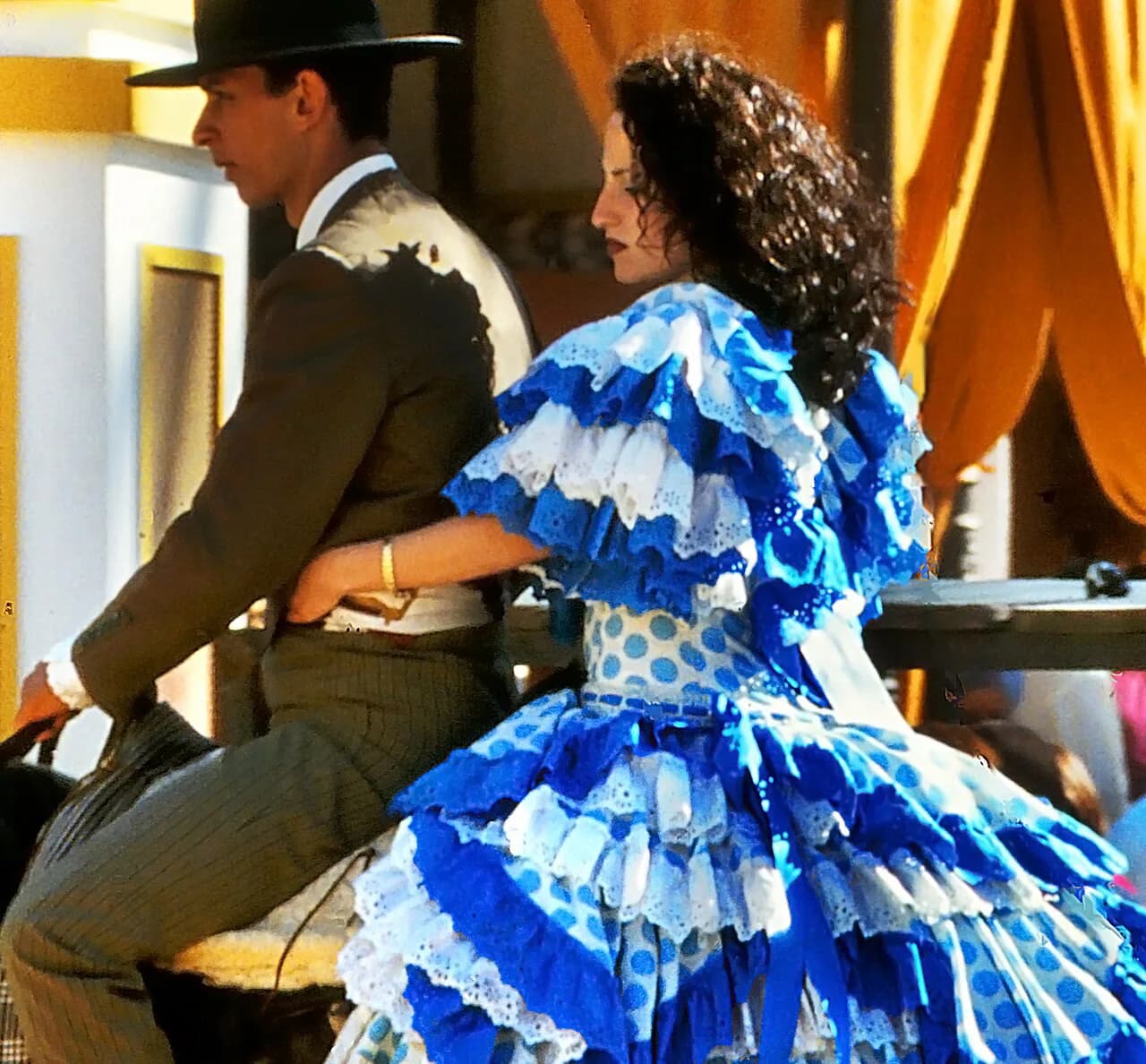
Flamenco dress is not required, though many women wear traje de gitana and riders wear traje de corto during the day. Evening dress leans smart casual or traje de chaqueta. Because the fairgrounds are covered in albero sand, skip suede and white shoes.
How far ahead should you book a hotel in Jerez for fair week?
Book six to nine months ahead if possible. Hotel and apartment rates around fair week climb well above off-season pricing, and rooms close to Parque González Hontoria sell out first.
What is the difference between the Feria del Caballo and Jerez's Feria de la Vendimia?
Feria del Caballo is Jerez's May horse fair, built around equestrian contests, sherry, and the public casetas covered in this guide. Feria de la Vendimia, by contrast, is a separate September harvest festival tied to the grape and sherry-making season. The two events do not overlap and celebrate different sides of Jerez's calendar.
Why do horses play such a central role in the Feria del Caballo?
The fair grew out of a medieval livestock market that King Alfonso X granted to Jerez in the 13th century. Horse trading and equestrian contests have remained part of the celebration ever since, even as the surrounding party grew larger around them.