Last updated July 2026, the Patios de Córdoba festival turns the old city into a walk-through garden for two weeks every May. Homeowners in neighborhoods like San Basilio and Santa Marina open private courtyards for free, competing for a municipal prize that has run since 1921. This guide covers the 2026 dates, the trade-offs between crowded and quiet routes, and the daily schedule, so a midday closure doesn't catch you standing at a locked gate.
Patios de Córdoba Festival: A Living UNESCO Tradition
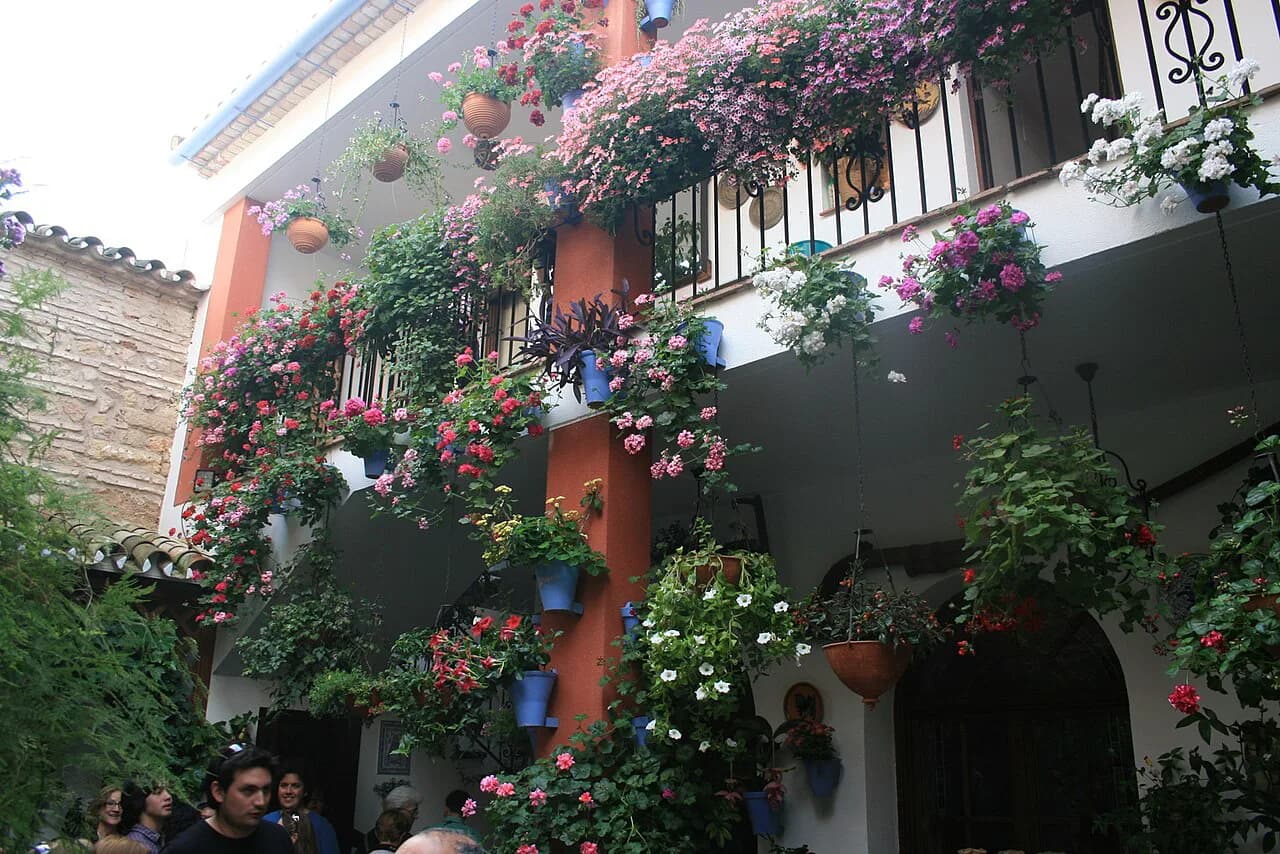
Córdoba's patio festival runs for two weeks each May, and UNESCO added it to the Representative List of the Intangible Cultural Heritage of Humanity on December 6, 2012. The listing recognizes something narrower than pretty flowers: a casa-patio tradition in which private homes are built around a shared inner courtyard, and families open their front doors so strangers can walk through. Residents plant, water, and maintain these courtyards year-round, not just during festival week. Visitor numbers have grown alongside the recognition; press-sourced figures cited on Wikipedia put 2018 attendance at roughly 150,000 people across the festival's two weeks.
History: From Roman Courtyards to the 1921 Competition
Córdoba's courtyard houses trace back to Roman-era design, when an open central space ventilated the rooms around it. Muslim-era builders later added a street-facing porch and filled the courtyard with plants to hold cool air during the region's hot, dry summers. That layout survived largely intact into the 20th century, which is why many historic courtyards still follow the same footprint today. Mayor Francisco Fernández de Mesa launched the first official contest in 1921, offering prizes of 100, 75, and 50 pesetas to just three houses: 8 Empedrada in Santa Marina, and 7 Buen Pastor and 11 Almanzor in the Jewish Quarter. Poor turnout stalled a repeat contest until 1933, when 16 courtyards entered under mayor Francisco de la Cruz Ceballos. The Spanish Civil War halted the competition between 1936 and 1939. It resumed in 1944 under new judging criteria that added architecture and decoration as scoring factors. By 1962, the top prize had grown from 3,000 to 8,000 pesetas, and organizers added consolation aid for courtyards that didn't place, plus classical music concerts and beauty pageants. Spain declared the courtyards a Fiesta of National Tourist Interest in 1980, more than three decades before the UNESCO inscription.
2026 Dates, Tickets, and Daily Schedule
Córdoba's tourism board lists the 2026 festival running from May 4 to May 17, matching the traditional two-week May window the festival has followed for decades.
- Dates: May 4 to May 17, 2026, per the Córdoba town hall calendar
- Entry: free at every competition patio; a small voluntary donation, la voluntad, is welcomed but never required
- UNESCO status: Intangible Cultural Heritage of Humanity since December 6, 2012
- Sessions: separate morning and evening blocks, with many patios closed for a midday break
Choosing a Route: San Basilio, Santa Marina, San Lorenzo, and the Judería
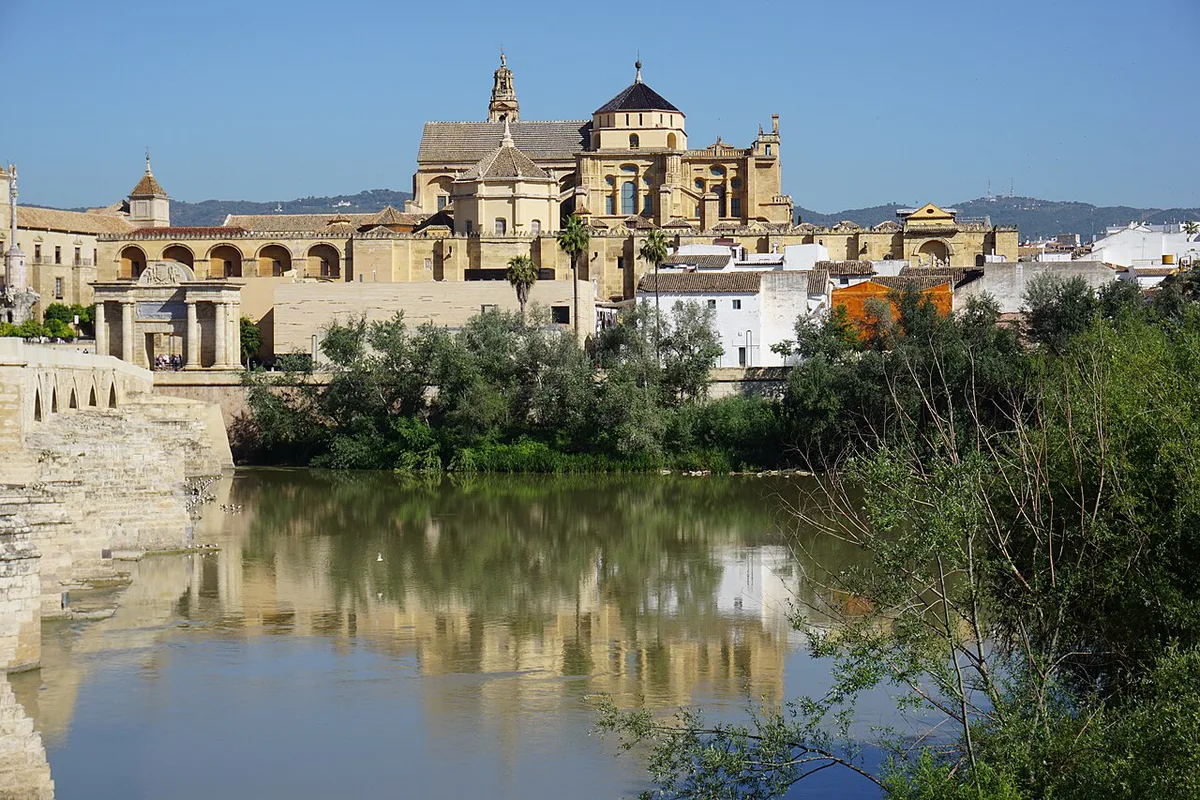
Córdoba spreads its patios across several old-city neighborhoods, and each has a different crowd profile. Alcázar Viejo sits between the Alcázar fortress and the San Basilio parish, and it's the festival's best-known route and also its most crowded. It's home to The Grandfather and the Child, a 2015 monument on Calle Martín de Roa depicting a man handing a flower pot to a boy on a ladder. Santa Marina and San Lorenzo, with a smaller cluster near La Magdalena, sit at what many locals treat as the festival's real center of gravity. Those neighborhoods carry a higher share of Old Architecture category winners and noticeably thinner crowds than San Basilio. The Judería, Córdoba's old Jewish quarter, sits close to the Mosque-Cathedral, which makes it convenient to reach but also busy for the same reason. Palacio de Viana adds a fifth option: twelve courtyards under one roof, open beyond festival season, for travelers who want the patio experience without route-planning.
Santa Marina and San Lorenzo concentrate older courtyards—entries built before the 1970s—and reward visitors with lighter crowds compared to San Basilio's busy Alcázar Viejo district.

| Traveler Type | Recommended Route | Why It Works |
|---|---|---|
| First-timers | San Basilio (Alcázar Viejo) | Most recognizable route; home to The Grandfather and the Child monument |
| Photography enthusiasts | Santa Marina and San Lorenzo | Higher share of Old Architecture category winners and thinner crowds |
| History buffs | Judería and Palacio de Viana | Monumental and stately courtyards near the Mosque-Cathedral |
| Limited time | Palacio de Viana only | Twelve courtyards in a single visit, open beyond festival season |
Competition Categories: Old, Modern, and Monumental Patios
Córdoba's competition sorts entries into two broad groups. Monumental and stately courtyards belong to palaces or religious buildings, including the Patio de los Naranjos inside the Mosque-Cathedral complex. The Santuario de la Fuensanta and Córdoba's historic synagogue each contribute a monumental courtyard too, both independent of the annual competition. Palacio de Viana is the standout example, gathering twelve stylistically distinct courtyards inside one former palace. Competition courtyards make up the second group, split into old architecture and modern or renovated architecture. Old architecture entries date to before the 1970s and keep their original structural features, per Turismo de Córdoba's own category description. Modern architecture entries belong to newer builds, or to older houses altered enough that the original layout no longer survives. Judging criteria have shifted over the decades, adding factors like floral variety, pot care, and natural lighting alongside the original architecture and decoration scoring.
What to Look For: Watering Traditions, Flowers, and Cordoban Paving
Watch for the regadora technique used to water hanging pots. Caretakers use a long cane fitted with a small tin can to reach pots too high for a normal watering can. Sculptor José Manuel Belmonte has built a small trilogy of monuments honoring that work:
- La Regadora: Puerta del Rincón, inaugurated April 2014, funded by Cervezas Alhambra at a cost of €30,000
- The Grandfather and the Child: Calle Martín de Roa, San Basilio, inaugurated May 2015
- The Well of Flowers: Plaza del Poeta Juan Bernier, installed July 2022, Belmonte's third caretaker sculpture
Beyond the Flowers: Wine, Flamenco, and Spain's Spring Festival Calendar
Music and food run alongside the flowers throughout the festival. Montilla-Moriles fino wine flows in bars near the routes, paired with local tapas. Flamenco guitar, singing, and dance appear inside several courtyards too, adding sound to the visual displays. Spring is Andalusia's festival season, and the patios pair naturally with events nearby. Málaga's Holy Week processions fill the weeks just before the patios open, with a solemn atmosphere that contrasts with Córdoba's flowers. Málaga follows up a few weeks later with its spring fair, trading solemnity for flamenco dresses and horse-drawn carriages. Barcelona keeps its own courtyard-adjacent tradition too: the Gràcia neighborhood festival decorates entire streets rather than private patios, worth a look for anyone the flowers hook. Madrid runs its own May celebration around the city's patron saint festival, close enough on the calendar to combine with a Córdoba trip on the same rail network. Andalusia's devotional calendar continues into late spring with the Rocío pilgrimage, a procession-based gathering that shares the region and season but not the horticulture. Travelers extending into early summer sometimes add Alicante's bonfire festival, Hogueras de San Juan. Alcoy runs its own historical pageant, Moros y Cristianos, around the same stretch of the calendar. Two more early-summer options worth noting are Haro's wine-throwing festival, the Batalla del Vino, and Elche's Misteri d'Elx mystery play, another Intangible Cultural Heritage entry like the patios themselves.
Mistakes to Avoid and Pro Tips
A few planning choices separate an easy visit from a frustrating one. Trying to see every participating courtyard in a single day is the most common misstep, since the routes span multiple neighborhoods on foot.
- Don't try to cover every route in one day: pick two neighborhoods and go deep instead of wide
- Skip weekend visits if you can: mid-week days draw noticeably thinner crowds at the same courtyards
- Wear real walking shoes: Córdoba's cobblestones and pebble-mosaic paving are unforgiving after a few hours
- Check the official Patios de Córdoba app or map for that year's queue updates before setting out each morning
Getting to Córdoba and Where to Stay
Córdoba sits on Spain's AVE high-speed rail network, with regular daily connections from both Madrid and Seville. Córdoba's old city is compact and walkable, so a rental car adds cost without much benefit once you're downtown. May accommodation books up well ahead of the festival, so reserve six to twelve months out if your dates fall inside the two-week window. Rooms inside or near the historic quarter, close to San Basilio or the Judería, put you within walking distance of the busiest routes, though they also cost more and sell out first.
The festival draws roughly 150,000 visitors across two weeks, creating accommodation scarcity that demands booking six to twelve months ahead for May travel.
How Patio Queues and Midday Closures Work
There is no single queue covering an entire route. Visitors line up separately outside each participating house, so waiting times can vary within the same neighborhood.
San Basilio attracts the longest lines, especially around Calle Martín de Roa and during weekend evening sessions. Arrive near opening time, then visit nearby patios before tour groups fill the narrow streets.
Santa Marina and San Lorenzo offer a useful alternative when Alcázar Viejo becomes congested. Their patios are more spread out, but queues are often shorter and pavements feel less crowded.
Most competition patios operate in separate morning and evening sessions. A long afternoon closure commonly falls around 14:00–18:00, although official hours can change. Use that break for lunch, the Mosque-Cathedral, or Palacio de Viana rather than waiting beside closed doors.
Check the official map before leaving each day. It identifies participating addresses and current opening details, helping you replace a crowded stop without abandoning the whole route.
For trip-planning details, see Festival de los Patios de Cordoba official source and Cordoba / regional tourism authority.
Frequently Asked Questions
What are the Patios de Córdoba festival dates in 2026?
Córdoba's tourism board lists the 2026 festival running from May 4 to May 17. Confirm exact opening hours and any last-minute changes on the official patios.cordoba.es program closer to your travel dates.
Do you have to pay to visit the patios?
Entry to every competition patio is free. Many owners welcome a small voluntary donation known as la voluntad. Palacio de Viana is the exception, since its twelve courtyards operate as a paid, year-round museum outside the free municipal contest.
Which route should first-time visitors choose?
San Basilio, in the Alcázar Viejo district, is the most recognizable route and a reasonable first stop, including The Grandfather and the Child monument on Calle Martín de Roa. Pair it with Santa Marina or San Lorenzo for a quieter second route, since those neighborhoods carry a higher share of Old Architecture category winners.
When is the best time of day to avoid crowds?
Weekday mornings, right when routes open, tend to be quietest. Many patios close for a midday break in the early-to-mid afternoon, so plan lunch or indoor sightseeing then rather than arriving at a shuttered door. Check the official festival program for that year's exact hours, since they can shift slightly year to year.
Do people actually live in the patio houses?
Yes. These are communal, family, or multi-family dwellings in Córdoba's historic quarter, and residents tend the plants and courtyards year-round, not just during festival week. UNESCO's own Intangible Cultural Heritage listing credits that continuity to the people who live there, not only to the flowers on display.
Is Córdoba walkable for visiting multiple patio routes in one day?
Córdoba's old city is compact, and most competition patios sit within its historic quarter. Covering two neighborhoods on foot in a single day is realistic. Adding a third route usually means rushing through courtyards instead of taking time with the caretakers and the details.