
Last updated August 2026. Every September, the Feria de Albacete takes over Albacete, in Castilla-La Mancha, for a 24-hour, ten-day run centered on the ring-shaped fairground locals call La Sartén. This guide covers eight practical things to know before the Puerta de Hierros opens on September 7.
8 Things to Know Before You Go to the Feria de Albacete
Spain's Ayuntamiento de Albacete organizes the Feria de Albacete each year and has held Fiesta of International Tourist Interest status since 2008. Viewers voted it Spain's best fiesta on Telecinco's poll in 2009 and on Antena 3's poll in 2013, 2015, and 2017. Artist Carlos Pérez Ballesteros designed the 2026 poster, titled Legado de Tradición. These eight essentials cover what matters most for a first visit.
- The Fair Runs 24 Hours a Day for Ten Straight Days
- Feria de Albacete dates stay fixed at September 7 to September 17 each year, honoring the city's patron, the Virgen de los Llanos.
- Stalls, casetas, and fairground attractions stay open around the clock, so there is no single closing time to plan a visit around.
- City reporting describes the population as roughly quadrupling for the ten days, as day-trippers arrive from across the region.
- La Sartén: The Ring-Shaped Recinto Ferial
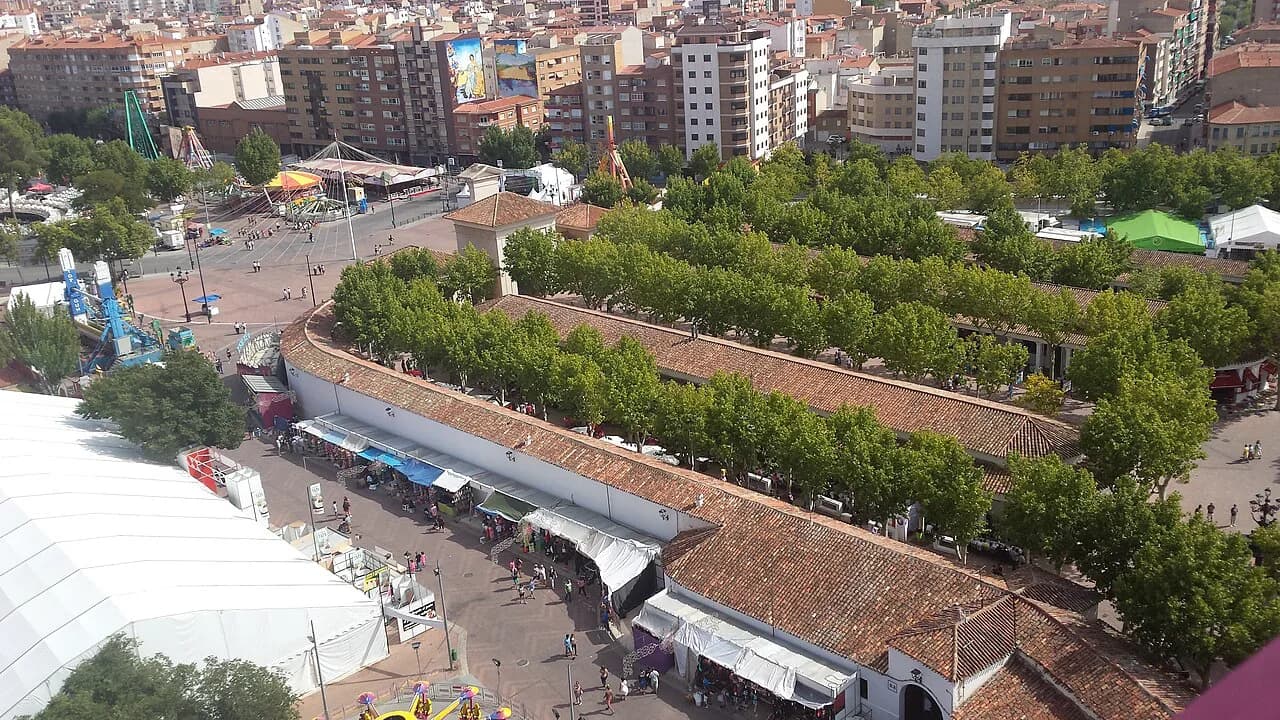
- Locals call the Recinto Ferial La Sartén, or frying pan, and sometimes Los Redondeles, for its shape: a long entrance paseo feeding three concentric rings.
- It covers more than 44 acres in the city center, among the largest purpose-built fairgrounds in Spain.
- Later sections break down what happens in each ring, so you can plan a route before you arrive.
- The Puerta de Hierros Opens the Fair on September 7
- Every September 7 at 10 p.m., the mayor unlocks the Puerta de Hierros, officially opening the fair for its ten-day run.
- A Cabalgata de Apertura precedes it: roughly a hundred floats, marching bands, and dancers in traditional Manchego dress parade through the city first.
- Arrive early for a spot along the route, since the crowd around the gate grows dense before the opening moment.
- The Batalla de Flores and Manchego Dress
- A day after the opening parade, the Batalla de Flores sends the same floats back through the streets, with dancers tossing confetti and streamers.
- Watch for the Manchega, serrana, and spigadora styles of traditional dress, worn by pairs competing each year for the Manchegos de la Feria title.
- An Ofrenda floral, or flower offering to the Virgen de los Llanos, draws more than 30,000 participants on the fair's first Sunday, accompanied by the Banda Sinfónica Municipal de Albacete.
- Miguelitos de La Roda and the Fair's Cider Habit
- Miguelitos, a puff-pastry dessert filled with custard and dusted with powdered sugar, originated in nearby La Roda and are sold across the fairground.
- Cider, not wine, is the traditional pairing for miguelitos in the casetas that serve food throughout the day.
- Expect arroz con caracoles, grilled chorizo, and boiled shrimp with beer, a classic pairing in the traditional casetas.
- The Feria Taurina Bullfighting Calendar
- Albacete's plaza de toros opened in 1917 with room for nearly 10,000 spectators.
- It hosts one of the country's most closely watched bullfighting calendars, with roughly ten fights across the fair's ten days.
- That is up from three or four fights the ring hosted in the 1930s, so book marquee dates through the official fair programme early.
- Feria de Día vs. Feria de Noche
- Daytime hours suit families, with carriage and horse displays, children's rides along the paseo, and the Tómbola de Caridad charity raffle running since 1953.
- Caseta de los Jardinillos, the fair's main concert venue, holds 6,300 people between standing room, fixed seating, and table seating.
- After dark, casetas around the Ejidos switch to loud music, with several running from around 3 p.m. to 7 a.m.
- Book Trains and Lodging Months Ahead
- Renfe's AVE high-speed line connects Albacete to Madrid and Alicante, and fair-week trains sell out well before September.
- Hotels inside the city center book up early and charge a premium during the fair.
- Properties on the outskirts cost less but need a bus or taxi ride in, so reserve lodging and trains as soon as dates are confirmed.
A Fair with Roots Back to 1375
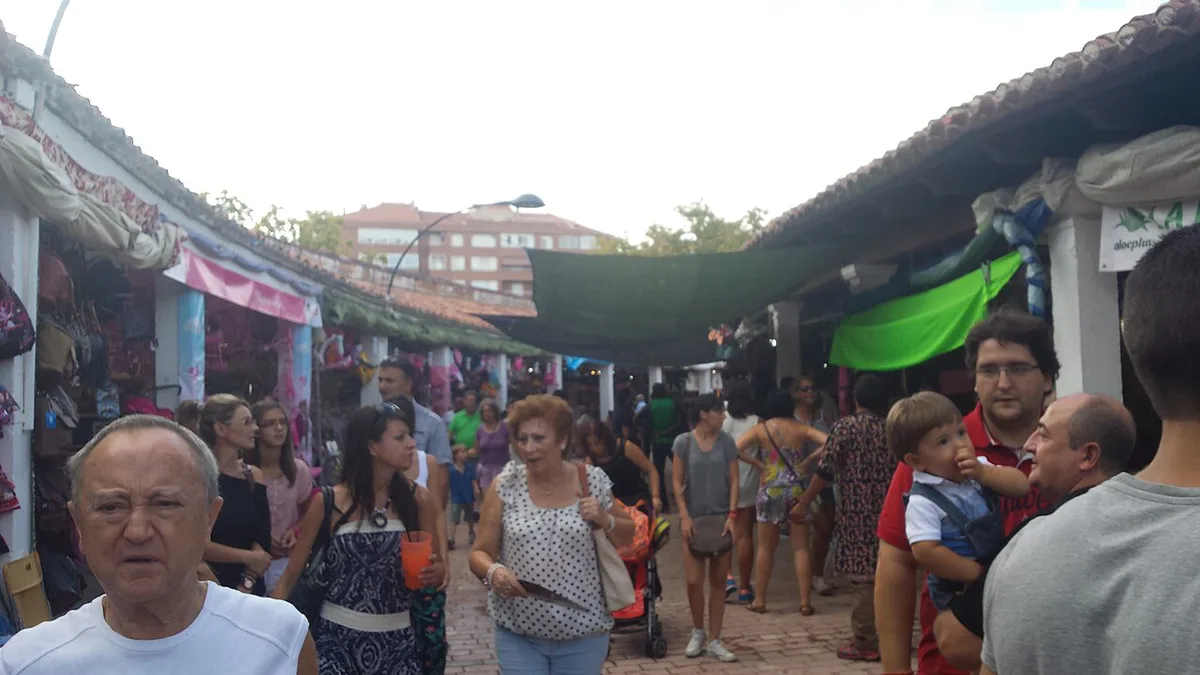
Albacete's right to hold an annual fair dates to 1375, when the town separated from Chinchilla and gained market privileges. Its modern form took shape on March 6, 1710, when King Felipe V granted a four-day franca fair. That grant grew into today's ten-day run over the following two centuries. Builders finished the Recinto Ferial in 1783, and Spain declared the whole event a Fiesta of International Tourist Interest in 2008. A document from 1325 already references Albacete's traders, when merchants in Valencia were warned that a rival fair would run in nearby Chinchilla instead. Between 1710 and 1712, the fair briefly split across two sites, a period historians call la feria dividida. Castilla-La Mancha's tourism board lists the fair among the region's flagship September events, tied to the ongoing devotion to the Virgen de los Llanos.
The Puerta de Hierros: A Closer Look at the Fair's Gate
Built in Mudéjar style, the current Puerta de Hierros forms nine doors across five main portadas within one structure. It measures about 118 feet long and 82 feet high, dominating the entrance to the Recinto Ferial. A decorative spire, the Pincho de la Feria, sits above the central arch, with the city's coat of arms mounted below it. Each year the façade is lit in different colors, spelling out Albacete and the current year between the side portadas. A separate structure, the Antigua Puerta de Hierros, is a neoclassical replica of the original 19th-century gate. It stands between Calle Feria and the Jardinillos park, installed in 2010 for the 300th anniversary of Felipe V's original grant.
The Pregón: The Fair's Official Kickoff on September 6
Pregón, the fair's first official act, takes place on September 6 at the Museo Municipal de Albacete, on the Plaza del Altozano. Each year, the Ayuntamiento selects a public figure to deliver the address that formally opens fair season, a day ahead of the Puerta de Hierros. Albacete also names that year's Manchegos de la Feria, the costumed pairs who represent the city at official events, on the same evening. Editions have run almost every year since the fair's founding. It paused during the civil war in 1937 and 1938, was cancelled in 2020 due to COVID-19, and returned as a reduced edition in 2021.
How to Read La Sartén: A Ring-by-Ring Map of the Recinto Ferial
Four practical zones divide the Recinto Ferial, and knowing them before opening night saves time. See the Recinto Ferial layout guide for the fairground's full architectural history.
- The Paseo (the Handle)
- A long entrance walkway holds game stalls, the Tómbola de Caridad, and children's rides, feeding directly into the three rings.
- Vendors and small rides line both sides, so plan to walk it slowly rather than rush straight to the casetas.
- The First Ring and the Templete
- An innermost ring holds the modernist Templete pavilion, built between 1911 and 1913, plus stalls selling traditional crafts.
- It sits at the center of the whole complex, so it works as a landmark for regrouping with a group.
- The Second and Third Rings
- These outer rings hold most of the casetas, tents that serve food and drink all day and switch to music and dancing at night.
- Expect the loudest, busiest atmosphere here after dark, when the casetas with open access draw the largest crowds.
- The Ejidos
- Open ground surrounding the whole structure holds the largest rides, concert tents, and the fair's equestrian displays.
- This is also where the Feria de la Tapa and the larger music carpas set up for the run of the fair.
Where to Catch Cante y Baile por Manchegas
Traditional casetas run their own performance schedule throughout fair days, separate from the concerts at the Caseta de los Jardinillos.
- Daytime Caseta Programs
- Many traditional casetas schedule manchegas, flamenco, sevillanas, and karaoke sets across the day, alongside their food service.
- The Templete and AMFA
- A modernist Templete, at the center of the first ring, hosts folk performances tied to the Asociación de Manchegos y Manchegas de la Feria de Albacete, founded in 2014.
- Best Time to Watch
- Catching a Manchegos performance in full costume before the Puerta de Hierros opens on September 7 is one of the most direct ways to see the region's folk traditions.
Feria de Albacete Compared to Spain's Other Big Ferias
Feria de Albacete is not the only major fair on Spain's calendar, and comparing formats helps set expectations. In Seville, the Feria de Abril draws a larger international crowd, with more emphasis on flamenco dress. In Málaga, the Feria de Málaga splits into a daytime old-town fair and a separate nighttime fairground. In Córdoba, the Feria de Mayo centers on individually decorated private casetas rather than one shared ring layout. In Jerez, the Feria del Caballo leans on horsemanship displays and sherry-house casetas. Casetas at Sevilla and Jerez fairs often require an invitation, while Albacete's casetas stay open to anyone walking in.
| Fair | Location | Layout | Best For |
|---|---|---|---|
| Feria de Albacete | Albacete, Castilla-La Mancha | One shared ring-shaped fairground (La Sartén) | A single walkable circuit and a heavy bullfighting calendar |
| Feria de Abril | Seville | Grid of family- and business-owned casetas | Flamenco dress and the biggest international crowd |
| Feria de Málaga | Málaga | Split zones: daytime old-town fair, separate nighttime ground | Keeping day and night scenes apart |
| Feria de Mayo | Córdoba | Individually decorated private casetas | One standout caseta over a full circuit |
| Feria del Caballo | Jerez de la Frontera | Casetas built around equestrian displays | Horsemanship and sherry-house culture |
Day or Night: Which Feria de Albacete Experience Fits You
Two different events run on the same schedule: one built for daylight, one for after dark. Families and first-time visitors often prefer the daytime version, while later arrivals gravitate toward the nightlife side. Deciding which one to prioritize shapes when you should book event tickets and casetas.
While the fair operates around the clock for ten days, musical casetas run from 3 p.m. to 7 a.m., creating distinct daytime and nighttime atmospheres throughout.
| Aspect | Feria de Día | Feria de Noche |
|---|---|---|
| Typical hours | Morning through mid-afternoon | Roughly 3 p.m. to 7 a.m. in many casetas |
| Best for | Families, traditional dress, equestrian displays | Live music tents, dancing, later crowds |
| Where | Paseo de la Feria, first ring, daytime bullfighting | Second and third ring casetas, Ejidos concert tents |
Getting There and Where to Stay
Renfe's AVE high-speed line links Albacete's train station to Madrid and Alicante, and it is the fastest way in during fair week. Trains and hotel rooms both sell out for the fair dates, so book both as soon as the year's dates are confirmed. Staying inside the city center puts you a short walk from the Recinto Ferial, but rooms cost more and casetas run loud past midnight most nights. Hotels on the outskirts cost less and stay quieter, though they add a bus or taxi ride each way. A public underground parking garage runs beneath the Paseo de la Feria, added during the 2008-2010 renovation tied to the 300th anniversary of Felipe V's original grant. Once the mayor opens the Puerta de Hierros on the night of September 7, it stays open. Both the gate and the fairground stay open continuously through the fair's close on September 17. For other fixed-date celebrations worth timing a trip around, check the Spain festival calendar.
The city's population roughly quadruples for the fair, so expect fully booked hotels and trains if visiting during weekends—reserve lodging at least six months out.
What the Feria de Albacete Actually Costs
Recinto Ferial charges no general entry fee: the paseo, the rings, and every caseta stay free and open to walk into. Spending happens item by item instead, on fairground rides, food and drinks inside the casetas, and tickets for the bullfights at the plaza de toros. That structure makes the Feria de Albacete cheaper to attend casually than fairs where casetas require paid membership or an invitation. A full week of rides, meals, and bullfighting tickets still adds up, the same as any major festival. Tómbola de Caridad keeps its prizes and ticket prices modest by design, since proceeds support local families rather than fairground profit. Lodging is the biggest line item for most visitors, and it swings hardest based on how close you stay to the Recinto Ferial and how far ahead you book.
Mistakes to Avoid at Feria de Albacete
A few avoidable missteps show up again and again among first-time visitors to the fair. Plan around these before the Puerta de Hierros opens.
- Booking Lodging at the Last Minute
- Rooms in Albacete fill up months ahead of the fair, and prices climb fast as September 7 approaches.
- Reserve a hotel at least six months out if the dates fall on a weekend.
- Wearing Shoes You Care About
- Dust, spilled cider, and packed crowds across the Ejidos and casetas take a toll on footwear fast.
- Pack shoes you would not mind retiring after the trip.
- Skipping the Tómbola de Caridad
- A charity raffle along the paseo has run since 1953, funding support for local families in need.
- Locals treat a stop at the Tómbola as close to a rite of passage during the fair.
- Trying to Cover the Whole Fair in One Day
- With activity running 24 hours across ten days, one day cannot cover the rings, the Ejidos, and the bullring.
- Spread a visit across two or three sessions, mixing a daytime pass with at least one night out.
Frequently Asked Questions
When is the Feria de Albacete in 2026?
Dates are fixed at September 7 to September 17, 2026. Those are the same dates the fair keeps every year, held in honor of the Virgen de los Llanos.
What does La Sartén mean, and where is it?
La Sartén, Spanish for frying pan, is the local nickname for the Recinto Ferial, the ring-shaped fairground at the center of the fair. Its name comes from the shape: a long entrance paseo, the handle, feeding into three concentric rings, the pan.
Is the Feria de Albacete free to attend?
Entry to the Recinto Ferial and its casetas is free and open to anyone walking in. Some of Spain's other fairs restrict caseta access to invited guests only. Individual rides, food, and drinks are paid separately, and bullfighting tickets are sold through the official fair programme.
How do you get to Albacete for the fair?
Renfe's AVE high-speed line connects Albacete to Madrid and Alicante, and it is the fastest way in during fair week. Fair-week trains and hotel rooms both sell out early, so reserve both once the dates are confirmed each year.
What food and drink is the Feria de Albacete known for?
Miguelitos de La Roda, a custard-filled puff pastry, are the fair's signature dessert, usually served with cider rather than wine. Traditional casetas also serve arroz con caracoles, grilled chorizo, and boiled shrimp with beer throughout the day.
Can you avoid the biggest crowds at the fair?
Peak crowds gather right at 10 p.m. on September 7, when the mayor opens the Puerta de Hierros, and again each night once the casetas switch to music. Visiting during the daytime Feria de Día, especially on weekday mornings, means shorter lines at rides and easier access to casetas.
Does the Feria de Albacete happen every year without exception?
Editions have run annually since the fair was established, with only a few interruptions across its history. It paused during the Spanish Civil War in 1937 and 1938, was cancelled for the 2020 COVID-19 pandemic, and returned as a reduced edition in 2021.
Explore Feria de Albacete
Plan your visit to Albacete's biggest fair, from the fairground itself to how it compares with Spain's other great regional ferias.
Inside the Fairground
Compare Spain's Regional Ferias
- Feria de Abril Seville Guide
- Feria de Málaga
- Feria de Córdoba 2026
- Feria del Caballo Jerez 2026 & 2027