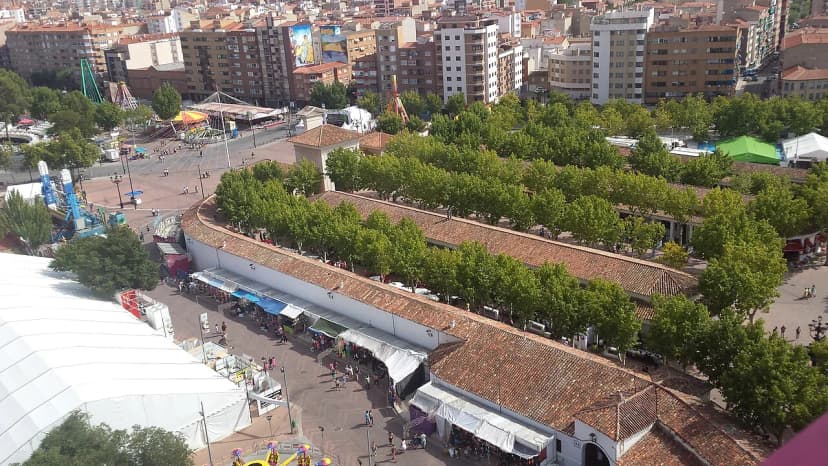
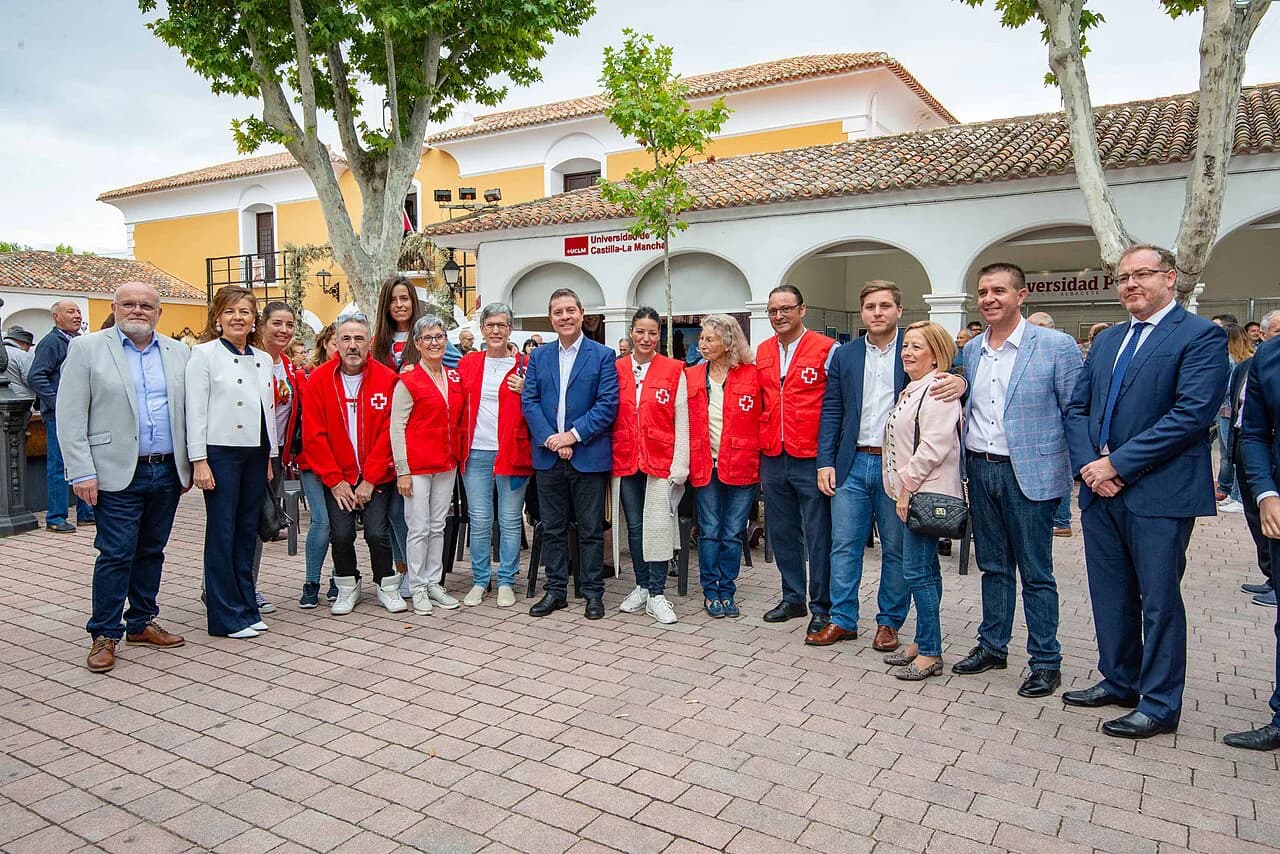
Last updated August 2026, the recinto ferial de Albacete is the permanent fairground behind the city's biggest festival. Local architect Josef Ximénez raised its circular core in 1783, and the building has held Bien de Interés Cultural protection since 1991. This guide covers the Sartén layout, the September 7-17 fair, and the Tuesday market that fills the grounds the rest of the year.
Recinto Ferial de Albacete: A Permanent Fairground Since 1783
Most Spanish ferias put up rows of canvas casetas for a week and take them down again afterward. Albacete built its fairground once, in masonry and brick, and never dismantled it. Construction began in 1783 on the Eras de Santa Catalina, open pastureland on the western edge of a city that had only about 7,000 residents at the time. Builders chose the site partly because the surrounding Ejidos de la Feria already hosted livestock trading, with horses and mules among the animals sold. Heritage sources including the regional tourism board describe the result as unique in Spain. It's a fairground raised specifically for that purpose, rather than a plaza borrowed for one week a year. Fair tradition here predates the building itself: centuries earlier, King Felipe V had granted Albacete the privilege of a feria franca, a tax-exempt trading fair. Albacete marked that declaration's tercentenary in 2010.
- Built: 1783, on the Eras de Santa Catalina grounds west of the old town
- Architect: Josef Ximénez, who completed the original circular plan in about a month
- Heritage status: Bien de Interés Cultural since 1991, monument category
- City size at construction: around 7,000 residents in 1783

The Sartén Layout: El Rabo and El Redondel
Locals call the whole complex La Sartén, Spanish for the frying pan, because its floor plan mimics one. El Rabo, the handle, is the long entrance avenue that runs from the Puerta de Hierros into the grounds. El Redondel, the pan itself, is the circular body beyond it, holding the three rings and the central Templete. Puerta de Hierros itself measures 36 meters wide and 25 meters tall, built in brick with Mudéjar details. Every September 7 at 10 p.m., the mayor of Albacete inserts the feria key into this gate and opens it, marking the fair's official start. A parade of floats travels from Plaza de Gabriel Lodares to the gate beforehand, accompanying the Virgen de los Llanos to the fairground. A replica of an earlier 19th-century gate now stands at the entrance to the nearby Jardinillos park, opposite the bullring. Today's gate dates to 1974, when the city rebuilt the ceremonial entrance.
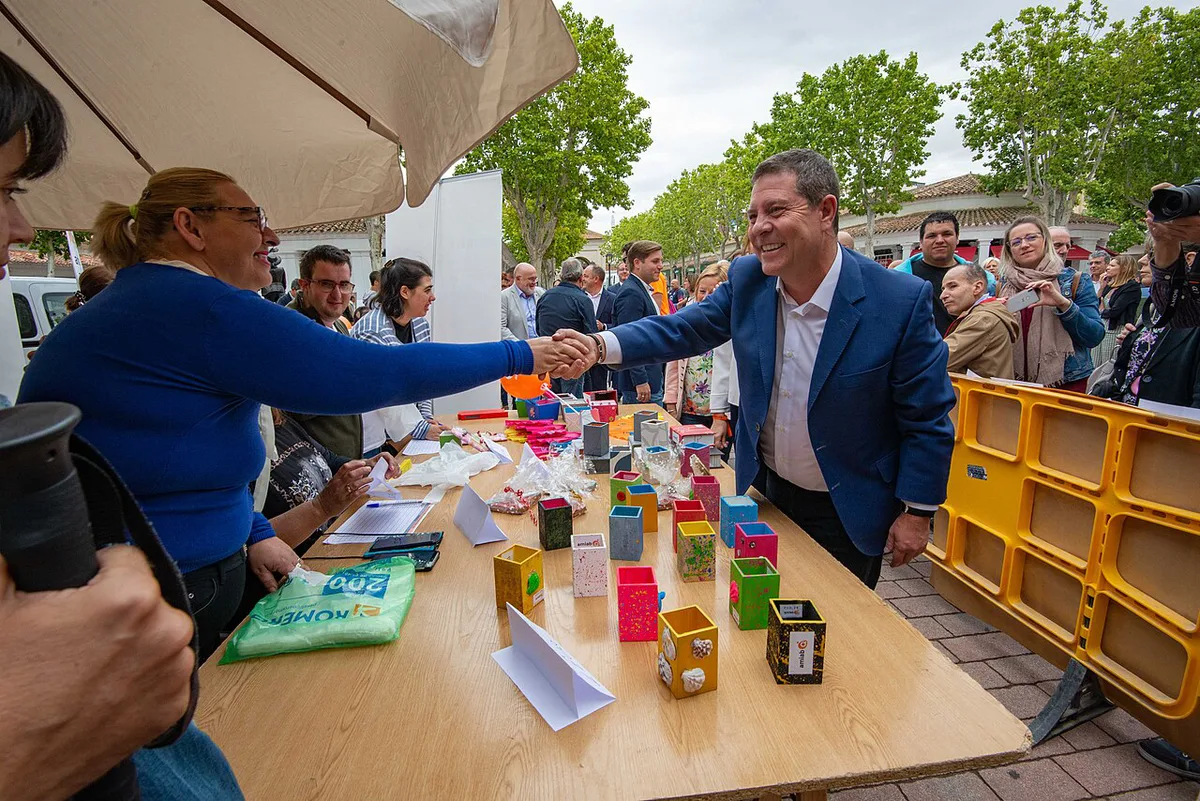
How the Recinto Has Changed Since 1783
Alterations have reshaped the building many times since its first fair. Iron columns replaced the original ring columns in 1876. A year later, workers removed the livestock watering pond that once sat at the center, replacing it with a kiosk. Two lateral doors went in beside the main façade in 1888 to ease crowding at the entrance. Key milestones appear in the table below.
| Year | Change |
|---|---|
| 1783 | Original circular plan and first ring completed |
| 1784 | Second ring added, entrance avenue extended |
| 1876 | Iron columns replace the original ring columns |
| 1877 | Central livestock pond removed, replaced by a kiosk |
| 1888 | Two lateral doors added beside the main façade |
| 1912 | Templete kiosk completed in modernist style |
| 1944 | Third ring and exhibition hall added |
| 1974 | Current Puerta de Hierros built |
| 1991 | Listed as Bien de Interés Cultural |
| 2017-2019 | Restoration opens the building for year-round public use |
Inside the Three Rings (Los Redondeles)
Each ring was added as the fairground grew. Its original 1783 circle became the first ring. A second ring followed just a year later, in 1784. A third ring came much later, in 1944, when the city doubled the width of the entrance avenue and added an exhibition hall. Details for each ring appear in the table below.
Daniel Rubio designed the Templete at the center of the first ring, a modernist kiosk built between 1911 and 1913 from iron, cement, and glazed ceramic. Beyond the three main rings, the grounds hold smaller named zones. Plaza de Talabarteros sits to the west, where crowds gather around the clock during the fair. La Lonja, on the same side, hosts international wine producers during feria week. Zona Amnistía, to the east, is another music-and-crowd gathering plaza.
| Ring | Added | What You'll Find |
|---|---|---|
| First Ring (Círculo Central) | 1783 | The Templete kiosk (1912) and food stalls, including miguelitos de la Roda |
| Second Ring | 1784 | Crafts, toys, ceramics, and traditional Albacete navajas (folding knives) |
| Third Ring | 1944 | Bars, tascas, and the fair's main nightlife strip |
The Feria de Albacete Experience (September 7-17)
Albacete's fair runs the same ten days every year, September 7 through 17, honoring the city's patron, the Virgen de los Llanos. Spain declared the fair of International Tourist Interest in 2008. During feria week, the recinto stays open around the clock, mixing family programming by day with nightlife that runs until sunrise in the third ring. Its bullfighting program, the Feria Taurina de Albacete, runs at the arena next to the recinto during the same ten days. A full day-by-day fair schedule covers concerts, bullfights, and the children's program hour by hour.
A fairground built in 1783 for a city of 7,000 residents now hosts a flower procession drawing more than 20,000 participants.
On the second Sunday of the fair, the Peña Templete organizes the Ofrenda de Flores, a flower procession to the Virgen de los Llanos. It has run since 1989 and draws more than 20,000 participants. It starts at the cathedral and ends at the chapel inside the recinto, which was fitted out for that purpose in 1952. Celebrations close on September 17 with an open-air mass at that same chapel, after which the Virgen returns to her chapel at the Ayuntamiento. Separately, the recinto also hosts the city's Fiestas de San Juan verbena, with the traditional paloma sanjuanera drink and rollicos de anís pastries.
Visiting Outside the Feria: Los Invasores Market
Feria week isn't the only reason to visit. Every Tuesday morning, except during the fair and the weeks just before it, the streets around the recinto fill with Los Invasores. Around 550 stalls set up each week. Vendors sell food, clothing, and household goods. Some stalls sell animals too, from poultry to household pets. The market generally wraps up by early afternoon, so a morning visit works best. Renovation work between 2017 and 2019 reopened the building for public use beyond fair week. A gastronomic fair became its first standalone event afterward, in 2020.
Because Albacete's permanent masonry structure from 1783 never comes down, unlike Spain's fairgrounds rebuilt each year, the recinto hosts Tuesday markets and year-round public access.
Outside both the fair and market days, the empty rings show off the recinto's brickwork and porticoes without crowds in the way. That makes non-Tuesday mornings the easiest time for architectural photography, and entry to the grounds stays free.
- Fresh food and produce
- Clothing and household goods
- Animals, from livestock to household pets
- Secondhand items and general market wares
Practical Visitor Information: Location, Access, and Mistakes to Avoid
Recinto Ferial de Albacete sits at the end of the Paseo de la Feria, within walking distance of the city center. Pedestrian access runs from the Paseo and the historic center, and the Ayuntamiento de Albacete coordinates public transport and signage on the busiest days. Wide access zones around the grounds are built to handle large fair-week crowds. An underground parking structure beneath the Paseo de la Feria opened as part of improvements carried out between 2008 and 2010. During feria week, though, access around the recinto is tightly regulated and signposted, so driving in is rarely the fastest option. Albacete's official fair site also publishes practical logistics information, including pharmacy and transport details, for the ten days. Individual event tickets, such as bullfights, are handled separately from general access to the grounds.
- Driving to the recinto during feria week: park in the underground Paseo de la Feria garage or walk in from the center instead
- Skipping the first ring's miguelitos de la Roda
- Assuming Los Invasores runs during feria week: it doesn't operate that week or the week before
Recinto Ferial de Albacete vs Spain's Other Ferias
Most of Spain's biggest ferias rebuild their fairgrounds from scratch every year. Albacete is different — the same masonry structure has hosted the fair since 1783. Seville's Feria de Abril fills a temporary caseta fairground rebuilt annually. Málaga's fair follows the same temporary-caseta model. So does Córdoba's Feria de Mayo. Jerez's Feria del Caballo does too, built around its equestrian program. Because Albacete's building never comes down, you can walk the same rings in April that you would in September, unlike the temporary fairgrounds elsewhere. For a wider view of how these dates line up across the year, check the Spain festival calendar.
| Feria | Structure | Rebuilt Each Year? |
|---|---|---|
| Albacete | Permanent masonry recinto (1783) | No |
| Seville, Feria de Abril | Canvas casetas | Yes |
| Málaga | Canvas casetas | Yes |
| Córdoba, Feria de Mayo | Canvas casetas | Yes |
| Jerez, Feria del Caballo | Canvas casetas | Yes |
Pair this with our broader Albacete tourism attractions guide for the full city overview.
Frequently Asked Questions
When is the Feria de Albacete in 2026?
The Feria de Albacete always runs September 7 to 17, honoring the Virgen de los Llanos. The 2026 edition's official poster is Legado de Tradición, by artist Carlos Pérez Ballesteros. Check the Feria de Albacete guide for the full day-by-day program.
Is entry to the Recinto Ferial free?
Yes. Entry to the grounds is generally free, and during the fair the recinto stays open 24 hours a day. Tickets for specific events, like bullfights, are sold separately from general access to the fairground.
What is Los Invasores?
Los Invasores is a street market that fills the area around the recinto every Tuesday morning. Around 550 stalls set up each week. Vendors sell food, clothing, and household goods. Some stalls sell animals too, from poultry to household pets. The market usually wraps up by early afternoon and does not run during feria week or the week before.
What's the difference between El Rabo and El Redondel?
El Rabo is the long entrance avenue running from the Puerta de Hierros into the fairground. El Redondel is the circular body beyond it, holding the three rings and the central Templete. Together, the two parts give the whole complex its nickname, La Sartén, or the frying pan.
Can you visit the Recinto Ferial outside the fair?
Yes, and it's easier now than it used to be. Restoration work between 2017 and 2019 reopened the building for public use beyond fair week. A gastronomic fair became its first standalone event in 2020. Tuesday mornings, when Los Invasores fills the grounds, are the most active time to see it outside September.
What food should you try at the Feria de Albacete?
Head to the first ring for miguelitos de la Roda, a cream-filled pastry sold at the food stalls around the Templete. The second ring is better for browsing crafts and the region's traditional navajas, or folding knives, than for eating.
What's the best time of day to visit the Recinto Ferial?
During feria week, mornings are calmer and better for photos before crowds build through the afternoon. Evenings bring the full atmosphere, with the third ring loudest after dark. Outside the fair, Tuesday mornings during Los Invasores are the most active time to see the grounds in use.