Last updated July 2026. The Feria de Málaga takes over the city for eight days every August, split between two distinct events that trip up first-time visitors. Official dates for 2026 run from Saturday, August 15, through Saturday, August 22, with the fair opening late on Friday, August 14. Understanding which venue does what, and when, matters more here than at almost any other Spanish festival.
What Is the Feria de Málaga?
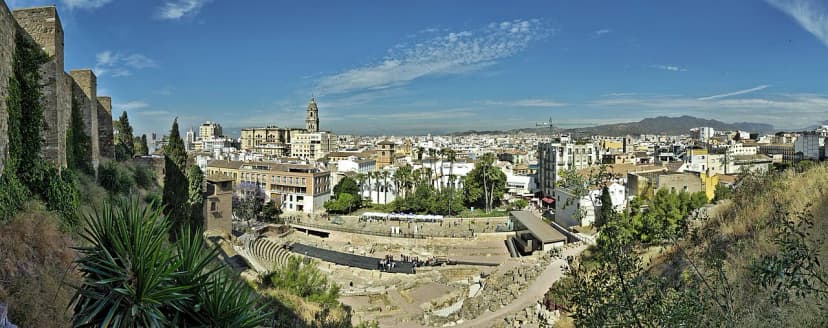
The Feria de Málaga marks the city's incorporation into the Crown of Castile in August 1487, when the Catholic Monarchs Isabella and Ferdinand took the city during the Reconquista. Local government has held some version of the celebration since 1491, and the modern two-venue format developed over the following century. For 2026, the city selected Flores para la Victoria by artist Patricia Castro Bohórquez as the official fair poster, chosen through public vote. This fair stands alongside Málaga's Holy Week processions as one of the city's two biggest annual events, though the mood could not be more different. Other Spanish festivals trace a similarly specific historical or religious origin, including the Misteri d'Elx, a centuries-old sacred drama performed in Elche.
Feria de Málaga 2026 Dates and Opening Night
Confirmed 2026 dates run from Saturday, August 15, to Saturday, August 22, per the Ayuntamiento de Málaga's official calendar. Festivities actually begin the night before, at midnight on Friday, August 14, with a fireworks display over the Malagueta waterfront. Recent editions of the show have used roughly 500 tonnes of fireworks across a 20-minute display timed to 11 songs. A companion drone show has traditionally launched from both Malagueta and Huelin beaches shortly before midnight, though the exact 2026 setup is worth confirming closer to the date. Alicante runs a comparable pyrotechnic spectacle each June with its own Hogueras de San Juan bonfire festival, though that one marks the summer solstice rather than a Reconquista anniversary. Music in the historic center cuts off at 6:00 PM every day of the fair. The city reaffirmed that closing time for 2026. Plan around it if you want to catch a specific verdiales performance or parade.
Day Fair vs Night Fair: The Two Faces of Feria de Málaga
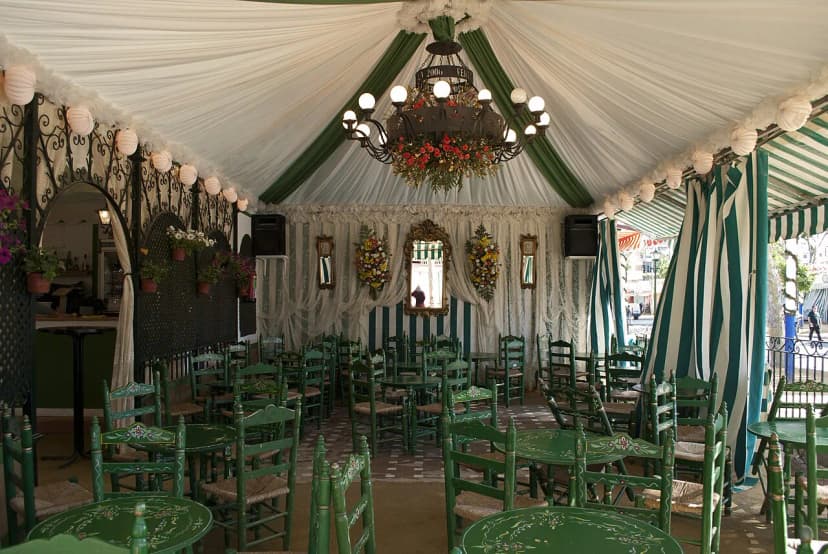
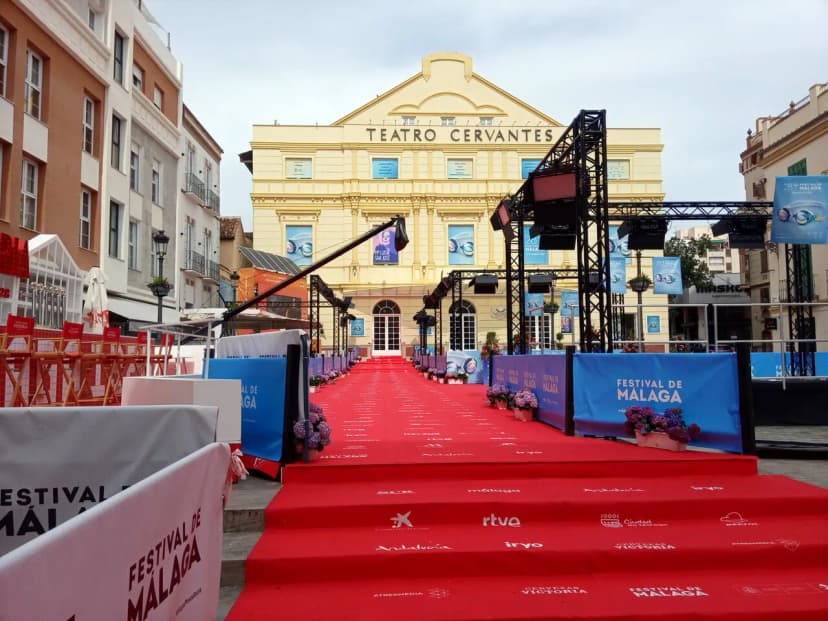
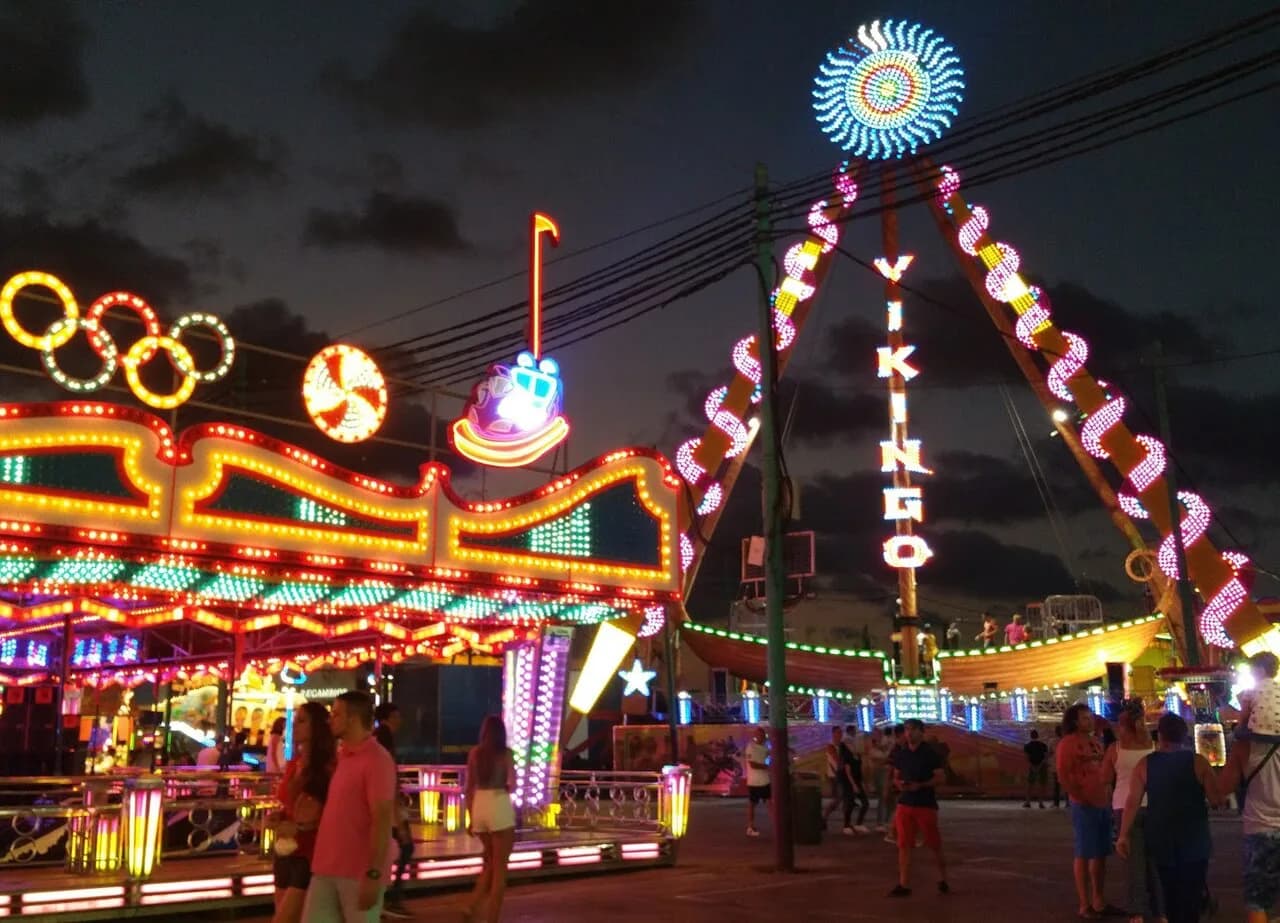
Feria de Málaga effectively runs as two separate festivals under one name, and mixing them up is the single biggest source of visitor confusion. The Day Fair, or Feria de Día, takes over the historic center around Calle Larios and Plaza de la Constitución from noon to 6:00 PM. Floral decorations, horse-drawn carriages, and daily pandas de verdiales performances fill the streets during those hours. Barcelona's Gràcia neighborhood festival shares that same street-decorating spirit each August, though its focus is elaborately dressed alleyways rather than a citywide day-night split. The Night Fair, or Feria de Noche, runs separately at the Real del Cortijo de Torres, the dedicated fairground west of the center. It opens at 2:00 PM but does not reach full intensity until after dark, running until dawn with amusement rides and more than 200 casetas. Unlike Seville's April Fair, most casetas here are open to the public rather than private, so you can walk in, sit down, and order a drink without an invitation.
The Day Fair's 6:00 PM closing creates a predictable surge of visitors transitioning to the Night Fair at the Real del Cortijo de Torres, making that hour the peak strain point for Feria Bus and other transit.
| Factor | Day Fair (Feria de Día) | Night Fair (Feria de Noche) |
|---|---|---|
| Location | Historic center: Calle Larios, Plaza de la Constitución | Real del Cortijo de Torres fairground |
| Hours | 12:00 PM to 6:00 PM | 2:00 PM onward, peaks after dark until dawn |
| Noise level | Lively but contained; music stops at 6:00 PM | Loud and continuous, especially after 10:00 PM |
| Kid-friendliness | Higher; horse parades and verdiales in daylight | Lower late at night; better in the early evening |
| Casetas | Fewer, concentrated around the main squares | 200+ open-access casetas with bars and dance floors |
| Attire | Traje de flamenca common but not required | More casual after dark, though many stay dressed up |
Getting to the Real del Cortijo de Torres and Around the City
Getting between the two venues, and back to your hotel afterward, takes more planning than a typical city outing. Public transport is the practical choice all week, since parking and street traffic around the Real get gridlocked.
- Feria Bus (Line F): marked with an F in the front window, this runs 24 hours a day for the whole week between the center and the Real del Cortijo de Torres. A single ride costs €2, tap-payable by phone or card.
- Cercanías C1 train: the direct link for anyone staying in Fuengirola, Benalmádena, or Torremolinos. Renfe typically adds extra early-morning departures during Feria week, roughly between 5:00 AM and 6:30 AM. Confirm exact times on Renfe's site closer to August 2026.
- Metro Málaga: extends its operating hours during Feria week, a useful backup once Feria Bus queues build up.
- Taxis and ride-hailing (Uber, Bolt, Cabify): a pickup point sits on Avenida Ortega y Gasset near the fairground. Surge pricing and gridlock around the Real make this the slowest option at peak hours.
What to Eat, Drink, and Wear
Feria food and drink lean traditional, and a few names are worth knowing before the first caseta. Cartojal, a sweet local wine typically served very cold, is the signature Feria drink. Rebujito, a mix of manzanilla or fino sherry with a lemon-lime soda, is the other standard order. Both drinks go down easily in the afternoon heat but carry more alcohol than they taste like, so pace them with water. Spain's other drink-driven festivals include Haro's Batalla del Vino, a wine-throwing festival in La Rioja each June. Pescaíto frito, fried small fish including anchovies and red mullet, and cured Iberico ham are the classic plates, alongside fairground churros and other sweets. There is no formal dress code at Feria de Málaga, but tradition runs deep in the historic center. Many women wear a traje de flamenca, a fitted polka-dot dress, often paired with a manila shawl and a flower in the hair. Vendors also sell biznaga, a jasmine flower pressed into a cactus leaf, as a small traditional gift for visitors in the crowd. Andalusia's other flower-centered festival is Córdoba's patio festival, held each May in the region's flower-filled courtyards. For a costume-first festival elsewhere in Spain, Alcoy's Moros y Cristianos parades go even further with elaborate historical dress. Plain summer clothes are just as common as traditional dress at both Feria venues. Comfortable, closed shoes matter more than any of it, since the historic center's cobblestones punish heels and thin sandals over a full afternoon.
Key Events Not to Miss
A handful of set-piece events anchor the week beyond the daily rhythm of casetas and verdiales.
- Romería to the Sanctuary of Victoria: a pilgrimage procession with horsemen and carriages on the first Saturday morning of the fair, similar in spirit to Andalusia's larger Romería del Rocío pilgrimage.
- Pregón: the official opening speech, delivered by a well-known Malagueño figure the night before the fair formally begins.
- Bullfights at La Malagueta: afternoon corridas run through fair week at the Plaza de Toros. Madrid stages a comparable bullfighting program during its own San Isidro festival each May. Verify the 2026 bullring schedule closer to August.
- Auditorio Municipal concerts: nightly performances at the Real, most of them free or low-cost, running throughout fair week.
- Historical parade: on the closing Sunday, a procession reenacting the Catholic Monarchs' entry into the city runs from Plaza de la Aduana to Calle Alcazabilla.
Heat, Crowds, and Other Survival Tips
August in Málaga runs hot and humid, regularly above 30°C (86°F), which shapes how the fair feels on the ground.
- Heat management: seek shade inside a caseta during the hottest hours, and carry water. Cartojal and rebujito both dehydrate faster than they seem to in the heat.
- The 6:00 PM gap: when the historic center's music cuts off, a wave of visitors shifts toward the Real del Cortijo de Torres at once. Expect the Feria Bus and other Line F stops to be busiest in this window.
- Book ahead: restaurants and hotel rooms near the center fill up 4 to 6 months before Feria week, especially for the opening weekend.
- First aid and lost property: both sit at the south end of the caseta area at the Real, near the Palacio de Congresos.
What Are Verdiales, and Where Can You See Them?
Verdiales are a fast, festive folk-music tradition from Málaga province. They predate modern flamenco and remain closely associated with rural communities in the Montes de Málaga and nearby villages.
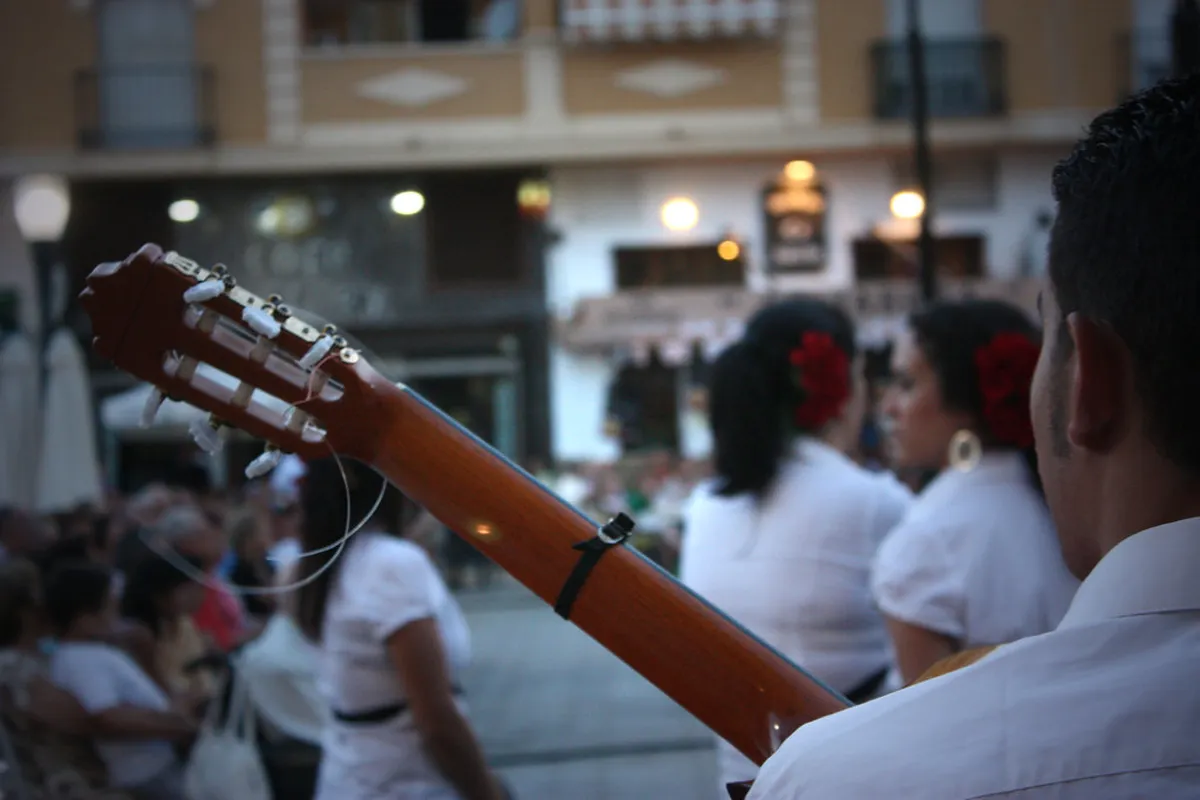
Performing groups are called pandas de verdiales. During the Feria de Día, they move through the historic center rather than staying on one fixed stage. Calle Larios and Plaza de la Constitución are reliable areas to watch for them before music ends at 6:00 PM.
- The Montes style features a prominent violin and a lively, driving rhythm.
- The Almogía style is especially energetic, with strong percussion and expressive dancing.
- The Comares style places greater emphasis on string instruments and more elaborate melodies.
A typical panda includes violin, guitars, tambourine, hand cymbals, singing, and dancing. The group’s leader often wears an ornate flowered hat decorated with ribbons and small mirrors. Check the Ayuntamiento’s daily Feria program for scheduled performances, then arrive early because street crowds can quickly block the best views.
For trip-planning details, see Feria de Malaga official source and Malaga / regional tourism authority.
Explore feria de in other cities
Frequently Asked Questions
What are the confirmed Feria de Málaga 2026 dates?
The Ayuntamiento de Málaga has confirmed 2026 dates of Saturday, August 15, through Saturday, August 22. Opening fireworks light up the Malagueta waterfront at midnight on Friday, August 14, the night before the fair officially starts.
What is the difference between the Day Fair and Night Fair?
The Day Fair, or Feria de Día, runs from noon to 6:00 PM in the historic center around Calle Larios and Plaza de la Constitución. Separately, the Night Fair, or Feria de Noche, takes place at the Real del Cortijo de Torres, opening at 2:00 PM and running past midnight with rides and more than 200 casetas.
Do you have to pay to enter the casetas?
Most casetas at the Real del Cortijo de Torres are open to the public at no charge, which sets Feria de Málaga apart from Seville's April Fair, where private casetas dominate. You still pay for food and drinks once inside.
How do you get from the city center to the Real del Cortijo de Torres?
The Feria Bus, marked with an F, runs 24 hours a day for the full week and costs €2 per ride. Cercanías C1 trains and an extended Metro Málaga schedule also serve the area, and both beat driving or a taxi during peak hours.
How hot does it get during Feria de Málaga?
August temperatures in Málaga regularly climb past 30°C (86°F) with high humidity. Plan around the heat by visiting shaded casetas in the early afternoon and saving walks through the historic center for morning or evening.
Do you need a flamenca dress to fit in at Feria de Málaga?
No, a traje de flamenca is common but not required at either venue. Comfortable, closed shoes matter far more than formal dress, since the historic center's cobblestones are hard on heels and sandals over a long afternoon.