Last updated July 2026, this guide covers feria de abril seville logistics for anyone planning a spring trip to Andalusia. The fair fills the Real de la Feria with striped casetas, horse-drawn carriages, and the sound of sevillanas for six straight days. Because the opening date shifts with Easter every year, working out the calendar takes some arithmetic before you book flights.
What Is Feria de Abril in Seville?
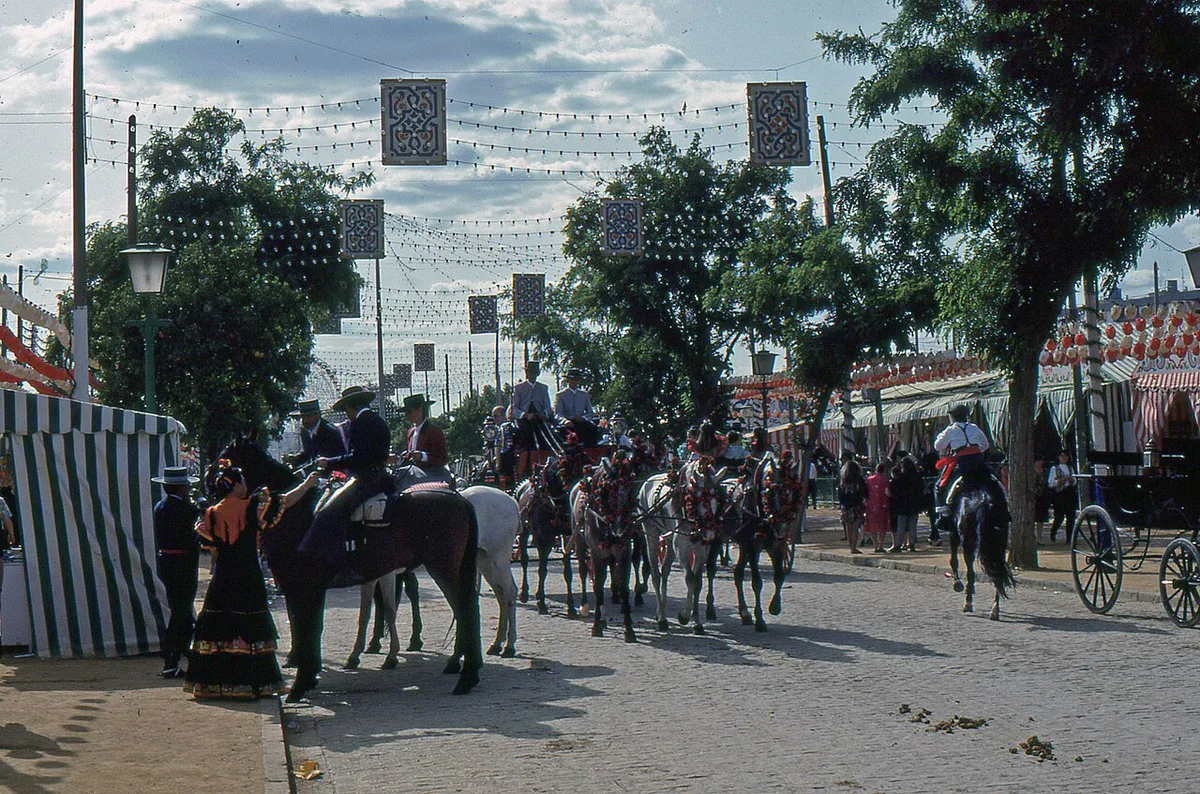
Feria de Abril began in 1847 as a livestock and agriculture fair, proposed a year earlier by councillors José María Ybarra and Narciso Bonaplata and approved by Queen Isabel II. The first fair ran at the Prado de San Sebastián, then on the edge of the city. Early tents were built mainly to shade cattle traders from the sun, and small food stalls started setting up around them soon after — the direct ancestor of today's casetas. Within a year, the Duke and Duchess of Montpensier, the Town Hall, and the Casino of Seville had each put up a caseta, and business quickly took a back seat to celebration. By the 1920s, the event had grown into the six-day festival Seville still throws every spring. Historical estimates cited on Wikipedia put full-week attendance near 5 million, with a single Friday night once recorded at around 850,000 people. Today the fairground fills with rows of striped tents, carriages circling by day, and the smell of fried fish and orange blossom drifting through the streets at night. The fair holds Spain's Fiesta of International Tourist Interest designation, granted in 1980.
The fair originated in 1847 as a livestock market; today it draws an estimated 5 million visitors over six days and costs the city approximately €3,000,000 annually to produce, illustrating how thoroughly a 19th-century trade event has transformed into Spain's most prominent spring celebration.
When Is Feria de Abril? The Two-Weeks-After-Easter Rule
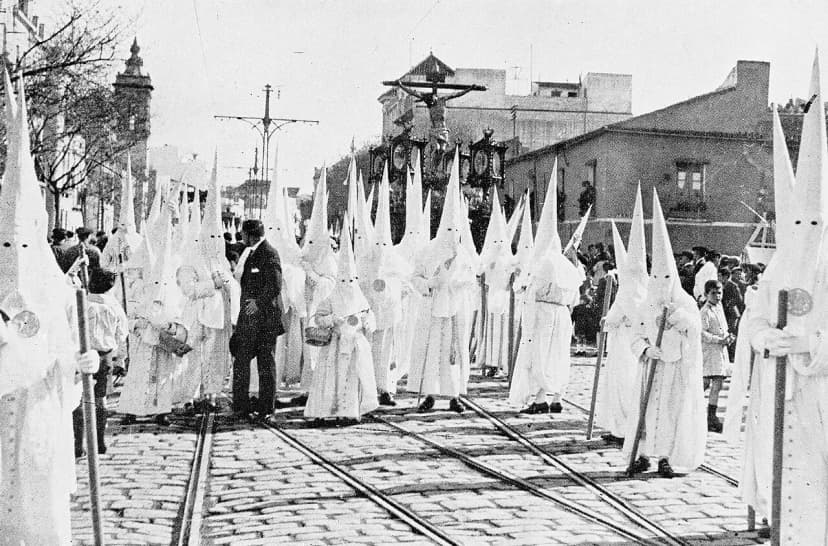
Semana Santa determines everything about Feria's calendar. Seville's Holy Week processions wrap up first, and the fair traditionally opens two weeks later, on a Monday night. Easter Sunday moves with the lunar calendar, so the fair moves with it too, landing anywhere from early April to early May depending on the year. Official tourism listings put Semana Santa in Seville at March 21-28, 2027. That puts the 2027 fair roughly two weeks after that window. Confirm firm dates on Seville's tourism site closer to travel, since organizers typically don't lock the calendar until a few months out. For a wider view of how this fits the rest of the country's calendar, check the Spain festival calendar.
The fair's opening ceremony lights the portada at midnight, Tuesday 00:00, but casetas remain quiet until around 9 p.m. each subsequent night—early arrivals find the fairground largely empty for hours after this ceremonial kickoff begins.
Once you know the opening Monday, the rest of the week is easy to pencil in. Tuesday through Saturday follow the same daily rhythm, and the fair always wraps up the following Sunday at midnight. Monday night is la noche del pescaíto, when caseta owners share a fried-fish dinner before the alumbrao. That's the ceremony that lights the portada and the fairground for the first time each year. It officially happens at midnight, Tuesday 00:00 on the clock. The party then runs until sunrise most nights. The following Sunday at midnight, a fireworks display over the Guadalquivir River closes the fair for another year.
Navigating the Real de la Feria
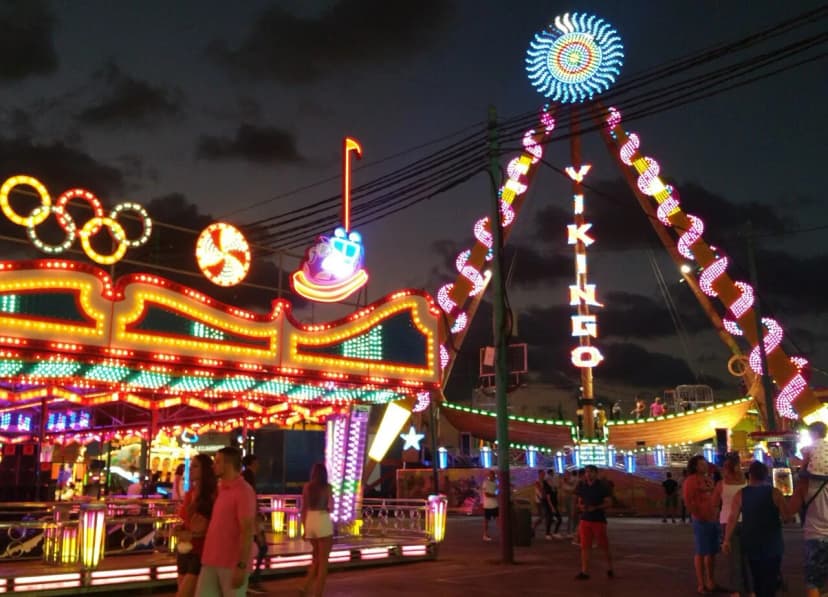
The fairground is called the Real de la Feria. It has sat in the same spot since 1973, between the Los Remedios and Tablada neighborhoods, spanning 24 blocks and about 111 acres. A new portada goes up every year. It's a freestanding gate roughly 160 feet tall, redesigned from scratch each season. Construction takes months, and clearing the site afterward takes several more weeks. Past the gate, streets carry the names of historic bullfighters, including Juan Belmonte and Pascual Márquez. Next to the Real sits Calle del Infierno, or Hell Street, an amusement park with rides and games that makes the fair genuinely workable for families with kids. Nearby Charco de la Pava has long doubled as the main parking area for fairgoers, and city officials have floated relocating the fair there for years without a firm plan. For now, though, the fair stays put in Los Remedios and Tablada, and every navigation reference in this guide points there.
The Caseta System: Private Tents vs Public Access
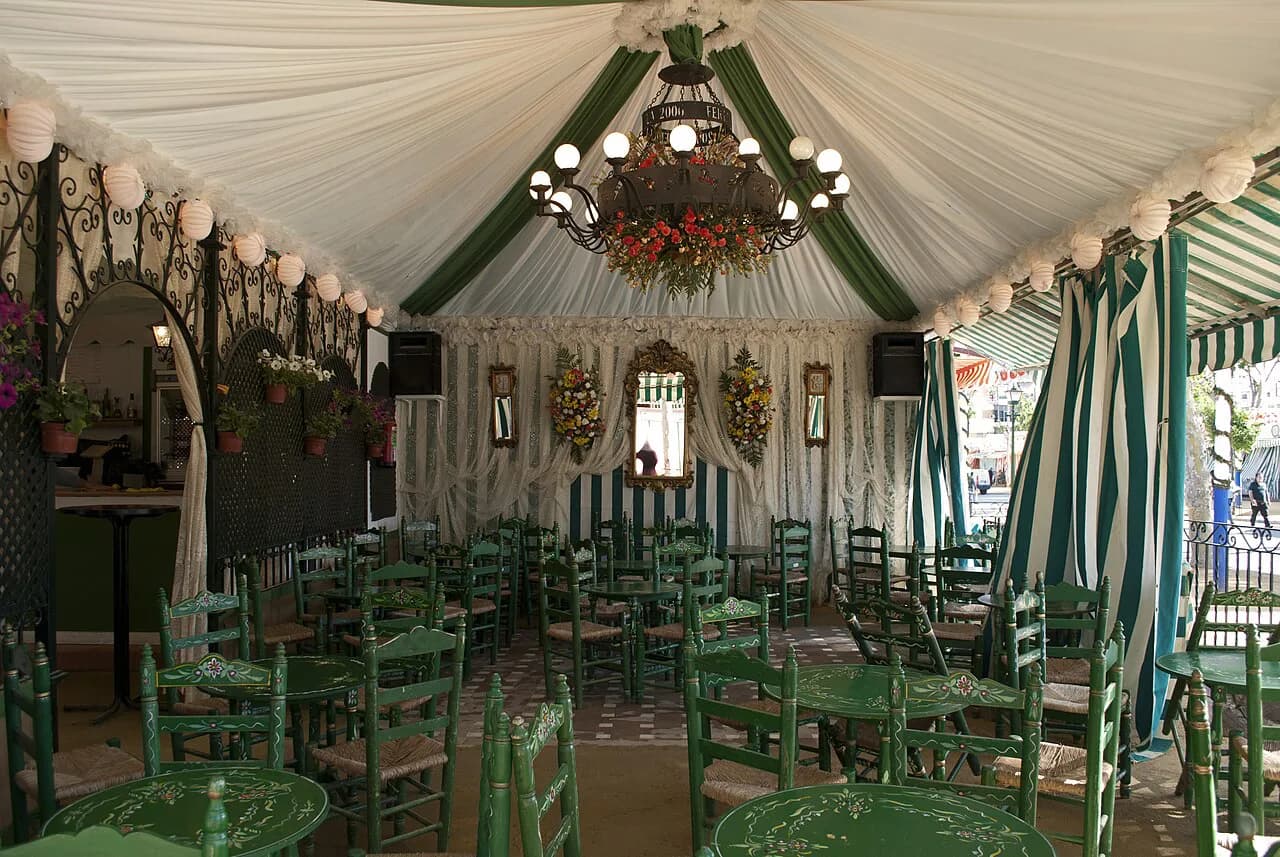
Seville counted 1,048 casetas as of the last widely published tally, in 2012, and the total has stayed above 1,000 in most years since. Most of them are private. Families, clubs, trade associations, and political parties put them up, decorate them, and staff them with a kitchen and bar for the week. Getting inside typically means knowing a member, or a guest who can bring you in — the invitation culture that surprises most first-time visitors. A smaller number of casetas are public and open to anyone who walks in. The fair's information office, near the main entrance, keeps a current list of which tents are public for that year. Starting there beats wandering the grounds hoping to get lucky. Even inside a public caseta, ordinary etiquette still applies. Buy what you eat and drink, and expect the crowd to care more about dancing than about spectating. Street-level people-watching outside the tents already delivers much of the atmosphere for free, even without an invitation.
Daily Traditions and What to Do
Each day at the fair follows the same loose rhythm, built around a handful of fixed traditions:
- Horse and carriage parade: riders and decorated carriages circle the grounds from midday into early evening.
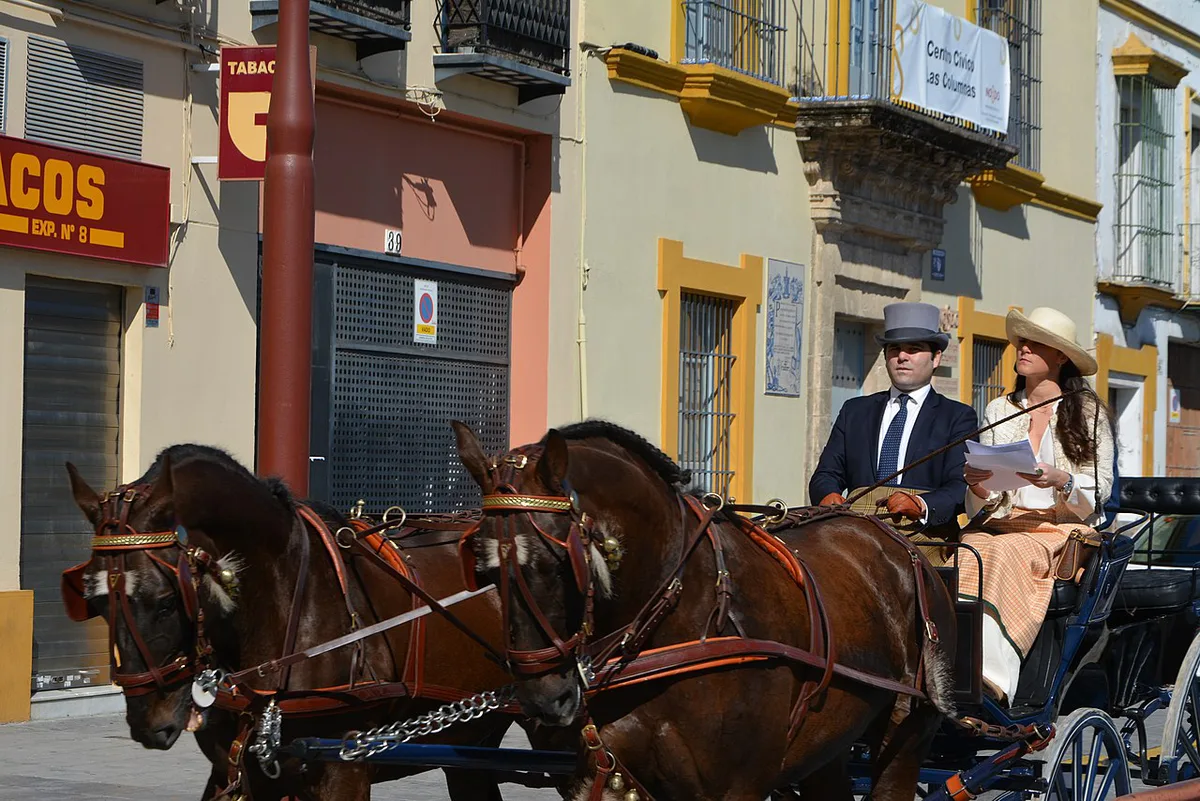
- A regular rental service lets visitors book a horse-drawn buggy with a driver for their own ride through the Real.
- Sevillanas: the four-part dance and song that fills every caseta after dark, distinct from broader flamenco.
- Bullfighting at La Real Maestranza runs most afternoons during fair week, with tickets sold in advance by phone or on the bullring's website.
- Beyond the fairground, the Real Alcázar hosts a separate summer concert series called Nights in the Gardens. It runs later in the season rather than during Feria week — per spain.info, the 2026 dates are June 25 to September 19.
What to Wear to Feria de Abril
Dress code is one of the more visible ways Feria separates locals from tourists, though nobody checks at the gate. A few adjustments go a long way toward not standing out.
- Women: a full traje de flamenca is the traditional option, but renting one takes fittings and costs considerably more than an outfit worn once.
- A simpler alternative is a mantón, a shawl worn over normal clothes with a flower pinned in the hair.
- Men: the traje de corto, a short jacket with fitted trousers and boots, is the traditional look for riders.
- A summer suit or blazer without a tie is a widely accepted alternative for men who aren't riding.
- Footwear: skip suede and light-colored shoes. The fairground's yellow sand, called albero, stains and scuffs them within hours.
Food and Drink: What to Eat and Drink at Feria
Eating and drinking at Feria follows its own calendar, from the first pescaíto dinner to the last churro before dawn.
- Rebujito is the fair's signature drink, made from manzanilla sherry mixed with a lemon-lime soda and served in tall cups.
- Tortilla española and jamón are standard tapas inside most casetas, alongside pescaíto frito, Andalusia's fried fish.
- Buñuelos and churros are the late-night and early-morning tradition, sold from stands as the party runs toward sunrise.
Getting to Feria de Abril: Transport and Where to Stay
Getting to the Real de la Feria is straightforward. Getting a taxi back afterward usually isn't. From the historic center, the walk to the fairground crosses the Guadalquivir River and takes a while on foot, so most visitors treat the metro or a shuttle as the default rather than the exception.
| Base | Distance to the Real | Trade-off |
|---|---|---|
| Los Remedios | Walking distance | Close to the fairground, but farther from the cathedral and Barrio Santa Cruz |
| Historic Center (Centro) | Metro or shuttle ride | Better placed for daytime sightseeing, with a nightly commute to the fairground |
- Metro Line 1 runs to stops near the fairground and is the most reliable option during peak hours.
- The city adds special shuttle bus routes for fair week to handle the extra crowds.
- Taxis get scarce near the Real once the party is in full swing, so budget extra time or default to the metro.
Feria de Abril Costs: What to Budget
Entrance to the fairground itself is free, and walking the streets outside the tents costs nothing. Food and drink inside a caseta run closer to restaurant prices than street-fair prices, especially at private tents staffed by paid crews. Budget accordingly for a caseta tab that can rival a sit-down dinner out, especially once rounds of rebujito start adding up. Staging the whole event is a serious municipal undertaking: press coverage has put the city's annual spend at roughly €3,000,000, covering infrastructure and staging rather than anything visitors pay directly.
Mistakes to Avoid at Feria de Abril
A few avoidable missteps trip up most first-time visitors:
- Arriving before dinner: the fairground stays quiet until around 9 p.m., when casetas fill up and the streets start moving.
- Bringing a full suitcase: casetas are packed with tables and chairs, and there's nowhere to stash luggage once you're inside.
- Wearing your best shoes: albero dust gets tracked into cars and hotel rooms, not just around the fairground itself.
- Skipping the information office: it's the fastest way to find that year's public casetas instead of guessing from the street.
- Assuming every caseta is off-limits: some public ones are genuinely easy to walk into, and skipping them means missing a chance to see the tradition from the inside.
Where Feria de Abril Fits in Spain's Festival Calendar
Feria de Abril isn't an isolated event on Seville's calendar. It's the joyful counterpart to a solemn week that comes right before it, and one stop on a national festival circuit that runs most of the year. Spacing a trip around a couple of these events, rather than just one, is a common way to build a longer Spain itinerary.
- Las Fallas in Valencia opens the spring festival season each March with fire monuments instead of casetas.
- Carnival in Cádiz kicks off the festival year each February with street costumes and satirical songs.
- Carnival in Tenerife fills the same February season in the Canary Islands with parades and costume competitions.
- San Fermín in Pamplona takes over each July, best known for its early-morning bull runs.
- La Tomatina in Buñol follows in August, when one street turns into a tomato-throwing free-for-all.
- La Mercè in Barcelona closes out the summer season each September with parades and free concerts.
- Fiestas del Pilar in Zaragoza rounds out the year each October with processions honoring the city's patron saint.
For trip-planning details, see Ayuntamiento de Sevilla (official) and Visit Sevilla — traditions and festivals.
Frequently Asked Questions
When is Feria de Abril in 2027?
There's no fixed date. Feria de Abril always falls about two weeks after Easter Sunday. Official listings put Seville's Holy Week at March 21-28, 2027, which points to a fair opening in mid-to-late April 2027. Check Seville's tourism site closer to the date, since the exact calendar is usually confirmed only a few months out. Booking flights and hotels before that confirmation is common practice locally, since the window rarely shifts by more than a few days once Easter's date is set.
How do you get into a caseta without an invitation?
Head straight for public casetas, which anyone can enter without knowing a member. The fair's information office near the main entrance keeps the current list for that year. Either way, the free street scene outside the tents runs the same live music and dancing that's happening inside.
What should you wear if you don't own a flamenco dress?
A mantón, or shawl, worn over regular clothes with a flower in the hair reads as feria-appropriate without the cost of a full traje de flamenca. Men can wear a summer suit or blazer without a tie instead of the traditional traje de corto. Both options keep costs and prep time far below a full flamenca outfit, which needs fittings well ahead of the fair. Either way, skip suede and light-colored shoes, since the fairground's albero sand stains them fast.
Is Feria de Abril free to attend?
Entrance to the fairground and the streets between casetas is free. Once you're inside a tent, food and drink are priced closer to a restaurant tab, particularly at private casetas with paid staff. Reporting on the fair's costs has put the city's total annual spend at roughly €3,000,000. That municipal number covers infrastructure and staging, not what visitors spend once they're inside eating and drinking.
What's the difference between Semana Santa and Feria de Abril?
Semana Santa is Seville's solemn Holy Week, built around silent religious processions through the city center. Feria de Abril follows about two weeks later with music, dancing, and casetas running until sunrise. The two events sit back-to-back on Seville's spring calendar but couldn't feel more different. Many visitors build a spring trip around both, watching Semana Santa's processions first and then staying on for Feria two weeks later.