Last updated July 2026. La Tomatina is Buñol's one-hour tomato fight, held every year on the last Wednesday of August, a rule that puts the 2026 edition on Wednesday, August 26. Roughly 20,000 ticketed participants converge on Plaza del Pueblo, then spend the rest of the day rinsing tomato pulp out of their clothes. This guide covers the timeline, transport from Valencia, ticket prices, and the gear that makes the day easier.
What Is La Tomatina? The Fast Answer for 2026
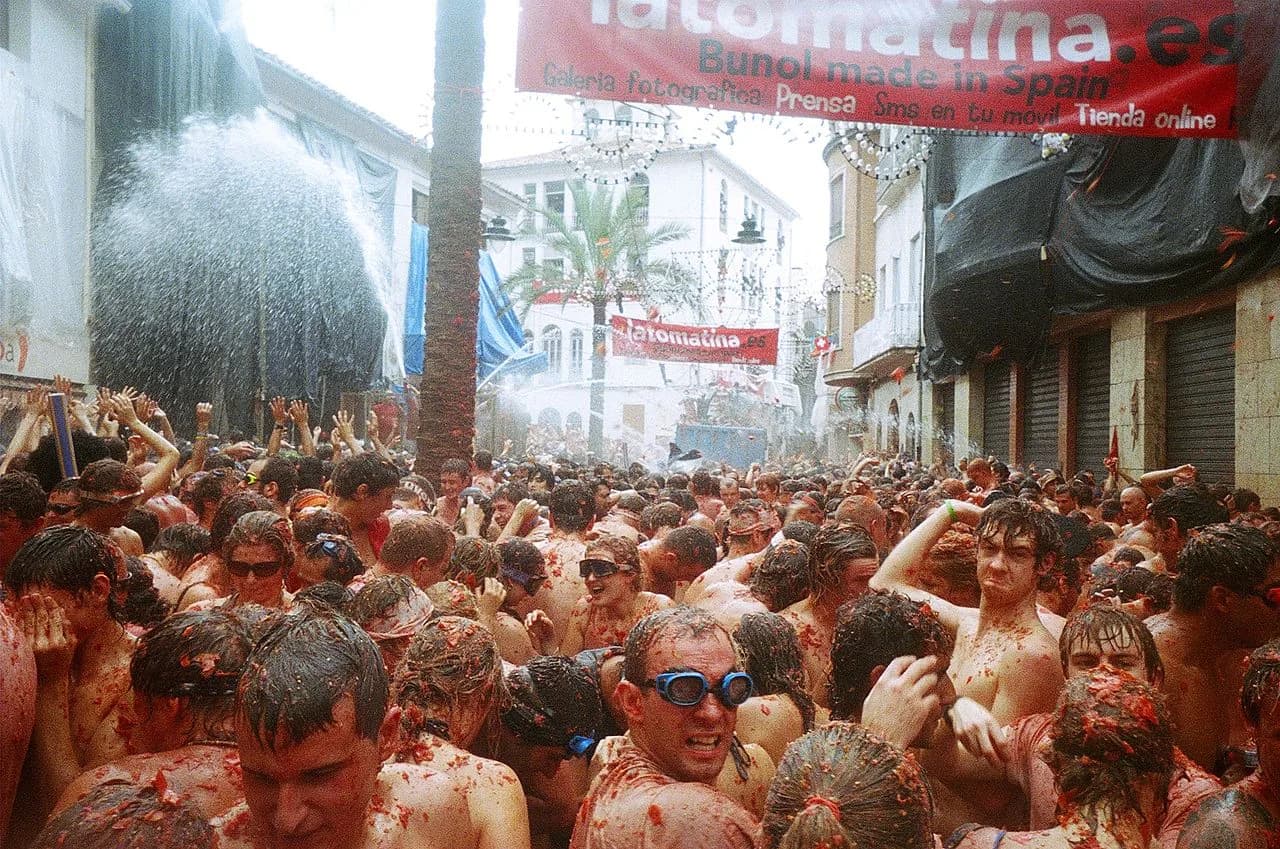
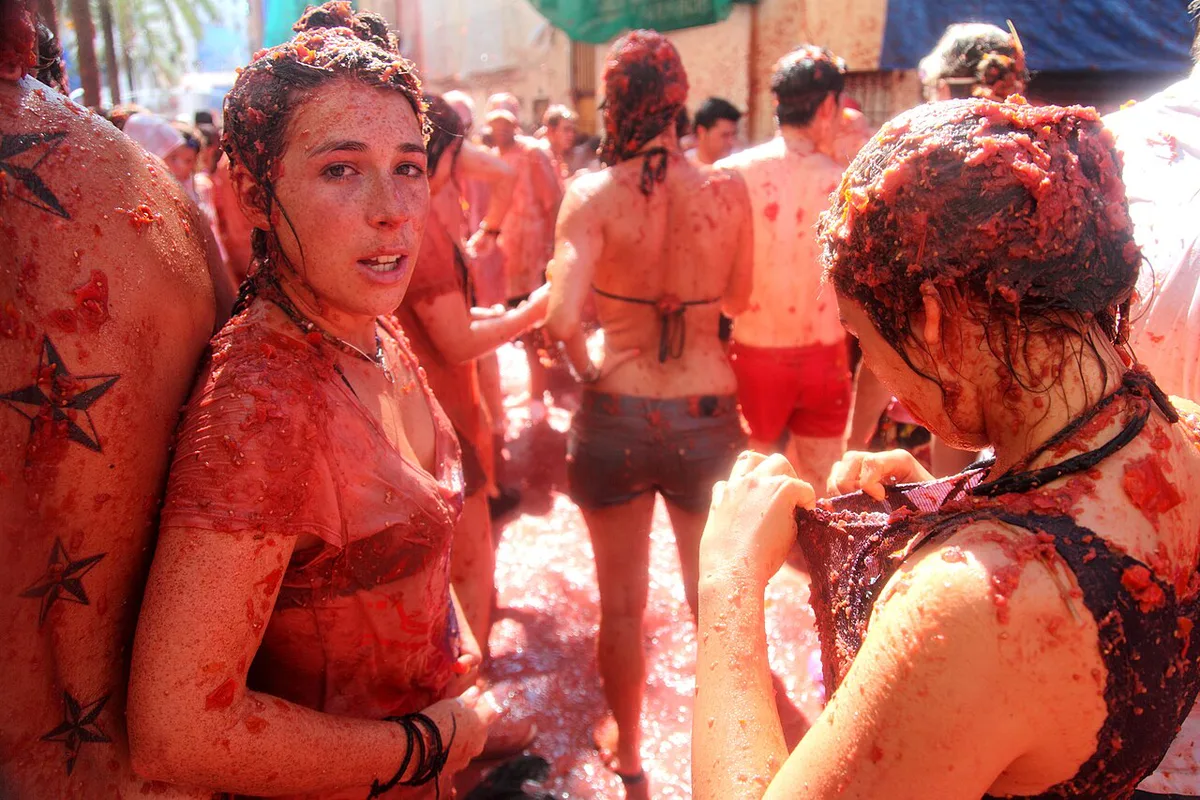
La Tomatina is a tomato-throwing festival held each year in Buñol, a town west of Valencia, Spain. Organizers and press describe it as the world's largest food fight, and 20,000 ticket holders pack Plaza del Pueblo for exactly one hour of throwing. The event always falls on the last Wednesday of August, a fixed rule that places the 2026 edition on Wednesday, August 26.
Attendance has been capped since 2013, largely to protect a town whose year-round population is only about 9,000 residents. The 2025 edition, marking its 80th anniversary, drew more than 22,000 participants. For the wider calendar of Spanish celebrations, see the Spain festival calendar.
| Detail | 2026 Information |
|---|---|
| Date | Wednesday, August 26, 2026 (last Wednesday of August, every year) |
| Location | Buñol, Valencia province, about 24 miles west of Valencia city |
| Duration | 1 hour, from noon to 1:00 PM |
| Capacity | 20,000 ticketed participants, capped since 2013 |
| Tomatoes used | Up to 145 metric tons, roughly 320,000 lb |
The 2026 Event Timeline: What Happens Hour by Hour
Festival day in Buñol runs on a tight schedule, and the days before it aren't idle either. Buñol hosts a paella cooking contest, tomato-themed fireworks, and parades with music bands through the medieval town center before Wednesday's battle. Knowing the hour-by-hour order helps with positioning before the crowd peaks and the first tomatoes fly.
- 9:00 AM: Crowds gather in Buñol's town square, and the Town Hall hands out rolls and pastries for breakfast.
- 11:00 AM: The Palo Jabón begins, as climbers try to scale a two-story greased pole topped with a ham. The fight technically can't start until the ham drops, though the crowd often surges before that happens.
- 12:00 PM (Noon): Trucks loaded with tomatoes roll into Plaza del Pueblo, and the first water cannon fires to signal the start of throwing.
- 1:00 PM: A second cannon blast ends the fight immediately. No more tomatoes can be thrown after this point, and fire trucks begin hosing down the streets.
Getting to Buñol from Valencia and Where to Stay
Buñol has only a handful of guest rooms for a town of roughly 9,000 residents, so almost every visitor bases in Valencia instead. Valencia sits about 24 miles east of Buñol, and most people travel out on festival morning and back the same night. Its own festival calendar includes Las Fallas Valencia: Complete Guide to Dates, Mascletà, and La Cremà each March, a separate fire-and-fireworks celebration worth combining with a Tomatina trip if timing allows.
20,000 ticketed participants converge for the festival, yet Buñol's permanent population is only roughly 9,000 residents. This demographic constraint explains both the attendance cap and why virtually all visitors stay in Valencia instead of in town.
Staying overnight in Buñol has real upside. There's no early train and no fighting the post-festival crowd at the station. It also leaves extra time to explore before or after the fight. The downside is availability. With so few rooms in town, anyone considering it should book as early as possible once 2026 dates are confirmed.
- Train: Cercanías regional trains run the C3 line between Valencia and Buñol. Extra festival-day services are typically added. Buy tickets at a train station in Valencia before the day itself to skip the ticket-line crowd.
- Official tour bus: bundled transfers guarantee a seat, often paired with entry tickets and after-party access, for a higher price than traveling independently.
- Driving: roads into Buñol close to general traffic on the festival morning, and in-town parking is extremely limited, so trains or organized transfers are the more reliable option.
Ticket Guide: Official Tickets vs Tour Packages
Two ticket paths cover most visitors. A standalone entry ticket suits travelers who just want into the fight zone. A bundled tour package also handles transport and lodging for a higher price. Official tickets go on sale through latomatina.info, the festival's own booking channel, and typically sell out given the 20,000-person cap. Unofficial resale listings circulate online closer to the date, so booking directly through the official channel, or a package operator that states official ticket inclusion, is the safer route.
A package earns its price when it removes stress. Transport is guaranteed, the hotel is already booked, and a bag-check point is sorted out in advance. Most packages include a secured locker or luggage hold at the departure point, which solves the no-bag rule without leaving cash or a phone loose in a pocket. Anyone who already has a Valencia base may prefer the standalone ticket and arrange transport independently.
| Ticket Type | What's Included | Approx. Price |
|---|---|---|
| Official ticket only | Entry to the fight zone; no transport or extras | About €10 (spain.info's listed general admission; confirm current pricing before booking) |
| Day-trip tour package | Ticket, round-trip transfer from Valencia, pre-party and after-party access | From about €149 |
| Multi-night hotel package | Ticket, two nights in a Valencia hotel, transfers, and after-party access | From about €225, rising past €670 for higher hotel categories |
La Tomatina Survival Guide: Gear, Rules, and Safety
What you wear and carry decides how comfortable the hour turns out to be. None of it is complicated, but skipping any of it is the most common regret among first-timers.
The Palo Jabón starts at 11:00 AM, giving early arrivals a full hour before the tomato fight begins. Positioning yourself near plaza edges rather than the packed center reduces claustrophobia risk during the throwing.
Buñol's streets around the plaza are narrow and fill fast, so claustrophobia is a real concern for some participants. Standing nearer the plaza's edges, rather than the packed center, leaves more room to move if the crowd feels overwhelming. Official rules exist because a tomato battle among 20,000 people can turn dangerous fast once hard objects or torn clothing enter the mix.
- Closed-toe shoes: flip-flops and sandals come off within minutes and can cause injuries in the crush, so wear old sneakers you're ready to throw away.
- Clothes to bin: tomato acid and dye ruin fabric permanently, so pack an outfit you don't need back.
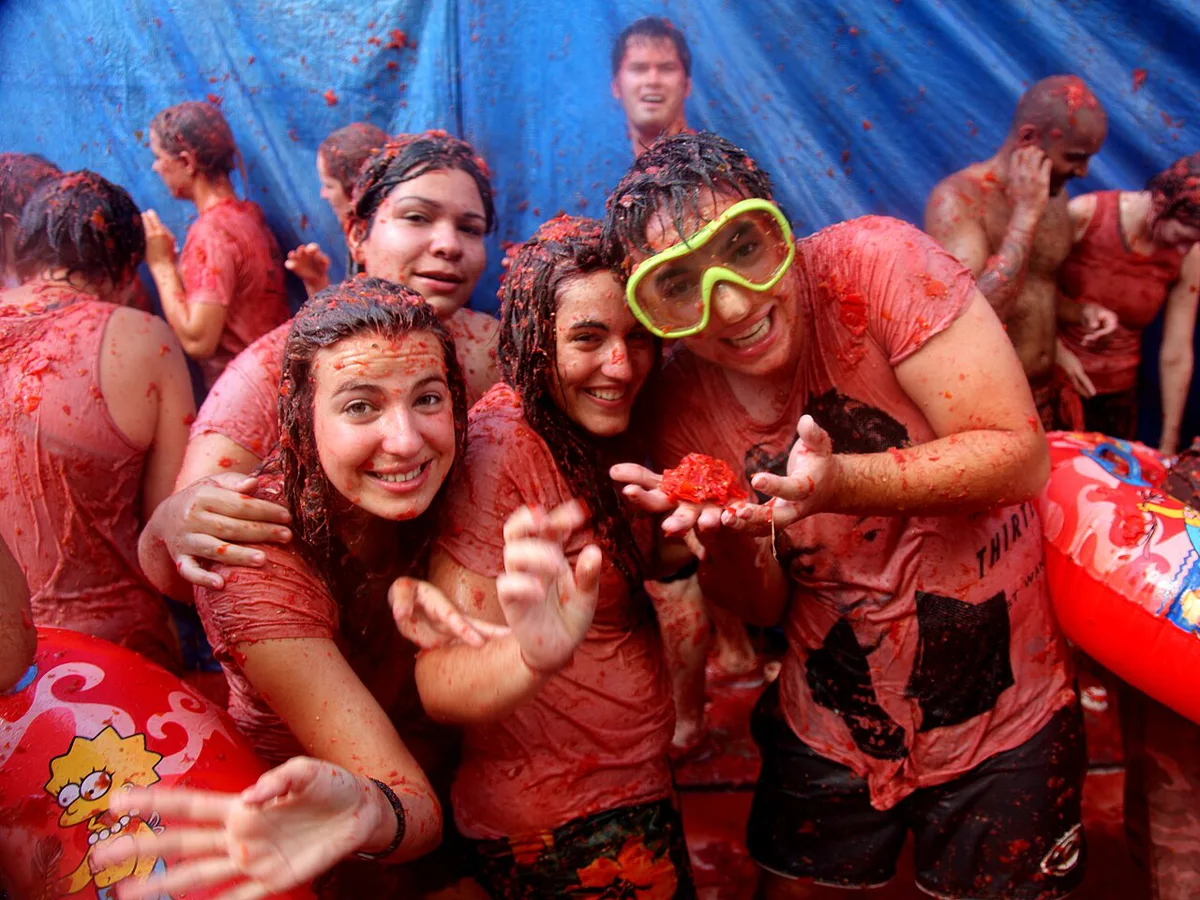
- Swimming goggles: tomato juice stings on contact with the eyes, and goggles are the simplest fix.
- No bag in the fight zone: bags generally aren't allowed inside Plaza del Pueblo, so store valuables in a locker or a tour bus's luggage hold beforehand.
- Only throw tomatoes: bottles and other hard objects are banned and cause real injuries.
- Squash each tomato before throwing it, which softens the impact.
- Don't rip other participants' shirts.
- Keep a safe distance from the tomato trucks at all times.
- Stop throwing the instant the second shot sounds.
The History of La Tomatina: From a 1945 Brawl to a Global Festival
La Tomatina traces back to 1945, when a Giants and Big-Heads parade in Buñol's town square turned into an impromptu brawl after a costume mishap. Bystanders grabbed vegetables from a nearby market stall and started throwing, and local police broke up the fight. A group returned the following year with tomatoes brought from home on purpose, and a tradition was born.
Authorities banned the festival in the early 1950s under Francisco Franco's government, citing its lack of religious significance. Residents pushed back, and in 1957 they staged a mock tomato funeral, parading a coffin holding a giant tomato through town to a funeral march. That protest worked, and the festival returned as an official event.
National attention followed a broadcast by journalist Javier Basilio on the Spanish television program Informe Semanal, which introduced La Tomatina to audiences across Spain. In 2002, the Secretary Department of Tourism named it a Fiesta of International Tourist Interest. The format has since inspired copycat tomato fights abroad, including an annual event in Reno, Nevada, running since 2009 as a direct tribute to Buñol's original.
Post-Tomatina Cleanup: Hosing Off and What Comes Next
Once the second shot sounds, cleanup begins almost immediately. Fire trucks hose down Plaza del Pueblo and the surrounding streets, and locals often bring out their own garden hoses to help rinse off participants.
Most guides skip one detail: the citric acid in the crushed tomatoes acts as a natural cleaner, leaving some of Buñol's stone streets brighter than before the fight started. Some participants head to Los Peñones, Buñol's public swimming pool, for a proper rinse and a change of clothes. The evening usually ends with an official after-party, included in most tour packages, for anyone with energy left. Anyone catching a train back to Valencia should expect the platform to fill quickly once the after-party winds down, so plan for some buffer time.
Many travelers fold La Tomatina into a longer festival-focused trip through Spain. San Fermín's bull-running week fills Pamplona each July. La Mercè festival follows in Barcelona each September. Fiestas del Pilar Zaragoza: A 2026 Travel Guide caps the season in Zaragoza each October.
For trip-planning details, see La Tomatina official (Ayuntamiento de Bunol) and Visit Valencia.
Frequently Asked Questions
Is La Tomatina safe?
Most injuries come from crowd density rather than the tomatoes themselves, so following the official rules matters. Closed-toe shoes, swimming goggles, and staying near the plaza's edges all reduce risk. In our editorial assessment, the event is manageable for healthy adults who prepare properly and stay alert to the crowd around them.
Can children take part in La Tomatina?
The main fight isn't designed for young children, given the crowd crush and the one-hour duration. Buñol runs a separate Tomatina Kids event on the Saturday before the main festival, giving families a calmer alternative.
What happens to all the tomatoes afterward?
Tomatoes used in the fight are over-ripe fruit not meant for sale or eating. Fire trucks and volunteer hoses clear the debris right after the fight, and the citric acid in the crushed fruit actually helps clean the streets.
Do you need a ticket for La Tomatina?
Yes. Entry has been capped at 20,000 ticket holders since 2013, and organizers are clear that there's no entry without one. Buy through the official channel, latomatina.info, well before August.
Where should you stay for La Tomatina 2026?
Nearly every visitor bases in Valencia, about 24 miles from Buñol, since in-town lodging is extremely limited. Trains, tour buses, or organized transfers cover the trip out and back on festival day.
What's the best way to buy La Tomatina tickets for 2026?
Official tickets are sold directly through latomatina.info, the festival's own booking portal. Buying early matters, since the 20,000-ticket cap has sold out in past years, and unofficial resellers aren't a reliable backup.
How much does La Tomatina cost?
Official general admission is listed around €10, based on spain.info's published rate. Bundled tour packages start near €149 for a day trip and climb past €670 for multi-night hotel packages.