Last updated July 2026, this guide covers everything worth knowing about the Batalla del Vino in Haro, the wine fight held every June 29 on the cliffs above town in La Rioja. Thousands of participants dressed in white climb the Riscos de Bilibio at dawn and soak each other in red wine until the surrounding fields turn purple. Timing and transport decide whether the morning works: the 7:00 AM departure, the climb to the hermitage, and the walk back into town known as Las Vueltas.
What Is the Batalla del Vino in Haro?
Expect exactly what the name promises: a wine fight, not a metaphor. Participants dressed in white throw red wine at each other until nobody's clothes are their original color. It happens at the Riscos de Bilibio, a cliff area about 4 miles north of Haro, at the point where the Ebro River enters La Rioja. Every year the date is fixed: June 29, the feast day of San Pedro, with pre-festivities starting June 27 and the town's biggest street party on June 28. Climbing, crowding, and gallons of wine landing on your face within minutes of arrival make for a physically demanding morning. Spain's official tourism board describes it as a peaceful battle: despite thousands of liters of wine in the air, the fighting stays good-natured rather than violent. The custom is older than most visitors assume, growing out of wine spilled casually during a post-mass lunch on the cliffs; it first appeared in print under the name Batalla del Vino in 1949 and has drawn larger crowds every year since. Haro's population of roughly 11,500 nearly doubles for the festival, so the crowd extends well past the mountain and into town itself.
- What: a wine fight where crowds soak each other in red wine until everyone turns purple.
- Where: the Riscos de Bilibio, about 4 miles north of Haro, La Rioja.
- When: every June 29, San Pedro's feast day; pre-festivities run June 27-28.
- The vibe: messy, loud, and physically demanding from the first splash to the last.
Planning Your Arrival: The Night Before and the Dawn Climb
June 28 delivers the biggest street party of the year in Haro's old town. Expect live music and dancing in the cobbled streets, with bars staying open well past midnight. Sleep is optional, but arrival time on June 29 is not. Locals recommend leaving Haro by 7:00 AM to reach the Riscos de Bilibio while there's still wine left to throw. Book accommodation early: Haro's limited hotel rooms sell out months ahead of the festival, and beds in general grow scarce over the last week of June. Organized tour groups also run transport and lodging packages for travelers who'd rather not sort the logistics alone. Staying inside Haro means easier access to bars, bathrooms, and a bed to collapse into afterward. Camping near the cliffs cuts the commute at the cost of comfort.
Arriving after 8:30 AM limits ground selection, and wine acidity becomes the chief threat to early departures, making goggles the single most important item to pack.
- Walking: roughly 4 miles uphill from central Haro; budget extra time for the climb and the crowd.
- Tractor-trailers: the traditional way up, following the mayor's procession out of town.
- Private vehicle: parking near the Riscos is extremely limited and typically fills by 6:30 AM.
The Batalla del Vino Timeline, Hour by Hour
The morning moves fast once the procession leaves Haro. Use this timeline to plan arrival, know when the wine actually starts flying, and figure out when to head back down for the bullring. The Campas are the open fields directly below the hermitage, where most of the wine gets thrown, rather than on the narrow paths leading up. Times shift slightly year to year, so check Haro's official festival announcements closer to your travel dates.
| Time | Event | Location |
|---|---|---|
| 07:00 | Procession leaves Haro, led by the mayor on horseback | Haro to Riscos de Bilibio |
| 08:30 | Mass at the Hermitage of San Felices | Riscos de Bilibio |
| 09:00 | A rocket signals the official start of the wine battle | The Campas (fields below the hermitage) |
| 10:30 | Wine runs out; participants dry off and eat breakfast | Riscos de Bilibio |
| 12:00 | Las Vueltas: the return march into town | Plaza de la Paz |
What to Wear and Bring to the Wine Fight
Wear white clothing you're willing to ruin, plus the traditional red pañuelo tied around your neck. Plan on throwing the clothes away afterward rather than trying to salvage them, since red wine stains are close to permanent. Footwear matters more than most first-timers expect: the ground below the hermitage turns into a purple mudslide by mid-morning, and open sandals slide out from under you. Pack shoes with real grip. Goggles are worth packing too, since wine's acidity in the eyes is the most common reason people leave the mountain early. Almost anything that holds liquid counts as a weapon, from buckets and jugs to repurposed spray bottles.
- Bota (wineskin): traditional and easy to refill, but hard to aim with any accuracy.
- Plastic bottles: cheap, refillable, and easy to squeeze for a direct hit.
- Water pistols and sulfatadoras (pressurized sprayers): far more efficient at soaking a crowd, though less traditional than a bota.
San Felices de Bilibio and Las Vueltas: What Happens After the Wine Runs Out
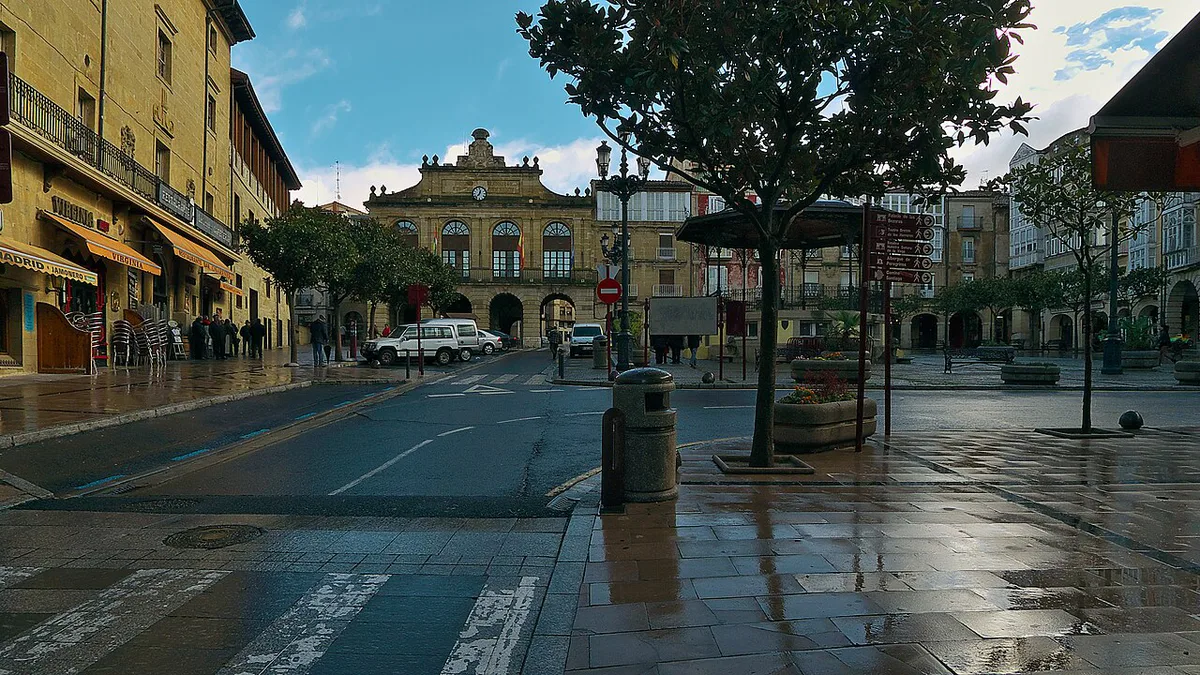
The hermitage on the Riscos de Bilibio marks where San Felices, a 6th-century hermit and teacher of San Millán, is said to have lived and died. Pilgrims have visited the site for centuries, and the current chapel dates to the early 18th century. At the hermitage, tradition has the mayor place a banner atop the rocks just before mass begins, marking the more solemn half of the day before the wine starts flying. Local legend ties the wine fight's location to a historical land dispute between Haro and neighboring Miranda de Ebro over the Riscos de Bilibio, reportedly dating to the early 13th century when the two towns contested the boundary lines around the cliffs. The Batalla del Vino carries Spain's Festival of National Tourist Interest designation, recognition tied to its long pilgrimage roots. Estimates for how much wine gets used vary widely: about 20,000 liters in 2007, rising to 30,000-40,000 liters in 2008, a year the date fell on a weekend. Most write-ups stop describing the day once the wine runs out, but Las Vueltas is where the festival changes character entirely. Around noon, the soaked crowd forms a procession back toward Haro, crossing the bridge over the river Tirón and marching down Calle Navarra to brass-band music. Dancing and singing replace the wine-throwing as the group circles the bandstand in Plaza de la Paz, before heading to the bullring, where several wild cattle are released for the crowd.
- Breakfast on the mountain: after the ceasefire around 10:30 AM, participants dry off over grilled snails or lamb chops cooked over vine cuttings.
- Children's Battle: a family-friendly version typically held June 26 or 27 in Plaza de la Paz; check Haro's official festival schedule for the current year's exact date.
Mistakes to Avoid at the Batalla del Vino
A few planning errors ruin the morning more often than the wine does. Most are avoidable with basic timing and packing decisions made the night before. None of them are fatal, but each one turns a physically demanding morning into a genuinely bad one.
- Arriving after 8:30 AM: by the time mass ends and the rocket fires at 9:00, the best ground on the Campas is already taken.
- Bringing valuables loose: wine gets into everything, so seal a phone in a waterproof pouch or leave it at the accommodation.
- Underestimating the cold: Rioja mornings on the cliffs are chilly before sunrise, and the first wine hits before the sun does.
- Skipping the post-battle meal: grilled snails or lamb chops cooked over vine cuttings on the mountain are part of the tradition, not just an afterthought.
How the Batalla del Vino Compares to Spain's Other Festivals
The Batalla del Vino sits at the chaotic end of Spain's festival calendar, and it isn't even the only wine fight in the region. San Asensio, near Haro, has run its own claret battle since 1977, and Jumilla holds a Great Wine Parade each August 15 with floats and street-side wine distribution. Unlike those, Haro's version is built around a single physical act repeated for about 90 minutes straight. Here's how it stacks up against other major festival dates worth planning a trip around.
Thousands of participants soak each other in 30,000-40,000 liters of wine during about 90 minutes straight, making Haro's version far more intense than other regional wine festivals.
- Semana Santa in Málaga is solemn and silent, a full contrast to a wine fight.
- Feria de Málaga draws far bigger crowds over a full week of fairground dancing.
- Romería del Rocío carries similar religious weight, built around a pilgrimage rather than a wine battle.
- Córdoba's patio festival swaps wine and crowds for flower-filled courtyards each May.
- San Isidro in Madrid fills the capital with verbenas and bullfighting weeks before Haro's fight.
- Hogueras de San Juan burns effigies on Alicante's beaches five days earlier, useful if you want to combine both trips.
- Moros y Cristianos in Alcoy stages mock battles with costumes and gunpowder instead of wine.
- Misteri d'Elx is a medieval sacred drama performed each August, about as far from a wine fight as Spain's festival calendar gets.
- Festa Major de Gràcia turns Barcelona's Gràcia neighborhood into decorated, competing streets each August.
Haro Beyond the Festival: Rioja Wine Country
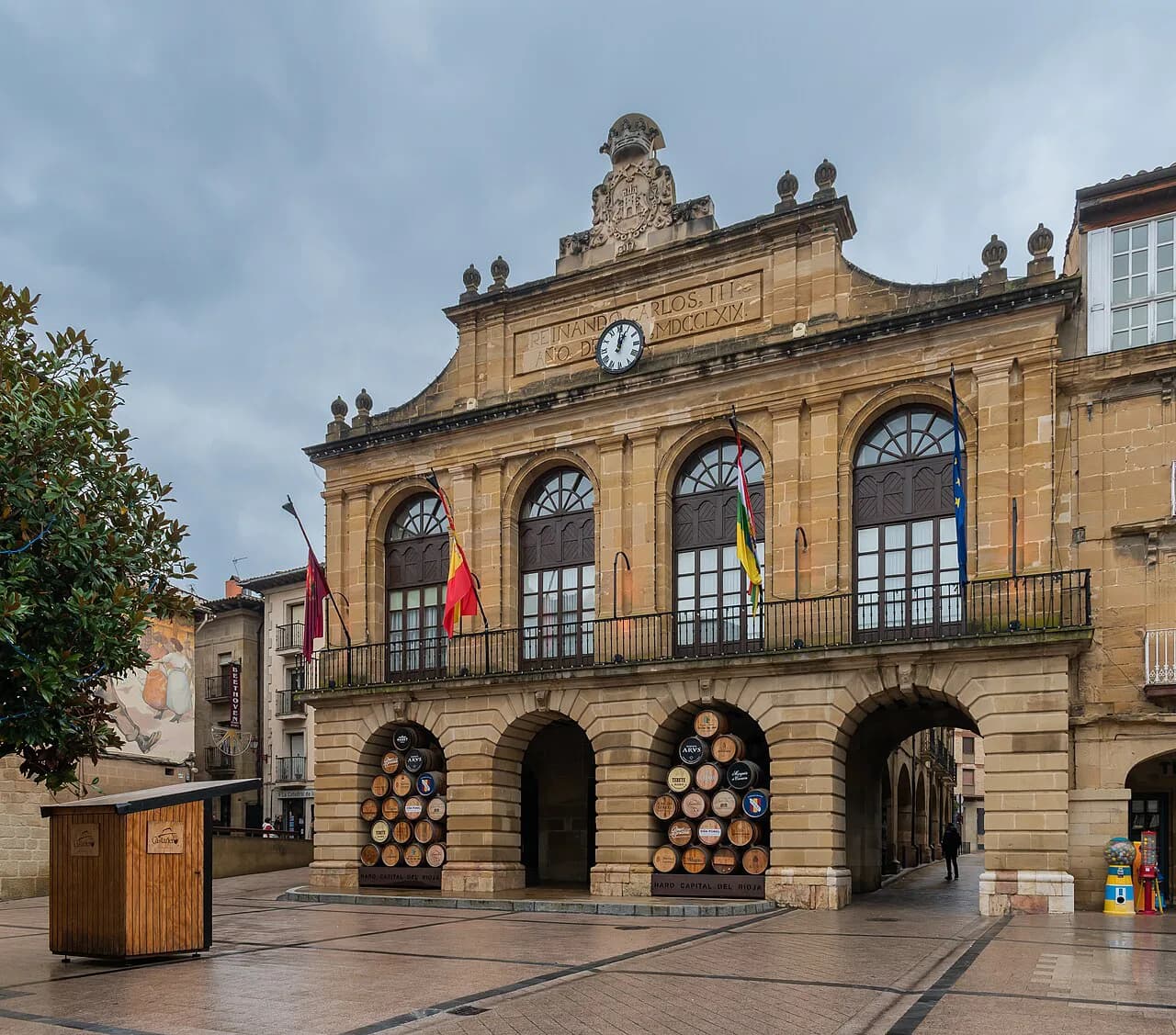
Haro is one of La Rioja's key wine towns, and its old town streets were declared a Historic-Artistic Site by the Spanish government in 1975. Wine isn't incidental to the festival: it's the town's core industry, and numerous bodegas operate within walking distance of the main square. Regional estimates put as much as 40% of Rioja's vineyards in the area around Haro, which explains why the town built an entire festival around throwing the stuff. Visiting outside the last week of June still means walking through a working wine town, just without the crowds or the purple stains. Combine a Batalla del Vino trip with a broader look at La Rioja's bodegas if the schedule allows extra days before or after June 29.
Wine-Fight Etiquette and Safety Rules
The Batalla del Vino is chaotic, but participation follows a simple rule: soak people with wine without trying to hurt them. The main action belongs in the Campas below the Hermitage of San Felices, not on narrow access paths.
- Wait for the official rocket before starting the main battle, and stop when organizers signal the end.
- Spray or pour wine rather than throwing bottles, buckets, or other containers.
- Avoid deliberately targeting faces. Goggles help, but they do not make close-range spraying considerate.
- Give space to children, older visitors, photographers, and anyone moving toward the edge of the crowd.
Expect to be soaked even when refilling a bota or standing beside the busiest area. Keep moving carefully because spilled wine turns the grass and soil slippery. Alcohol consumption also increases the risk of falls during the descent.
After the ceasefire, leave the throwing gear behind and follow the procession toward Haro. Las Vueltas is a musical return march through Calle Navarra and Plaza de la Paz, not a continuation of the battle.
For trip-planning details, see Batalla del Vino official source and Haro / regional tourism authority.
Frequently Asked Questions
When is the Batalla del Vino in Haro in 2026?
The Batalla del Vino falls on June 29, 2026, the feast day of San Pedro. Pre-festivities start June 27, and the town's biggest street party happens June 28.
How do you get from Haro to the Riscos de Bilibio?
Walk the roughly 4-mile route from central Haro, ride a tractor-trailer with the mayor's procession, or drive. Parking near the cliffs is extremely limited and typically fills by 6:30 AM.
What should you wear to the wine fight?
Wear white clothing you're willing to ruin, the traditional red pañuelo around your neck, and shoes with real grip. Goggles are worth packing too: wine in the eyes is the top reason people leave early.
Is there a version of the Batalla del Vino for kids?
Yes. A smaller Children's Battle is typically held June 26 or 27 in Plaza de la Paz. Confirm the exact date on Haro's official festival schedule for the current year.
What happens after the wine fight ends?
The wine runs out around 10:30 AM, and the crowd dries off over a breakfast of grilled snails or lamb chops. Everyone then marches back into Haro for Las Vueltas around noon, dancing into Plaza de la Paz. A bullring event closes out the day.
Is the Batalla del Vino free to attend?
Yes, watching and taking part in the wine fight is free. Main costs are accommodation, transport to Haro, and any wine or gear brought along. Book lodging early since Haro's limited hotel rooms sell out well before June 29.
Can you watch without joining the wine fight?
Yes. Spectators can watch from the edges of the Campas or from Plaza de la Paz during Las Vueltas around noon. Standing close on the mountain still means getting soaked, regardless of intent.
How physically intense is the Batalla del Vino?
It's more physical than most Spanish festivals. The core battle runs about 90 minutes, from the 9:00 AM rocket to the 10:30 AM ceasefire. Expect close-contact crowds, slippery footing, and wine sprayed directly at you throughout.