Last updated July 2026: the misteri d'elx is a two-act medieval drama performed every August inside the Basilica de Santa Maria in Elche. UNESCO has protected it as Intangible Cultural Heritage since 2008, and Spain had already named it a National Monument decades earlier. Seeing it well means choosing between a free but crowded performance on August 14-15 and a paid dress rehearsal with guaranteed seating on August 11-13.
What Is the Misteri d'Elx?
Misteri d'Elx is a liturgical drama that reenacts the death, assumption, and coronation of the Virgin Mary. Performers chant the entire text in medieval Valencian, with a few passages in Latin. Staged drama inside churches was banned under the Council of Trent from 1545 to 1563, yet a 1632 papal rescript from Pope Urban VIII granted Elche a permanent exemption. It survives today as the oldest liturgical drama still performed anywhere in Europe. UNESCO named it a Masterpiece of the Oral and Intangible Heritage of Humanity in 2001, then inscribed it on the Representative List of Intangible Cultural Heritage in 2008. Spain had already designated the play a National Monument in 1931, and separately named it a Fiesta of International Tourist Interest in 1980. Córdoba's patio courtyards hold the same UNESCO Intangible Heritage status. Alcoy's Moros y Cristianos festival preserves a comparable medieval-rooted pageant in the same region.
The Origins Debate: Legend vs. Recorded History
Two competing stories explain how the Misteri d'Elx began. An older legend, recorded by chronicler Cristobal Sanz in the early 17th century, ties the play to 1276 and to the city's reconquest by James I the Conqueror in 1265. In 1717, city official José Antón added a miraculous detail to that story: a wooden ark said to have washed up on Elche's beaches in May 1266. That ark, according to the legend, carried the Virgin's image and the Consueta script that still guides the performance today. Composer Óscar Esplá revived interest in the 13th-century dating in 1924, when he claimed to have seen a letter from 1266 authorizing the play. That letter has never resurfaced. Historians studying the play since the late 19th century place its actual composition no later than the very end of the 15th century. Most scholars today, working across literary, musical, and linguistic evidence, favor a composition date in the second half of the 15th century. Stage directions referencing the Heaven's linen ceiling first appear in records from 1530, and its oldest surviving Consueta manuscript, containing the dialogue and score, dates to 1625.
The play's composition in the second half of the 15th century preceded a church ban on staged drama from 1545 to 1563, yet a 1632 papal exemption allowed Elche's Misteri to survive when comparable traditions elsewhere ended.
Key Dates: When to See the Misteri d'Elx in 2026
Misteri d'Elx follows a fixed five-day rhythm every August, with paid rehearsals building toward two free public performances.
| Date | Time | Event |
|---|---|---|
| Aug 11 | 22:30 | Dress rehearsal (paid, reserved seating) |
| Aug 12 | 22:30 | Dress rehearsal (paid, reserved seating) |
| Aug 13 | 17:30 | Final dress rehearsal (paid), followed by Nit de l'Albà fireworks that night |
| Aug 14 | 18:00 | La Vespra - Act One, the death of the Virgin (free entry) |
| Aug 15 | 10:00 | Funeral procession of the Virgin through Elche's streets |
| Aug 15 | 18:00 | La Festa - Act Two, the Assumption and coronation (free entry) |
- Nit de l'Albà, on the night of August 13, fills Elche with fireworks launched from rooftops across the city. It closes out the dress-rehearsal period and marks the unofficial eve of the festival.
- After La Vespra concludes on the night of August 14, hundreds of participants carry candles through Elche in a night procession.
- In early August, the Casa de la Festa runs the Prova de l'Àngel, a closed rehearsal where children practice the aerial descent and overcome any fear of the harness.
- Even-numbered years add extraordinary performances in late October that require tickets. A fully free program follows on November 1: the Vespra in the morning, the funeral procession at midday, and the Festa in the afternoon. Travelers who want to avoid the August heat should aim for this autumn date instead.
Tickets vs Free Entry: The Visitor's Dilemma
Deciding between the free performance and the paid rehearsal comes down to comfort versus atmosphere. Free entry on August 14 and 15 means arriving three to five hours early to claim standing room inside the Basilica, then standing through the heat alongside a devout local crowd. Locals describe the free performance's emotional payoff as the main draw, even with the crowding and heat. Paid dress rehearsals on August 11-13 guarantee a seat, run the entire play in a single evening, and suit anyone prioritizing photography over religious atmosphere. Rehearsal audiences trade devotional atmosphere for comfort, since the crowd is smaller and more tourist-oriented. Buy rehearsal tickets at the Casa de la Festa, Carrer Major de la Vila 27 in Elche, or through El Corte Inglés. Sales for the August dates typically open in May, and autumn-performance tickets, sold only in even years, go on sale in September. Confirm exact 2026 pricing and on-sale dates directly with the Casa de la Festa before booking travel around them.
| Option | Dates | Cost | Seating | Best For |
|---|---|---|---|---|
| Dress rehearsal | Aug 11-13 | Paid; confirm current price at the Casa de la Festa | Reserved seat | Photographers and comfort-focused visitors |
| Official performance | Aug 14-15 | Free | Standing room; arrive 3-5 hours early | First-time visitors wanting the full devotional atmosphere |
- Choose free entry on August 14-15 for the full devotional atmosphere, if standing for hours in the heat is manageable.
- Choose a paid rehearsal on August 11-13 for a guaranteed seat, better photos, and the complete play in one evening.
Highlights of the Performance: La Magrana, the Araceli, and the Music
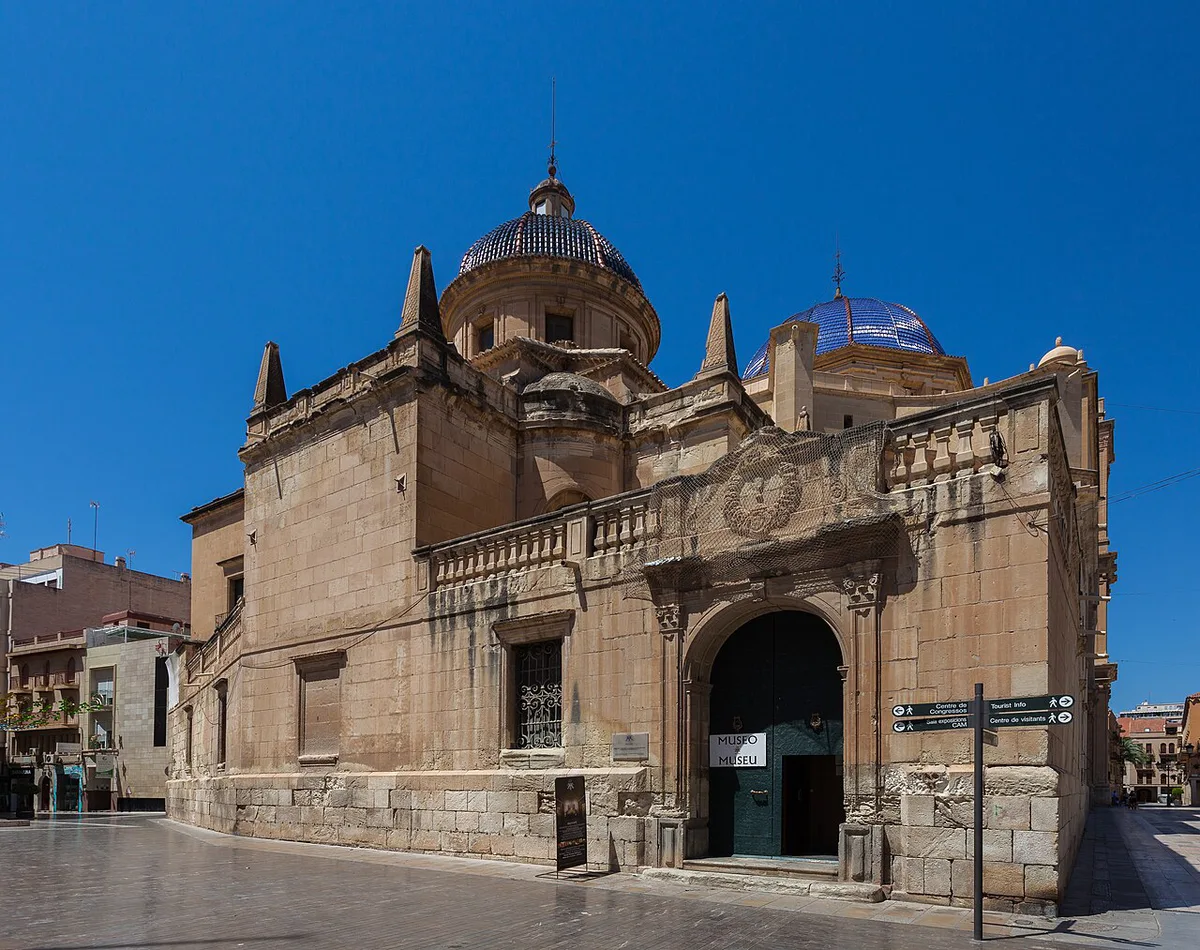
Performers stage the entire drama inside the Basilica, using several distinct areas and devices rather than one fixed set. Staging works on two levels: a horizontal terrestrial plane where actors walk, and a vertical celestial plane reached only through the aerial devices. La Magrana, a red pomegranate-shaped device, descends through the Basilica's linen ceiling to deliver the first angel, who hands Mary a golden palm frond. A second aerial device, the Araceli, appears twice during the play. Five angels first carry Mary's soul toward Heaven, then her statue ascends in the finale to be crowned by the Holy Trinity. Both devices pass through the Door to Heaven, a square opening in the linen ceiling that opens and closes three times during the play. Cadafal, a square wooden platform, is raised over a hidden space where some aerial devices descend and actors change costume between scenes. A raised ramp called the Corridor runs from the Basilica's main door to the Cadafal. Mary's actor walks this ramp during the performance, tracing a path from the earthly entrance toward the sacred platform. Music shifts across the performance from medieval monophony to Renaissance and Baroque polyphony, tracing centuries of additions to the Consueta manuscript. Every role, including Mary and the angels, is sung by males: La Capella, an adult male choir, carries the lower voices, while the Escolania boys' choir sings the treble parts. More than 300 volunteers keep the tradition alive each year, working as actors, singers, stagehands, tailors, and stewards in preparations that run all year. Seating near the Cadafal gives the clearest sightline to the pomegranate's descent, though the sound often carries best from seats set back, away from directly beneath the Heaven.
Getting to Elche and Where to Stay
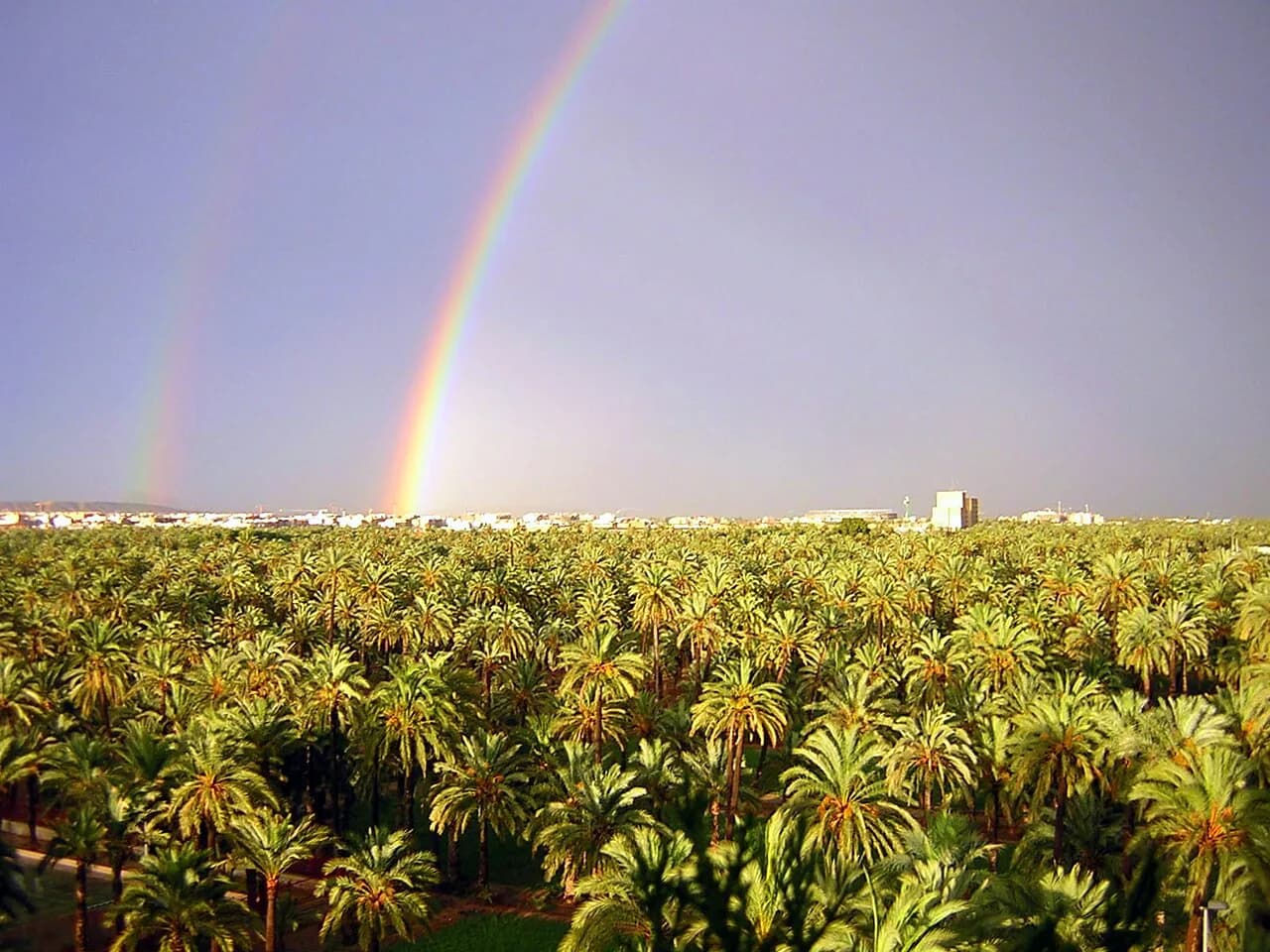
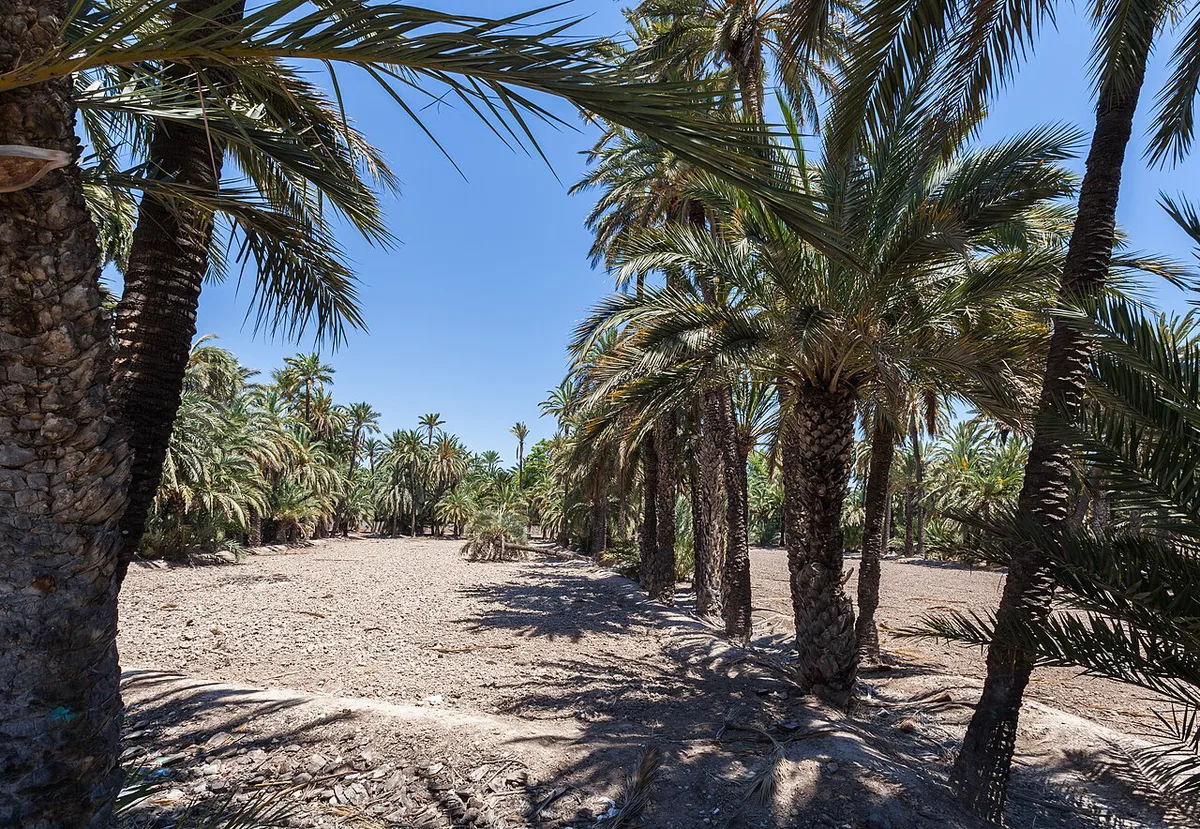
Elche sits on the C-1 Cercanías line, with direct trains from both Alicante and Murcia. Confirm the Cercanías schedule close to travel dates, since August timetables can differ from the rest of the year. Three UNESCO recognitions belong to Elche in total: the Misteri d'Elx, the Palmeral de Elche palm grove, and the Museo Escolar Pusol. Book accommodation near the Palmeral de Elche or within walking distance of the Basilica itself. Hotels near the Basilica sell out months ahead of August 13-15, so reserve as soon as travel dates are confirmed. Basilica de Santa Maria's Baroque design was shaped around the play itself. Its dome and linen Heaven ceiling exist specifically to stage the aerial descents. Anyone extending the trip along the Costa Blanca can pair the visit with Alicante's Hogueras de San Juan, another Valencian tradition built around fire and civic pride.
The Basilica de Santa Maria's design for staging aerial effects is realized annually through more than 300 volunteers—actors, singers, stagehands, and tailors—working year-round to maintain this ancient tradition.
Mistakes to Avoid and Pro Tips
Mid-August heat in Elche regularly climbs past 95°F (35°C) inside a packed, non-air-conditioned Basilica. Bring a hand fan and drink water before entering, since the doors often stay closed once the performance begins. Movement inside the church is restricted once the Heaven opens or La Magrana starts its descent, so pick a spot early and stay put. Plan to be along the procession route by 10:00 on August 15, when the funeral procession carries the Virgin's image through Elche's streets before the final act. Set aside time to walk the Huerto del Cura, the palm garden a short walk from the Basilica, while in Elche. Readers who want to compare the Misteri's solemn atmosphere with Spain's Easter traditions can look at Málaga's Semana Santa processions. Those drawn to pilgrimage devotion instead should read about the Romería del Rocío. Anyone who prefers a louder, less religious August week nearby can plan around Málaga's summer fair instead.
- Water - the Basilica interior regularly passes 95°F (35°C) in mid-August
- Hand fan - standing-room sections have no air conditioning
- Printed ticket - useful for rehearsal entry, since outdoor glare can make phone screens hard to scan
- Binoculars - for watching the aerial devices move through the linen Heaven ceiling
La Roà and the August 15 Funeral Procession
The Virgin’s funeral observances continue between La Vespra and La Festa. After the first act, her image remains inside the Basilica de Santa María for public veneration.
At midnight, La Roà begins. Residents walk the traditional route through Elche’s historic center while carrying candles. This informal vigil continues until the early morning. It is quieter than the main performances, but central streets remain busy.
The official funeral procession leaves the Basilica at 10:00 on August 15. Apostles and other Misteri characters accompany the reclining image of the Virgin through the old town. The procession then returns to Santa María before La Festa begins that evening.
Arrive near the Basilica early if you want a clear view of the departure. Choose a position farther along the route for more space. Wear comfortable shoes because temporary street closures can require detours. Keep pathways clear for participants, especially around the Basilica entrances and the narrow streets nearby.
For trip-planning details, see Misteri d'Elx official source and Elche / regional tourism authority.
Frequently Asked Questions
What is the Misteri d'Elx?
The Misteri d'Elx is a two-act liturgical drama performed inside the Basilica de Santa Maria in Elche every August. It reenacts the death, assumption, and coronation of the Virgin Mary, chanted in medieval Valencian with passages in Latin.
When does the Misteri d'Elx take place in 2026?
The two main acts run every year on August 14 and 15, preceded by paid dress rehearsals on August 11-13. In even-numbered years, extraordinary performances add ticketed dates in late October plus a free program on November 1.
Do you need a ticket to see the Misteri d'Elx?
Entry to the August 14 and 15 performances is free, though arriving three to five hours early is necessary to get inside. Reserved seating is only available for the paid dress rehearsals on August 11-13, sold through the Casa de la Festa and El Corte Inglés.
What language is the Misteri d'Elx performed in?
Performers chant the play in medieval Valencian, the local form of Catalan, with certain sections sung in Latin. Every role, including Mary and the angels, is sung by male voices from La Capella choir and the Escolania boys' choir.
How do you get to Elche for the Misteri d'Elx?
Elche is on the C-1 Cercanías line, with direct trains from Alicante and Murcia. Reserve a hotel near the Basilica or the Palmeral de Elche early, since rooms sell out months before August 13-15.
What should you bring to the performance?
Pack water, a hand fan, and a printed ticket if attending a paid rehearsal, since the Basilica gets hot and phone screens can be hard to scan outdoors. Binoculars help for watching the aerial devices move through the linen Heaven ceiling.
What happens during Nit de l'Albà?
Nit de l'Albà takes place on the night of August 13, when Elche fills with fireworks launched from rooftops across the city. It closes out the dress-rehearsal period before the two free performances on August 14 and 15.
What is the Consueta?
The Consueta is the manuscript containing the play's dialogue, stage directions, and musical score. Its oldest surviving copy dates to 1625, though most scholars date the play's core text to the second half of the 15th century.
Is the Misteri d'Elx performed the same way every year?
The core performance repeats annually on August 14 and 15 in odd and even years alike. Even-numbered years add the extraordinary autumn performances in late October and on November 1, which don't occur in odd years. Check the Casa de la Festa's calendar each year to confirm whether it falls on an odd or even cycle.