Last updated July 2026. Carnaval de Cádiz turns this Atlantic port city into an eleven-day contest of wit, where satirical songwriting matters more than elaborate floats or spectacle. Local groups spend months writing and rehearsing new material, and the festival's Fiesta of International Tourist Interest status reflects how central it is to the city's identity. This guide breaks down the musical groups, the two-week schedule, and the logistics of finding a bed during Cádiz's busiest fortnight.
What Is the Carnaval de Cádiz?
Carnaval de Cádiz runs on humor rather than spectacle. Brazil's Rio Carnival leans on elaborate floats. Spain's own Carnaval de Santa Cruz de Tenerife: 2026 Dates, Tickets, and Tips leans on costume spectacle and stagecraft. Cádiz instead rewards wordplay, satire, and clever double meanings. Local groups spend the year writing original songs that mock politicians, celebrities, and whatever dominated the news over the previous twelve months. In its own way, the festival works like a collective op-ed: its songs turn the year's news into public sing-alongs that spread across the city within days. Spain designated the festival a Fiesta of International Tourist Interest in 1980, a status that reflects a long history rather than a recent rebrand. Its roots trace to the 16th century, when Genoese merchants trading through the port brought Italian carnival customs — masks, confetti, and paper streamers — that gaditanos gradually reshaped into something more verbal and local. Authorities banned the celebration during the Spanish Civil War in 1937, and the city revived it in 1947.
Despite Spain's Fiesta of International Tourist Interest designation in 1980, Carnival remains complex to plan: organizers typically confirm dates only a few months in advance, making advance bookings risky.
Chirigotas, Comparsas, Coros, and Cuartetos: A Field Guide to the Groups
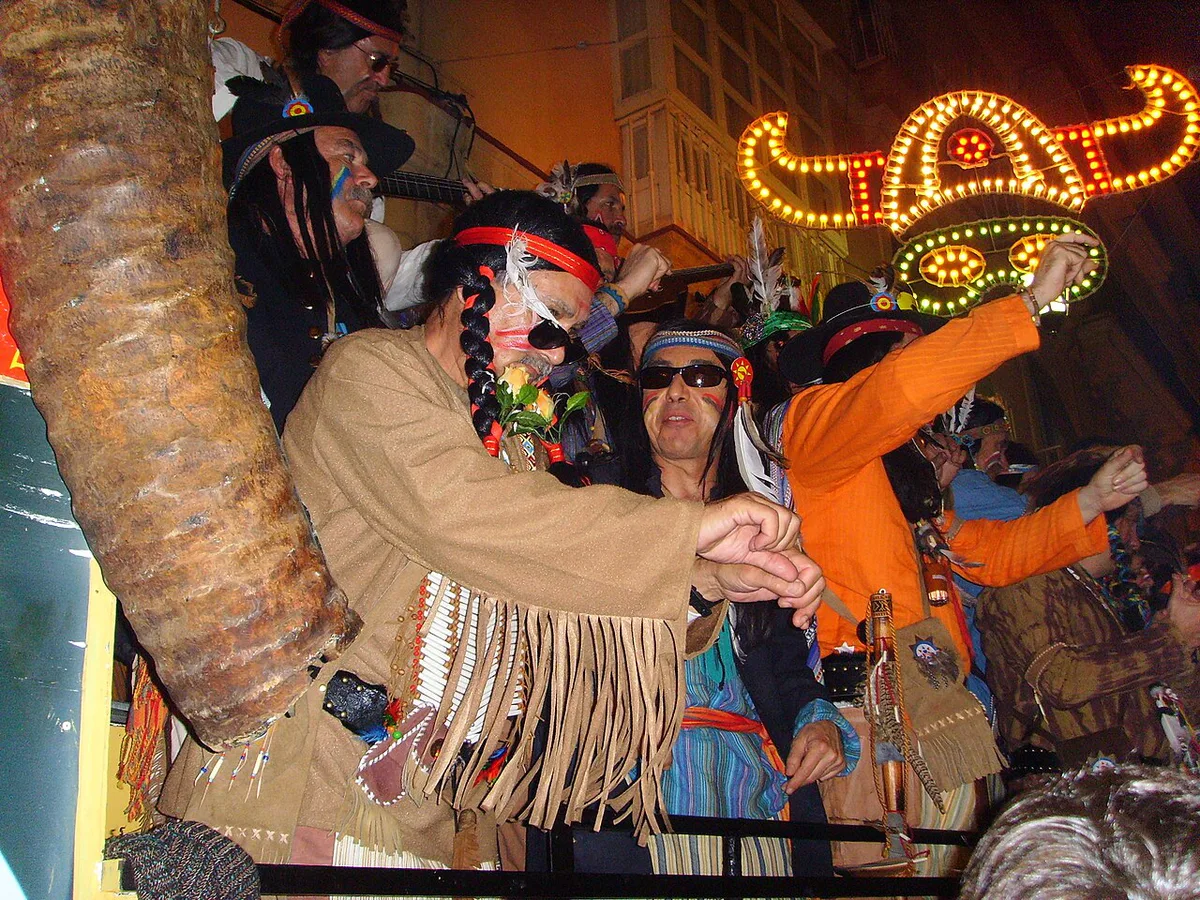
Four musical formats make up Carnival's backbone, and telling them apart is the fastest way to understand what is happening on any given street corner or stage. Comparsas and chirigotas both compete inside the Gran Teatro Falla. Comparsas favor social critique delivered with vocal polish. Chirigotas favor faster punchlines and lighter melodies covering some of the same topics. Coros travel through the city on open flat-bed carts before taking the stage together for the Carrusel de Coros, a showcase built around their elaborate costumes as much as their singing. Cuartetos, despite the name, rarely number exactly four. Three-to-five-person casts trade the guitar for a kazoo and two sticks, and lean entirely on scripted skits, improvisation, and physical comedy. A smaller, older format called romanceros also appears in the streets, though it draws far less attention than the four main formats.
| Group | Size & Instruments | Tone |
|---|---|---|
| Comparsas | Uniformed group; guitars | Lyrical, socially critical, original compositions |
| Chirigotas | Uniformed group; guitars and percussion | Broad humor, wordplay, catchier tunes |
| Coros | Large ensemble on an open cart; guitars and lutes | Alternates comic and serious 'Carnival Tango' numbers |
| Cuartetos | 3 to 5 members; kazoo and two sticks, no guitar | Purely comic skits and dialogue |
The Two Carnivals: Official Contest vs. the Ilegales in the Street
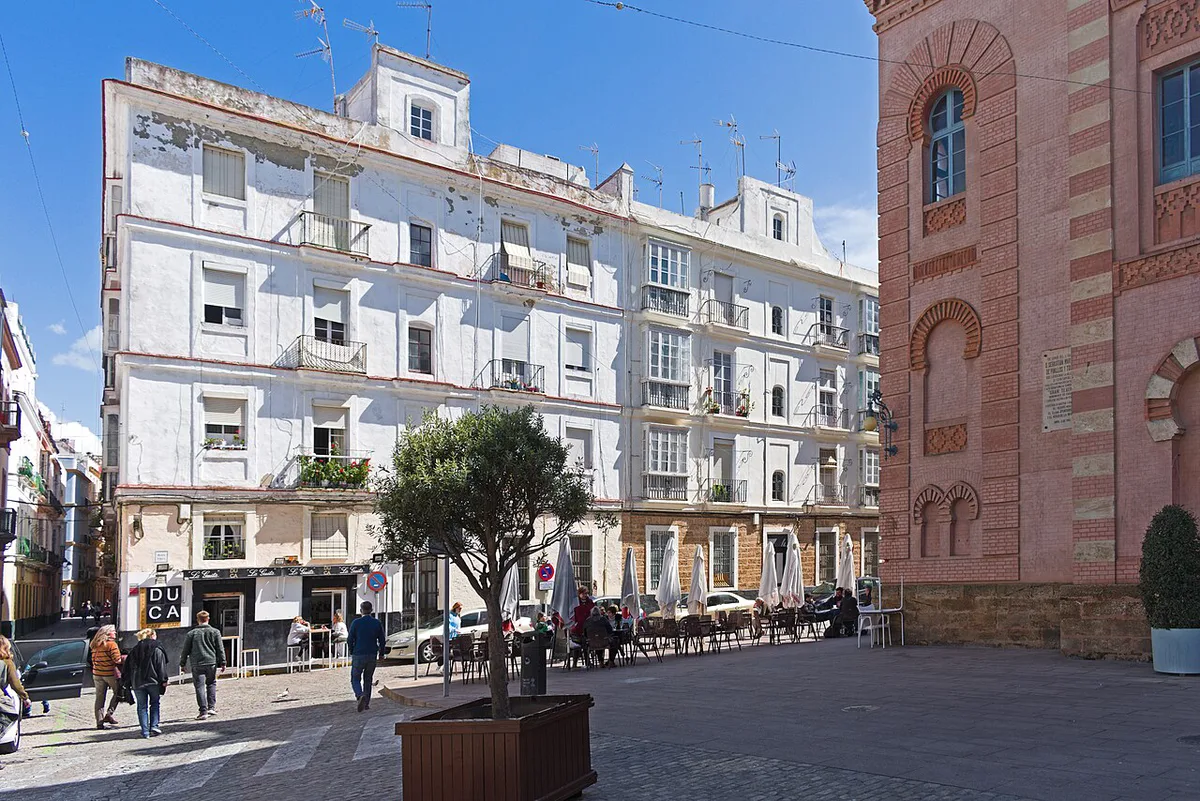
Carnaval de Cádiz effectively runs as two festivals at once. Groups that want to compete formally enter the Concurso Oficial de Agrupaciones Carnavalescas, known as COAC, staged inside the Gran Teatro Falla. More than 100 groups take part in a typical year, according to Spain's national tourism board, competing across the comparsa, chirigota, coro, and cuarteto categories for a jury-judged award. The Gran Final caps the contest on the first Friday of Carnival and runs until the following morning. Afterward, the winning groups head into the old town to keep performing in the streets. An entirely separate scene plays out beyond the theater walls. Charangas ilegales — the name is folkloric rather than a real legal designation — are families, friends, and coworkers who write and perform their own material without ever entering the official contest. They gather most visibly around Plaza de las Flores, and unlike a seat at the Gran Teatro Falla, watching them costs nothing.
When Cádiz Carnival Happens: An Eleven-Day, Two-Weekend Schedule
Cádiz Carnival always runs eleven days and always ends the day before Ash Wednesday, but that anchor point moves with the Christian liturgical calendar every year. Ash Wednesday shifts annually, so the festival lands anywhere between early February and early March depending on the year. Do not treat any single date circulating online as fixed. Check the current Spain festival calendar or the official Cádiz tourism site before booking. Spain's national tourism portal has listed dates for upcoming editions as still to be confirmed months in advance. That is normal this far out. Organizers typically firm up the calendar only a few months ahead of the festival.
- About a month before: rehearsing groups host open-air gastronomic events, previewing songs alongside typical Cádiz food.
- First Saturday: fancy dress is close to mandatory for anyone joining the crowds in the old town.
- First Sunday: the Gran Cabalgata, the main parade, runs down the avenue at the city's entrance and draws tens of thousands of spectators.
- First Sunday and Monday: coros groups take the stage for the Carrusel de Coros.
- Weekdays: crowds thin, making it easier to catch the lyrics of the street chirigotas and comparsas.
- Second weekend: the Cabalgata del Humor, a comedy-themed parade, winds through the old town to close the festival.
Getting to Cádiz for Carnival
Cádiz sits at the end of a narrow peninsula, and Carnival weekends turn that geography into a genuine bottleneck for cars. Renfe, the national rail operator, has historically added extra Cercanías services from Jerez de la Frontera and El Puerto de Santa María during the festival. Check Renfe's site for confirmed 2026 schedules and any Carnival-specific services closer to your travel dates. Parking in the old town during Carnival weekends is difficult. Arriving by train from a nearby Bay of Cádiz town is usually the more reliable option, even if it means a longer trip home each night.
Where to Stay: Old Town, New Town, or a Nearby Base
Staying inside the old town puts every parade, theater performance, and street-corner chirigota within walking distance. Rooms there fill up early and get noisy through the night, so book well ahead if that trade-off works for you. The newer parts of the city offer a quieter alternative that is still a short walk or bus ride from the old town's core. San Fernando and El Puerto de Santa María, both on the Bay of Cádiz, are common commuter bases too, alongside Jerez de la Frontera. Riding the Cercanías in each day trades a nightly commute for lower prices and an easier night's sleep once old town rooms are gone. Wherever you base yourself, confirm cancellation policies before booking, since Carnival weekend rooms in the old town are among the least flexible bookings of the year in Cádiz.
Costumes: Why You Need a Tipo
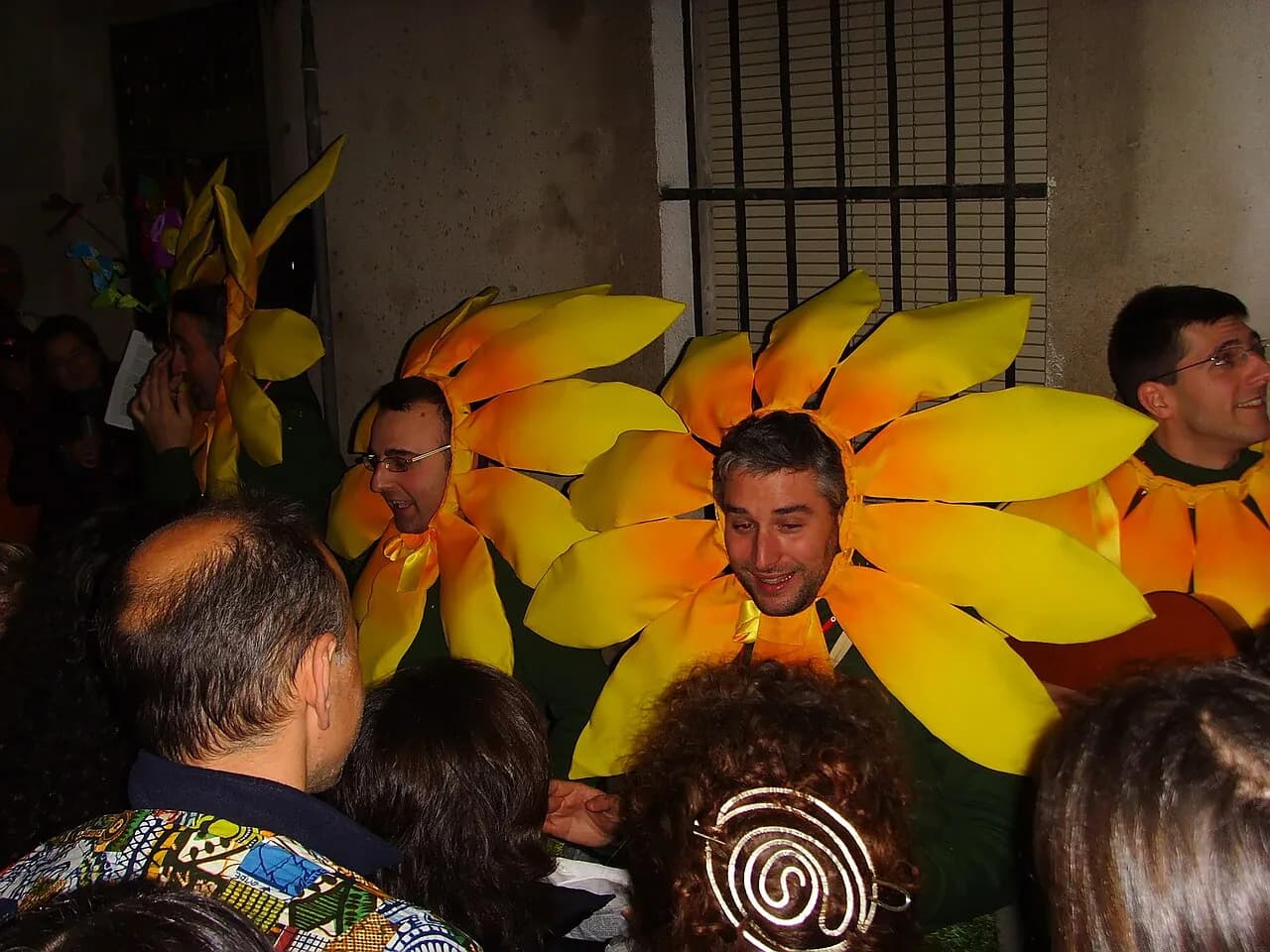
Fancy dress, called a tipo locally, is close to mandatory at Cádiz Carnival, especially on the first Saturday and during both parades. Showing up without one breaks no rule, but it puts distance between visitors and a crowd that treats costuming as part of the performance. Painting the face is a long-standing alternative to a full mask, treated as its own tradition rather than a shortcut. A costume does not need to be elaborate. A themed group outfit, a simple painted face, or even a basic prop is enough to join in rather than just watch.
Costs and Tickets
Most of Carnaval de Cádiz costs nothing to attend. The Gran Cabalgata, the Cabalgata del Humor, and every ilegales performance around Plaza de las Flores are free street events. The one real expense is a seat inside the Gran Teatro Falla for the official COAC contest. Tickets go through the theater's own box office and website, and demand for the best sessions — especially the Gran Final on the first Friday — outstrips supply most years. A theater seat there costs both money and advance planning that a free spot on the street does not require. When theater tickets are unavailable, the free street performances remain the more accessible way to hear the same groups and material.
Mistakes First-Time Visitors Make
A handful of avoidable missteps show up again and again among first-time visitors.
- Expecting a Rio-style spectacle: Cádiz Carnival centers on lyrics and satire, not elaborate floats or choreography.
- Skipping the costume: a tipo is close to mandatory on the first Saturday and during both parades.
- Underestimating February weather: Cádiz sits on the Atlantic coast, and the season brings wind and damp cold that a light jacket will not handle.
- Assuming Spanish is required: satire is language-heavy, so the coros, with their costumes and stagecraft, are the easiest group to enjoy without following every lyric.
- Booking a room without checking the calendar first: dates move every year, so a room booked around a prior year's dates can miss the festival entirely.
Beyond Carnival: Cádiz's Other Big Events
Carnival is not the only reason Cádiz stays busy on the events calendar. Together, these events keep Cádiz's cultural calendar full well beyond the eleven days of Carnival.
Carnival shifts between early February and early March yearly, while major cultural events like the Atlantic Film Festival (September 25 to October 2, 2026) and Easter Week (March 19-28, 2027) hold fixed dates, allowing travelers to layer multiple Cádiz experiences across seasons.
- Alcances Atlantic Film Festival: runs September 25 to October 2, 2026.
- Easter Week in Cádiz: returns March 19-28, 2027, with the city's own processions.
- Ibero-American Theatre Festival: also part of Cádiz's yearly cultural calendar.
How Cádiz Carnival Compares to Spain's Other Big Festivals
Carnival sits inside a wider circuit of major Andalusian and Spanish festivals worth weighing against each other before choosing where to spend a trip. Seville's Semana Santa processions follow a similar reverence-versus-street-energy contrast just weeks later in the same region. Feria de Abril in Seville extends that regional calendar into April with a dance-and-fairground format entirely unlike Carnival.
- Las Fallas in Valencia centers on giant sculptures and fire rather than song.
- La Tomatina in Buñol is a single-day tomato fight rather than a two-week program.
- San Fermín in Pamplona is built around the bull run rather than musical competition.
- La Mercè in Barcelona mixes fire runs and human towers into a late-September city festival.
- Fiestas del Pilar in Zaragoza centers on a religious procession and a week of concerts.
Which Carnival Days Should You Choose?
Your ideal visit depends on whether you value spectacle, street songs, or manageable crowds. The first weekend delivers the largest events and the busiest atmosphere. It suits visitors prioritizing the Gran Cabalgata, group costumes, and late-night celebrations.
- First weekend: Choose it for maximum energy, the main parade, and the first major street performances. Expect crowded trains, packed plazas, and scarce accommodation.
- Weekdays: Choose them to hear callejeras and competing groups more clearly. Plaza de las Flores and nearby old-town streets remain lively, but movement is easier.
- Second weekend: Choose it for the Cabalgata del Humor and the festival’s closing atmosphere. Crowds return, although the program feels more informal than the opening weekend.
Music-focused travelers should combine one weekday with either weekend. Party-focused visitors will find the first Saturday most intense. Families may prefer daytime events and the main parade route outside the tightest old-town lanes.
For trip-planning details, see Ayuntamiento de Cadiz (official) and Turismo Cadiz.
Explore carnival in other cities
Frequently Asked Questions
When does Carnaval de Cádiz take place in 2026?
The exact dates move every year because Carnival always ends the day before Ash Wednesday, a date set by the Christian liturgical calendar. That places it somewhere between early February and early March depending on the year. Spain's national tourism portal has listed some future editions as dates to be confirmed months out, so check the official Cádiz Carnival site or the city's tourism board close to your travel dates rather than relying on an old post.
What is the difference between a chirigota and a comparsa?
Both are costumed groups that write original Carnival songs and compete at the Gran Teatro Falla. Comparsas lean toward lyrical, socially critical material and polished vocal delivery. Chirigotas lean toward broader humor and wordplay, with lighter, catchier tunes covering some of the same topics.
Are the best Carnaval de Cádiz events free?
Most of them, yes. The Gran Cabalgata, the Cabalgata del Humor, and every performance by the ilegales groups around Plaza de las Flores cost nothing to watch. Only a seat inside the Gran Teatro Falla for the official COAC contest costs money, and it goes through the theater's own box office and website.
Do you need to speak Spanish to enjoy Cádiz Carnival?
Not to enjoy it, though the satire lands harder if you follow the lyrics. The coros are the easiest group for non-Spanish speakers to appreciate, since their appeal leans on elaborate costumes, stagecraft, and music as much as on wordplay. Comparsas and chirigotas reward some Spanish, since their material is built around current-events wordplay.
Is a costume required to attend?
No rule forces visitors into a tipo, but fancy dress is close to mandatory in practice, especially on the first Saturday and during both parades. Face paint alone, used as a traditional stand-in for a full mask, is enough to fit in without a full costume.
What should you pack for Cádiz Carnival?
Layers work best, since Cádiz sits on the Atlantic and February days can swing from sun to wind and damp within hours. Comfortable shoes matter more than a curated outfit, given how much of Carnival happens standing in the street. A tipo, even a simple one, is worth packing or assembling locally if joining the first Saturday crowd is part of the plan.